Netball Technique
Goal Shooter Movement Patterns: A Netball Coach’s Guide to Creating Space
Help goal shooters create better passing lanes, receive in balance and convert more chances. This coach-focused guide explains the key movement patterns and three practical drills to use at training.
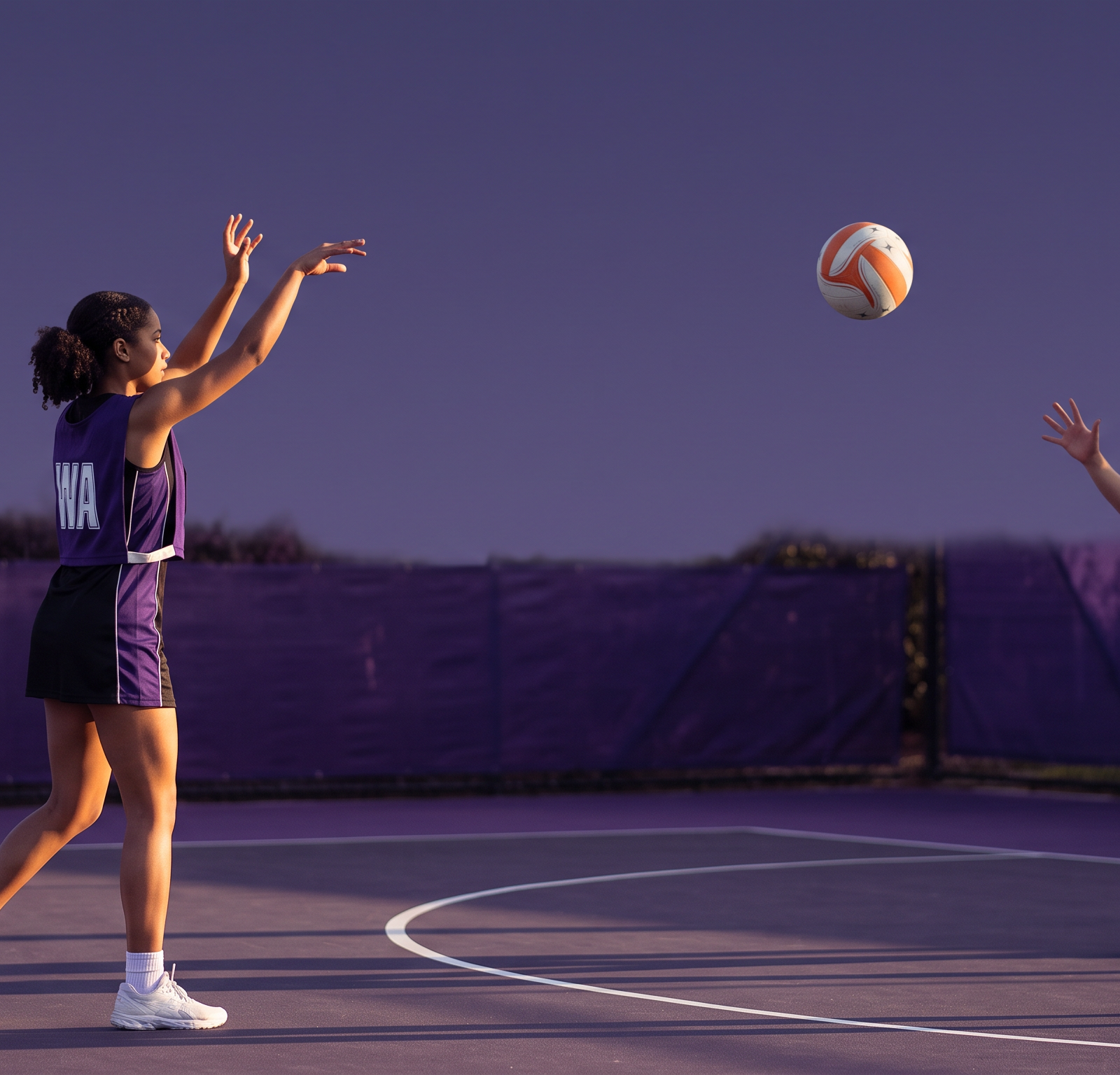
A goal shooter can be accurate and still be predictable to defend. In the shooting circle, every change of pace, angle and body position affects whether the feeder sees a safe pass and whether the shooter receives in balance. Teaching goal shooter movement patterns is therefore more than getting free. It is about creating space at the right moment, protecting it legally and finishing efficiently.
The best goal shooters do not run constantly. They read the defender, make each action useful to the next and stay available when the first pass is not on. This guide covers the patterns, coaching cues and practical drills that develop a reliable, difficult-to-mark shooter.
Why Goal Shooter Movement Patterns Matter
A goal shooter converts possession into points, but her work starts before she receives the ball. She must offer a clear target, disturb the defender’s preferred position and arrive where she can land, turn and shoot. When her movement is sharp, the goal attack has more room, feeders release earlier and the attacking unit becomes harder to contain.
Effective movement combines timing, angle and intent. Move when the feeder is balanced and ready to release, rather than too early. Attack open space or a defender’s outside shoulder, rather than running straight at her. Ensure every cut has a next action: receive and shoot, draw the defender then re-offer, or clear space for a teammate.
Read the Defender First
Ask shooters to notice how their marker is defending. Is the goal keeper fronting, body-to-body or sitting back to protect the post? The response should change with the picture. A defender who overplays the front may leave the baseline lane open; one who retreats may invite the shooter to step out, receive high and turn into a comfortable shot.
The aim is not to win every contest with speed. It is to make the defender commit, then take the space she leaves. Encourage players to scan before each restart and call the picture: “fronting”, “behind”, “post side” or “space top”.
Core Movement Patterns for Goal Shooters
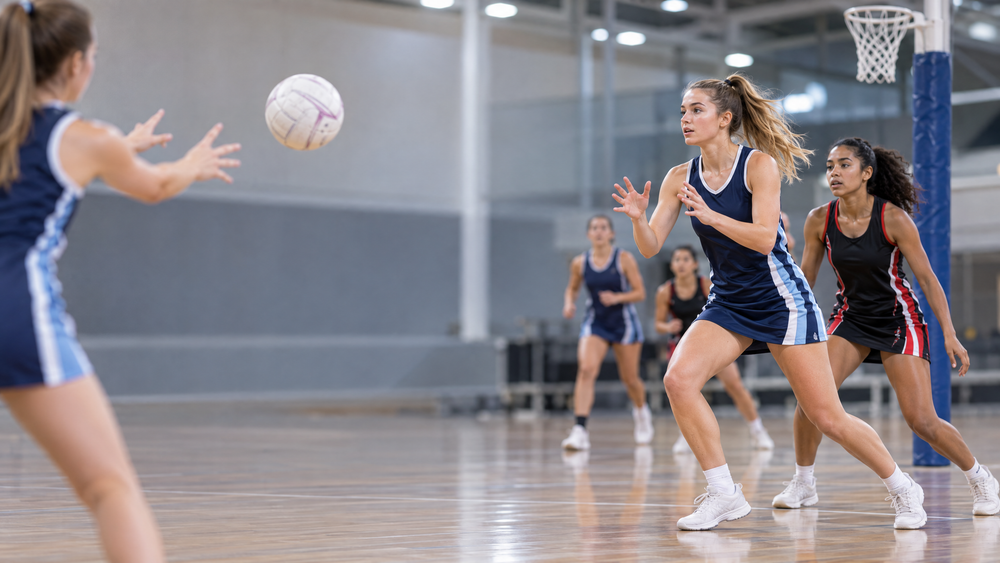
Front Cut and Re-offer
The front cut is a quick drive into the defender’s front space, usually towards the ball. Start on a slight angle, plant low and explode for two or three steps. The shooter presents hands early and calls only once she has separation.
If the pass is not on, she brakes under control, changes angle and offers again in a fresh passing lane. This “go, then go again” habit keeps the defender moving and gives feeders a dependable second option.
Baseline Cut
Use a baseline cut when the defender is fronting, ball-watching or owning the centre lane. The shooter sells a small movement towards the ball, then pushes towards the baseline and post. The change of direction matters more than a long sprint; the defender must shift her feet before the shooter attacks the outside shoulder.
Lead the pass ahead of the outside shoulder, giving the shooter space to turn and face the post.
Seal, Spin and Reposition
Near the post, a shooter can protect space with legal body position rather than force. Begin low and balanced: feet about shoulder-width apart, knees soft, chest up and arms available. She feels the defender’s position through her own balance, then pivots away from pressure.
After the catch, the first look is a balanced shot. If that is not available, the shooter spins out, clears a few steps and re-offers. The defender must then react to the shooter’s shape and next direction.
Short Clear and Timed Return
Young shooters often stay beside the post because it feels safe. A short clear can create the better chance. The shooter moves out of congested space for two or three controlled steps, drawing the defender, then returns on a sharp angle as the ball approaches the circle edge. The return must match the feeder’s vision, not simply the shooter’s urge to get back under the post.
A shared cue such as “out, then in” helps the attacking pair avoid standing in the same lane.
Coaching Cues That Make Movement Effective
Great circle movement rests on efficient footwork. Coach a powerful first step followed by a controlled deceleration before the catch. Fast feet without control create off-balance landings, rushed pivots and low-percentage shots. Practise landing on either foot, turning both ways and holding the finish for one second after each shot.
Hands should be visible before the ball arrives. A clear target lets the feeder decide earlier; late hands invite a risky pass. On every catch, the shooter should know her first look: shoot if balanced and clear; turn and release if the defender has closed; or reset if the angle is poor.
Three Practical Drills for Goal Shooter Movement
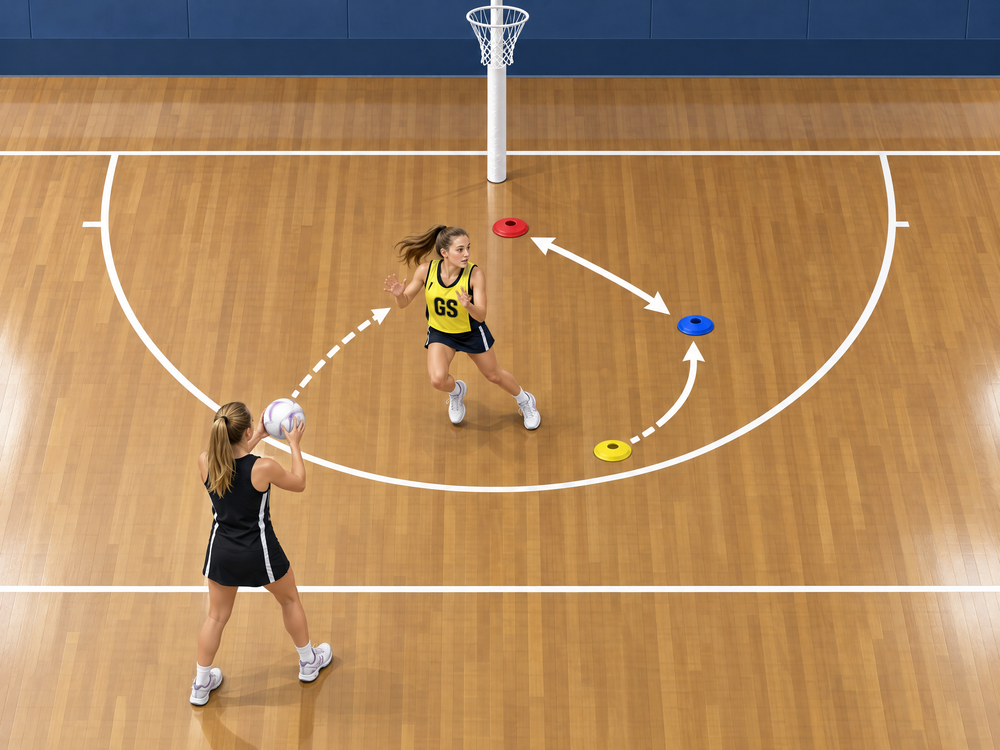
1. Three-Point Circle Attack

Set three flat markers inside the circle: one at the front, one to the side and one near the baseline. Place a feeder outside and a defender behind the shooter. On the signal, the shooter starts at the post, clears to one marker, attacks a second and presents for the pass. The feeder passes only when there is a clear lane; otherwise the shooter re-offers to the third point.
Run 30-second rounds, switching defender and shooter. Begin with passive defence, then progress to live pressure. Coach the plant-and-go: low plant, explosive first step and hands up before the catch. Call the target marker late as a variation, so the player scans and adapts instead of memorising a route.
2. Seal, Spin and Shoot

Position the shooter one or two metres from the post, a defender in close marking position and a feeder at the top of the circle. The shooter establishes a legal seal, receives, pivots away from pressure and shoots. If the feeder cannot see a safe ball within three seconds, the shooter spins out, resets on a new angle and re-offers.
Focus on balance rather than wrestling. The torso stays tall, feet stay active and arms remain free. Praise a shooter who clears intelligently as much as one who scores. The drill builds discipline not to force a pass or shot when the defender has won the first position.
3. Clock-Face Connection
Imagine the circle as a clock, with the post at 12 o’clock. Put one feeder at 3 o’clock and a second at 9 o’clock. The shooter begins near 6 o’clock and creates a scoring option from three different clock positions before shooting. Because each feeder decides when to release, the shooter must match her cut to the ball carrier’s body shape and passing arm.
Add a defender when the pattern is secure. Award one point for a clean receive, one for a balanced shot and one for a goal. After each round, ask: Which cut made the clearest lane? What did the defender give you?
Common Errors and Simple Corrections
The most common error is moving too early. A shooter who runs before the feeder is balanced lets the defender recover. Use the cue “see hands, then go”: the move starts when the feeder is looking up and ready to pass. Another error is running in straight lines. Set cones on diagonal entry routes and remind the shooter to attack a shoulder, not a body.
Some players catch facing away from the post and take too long to organise themselves. Freeze the player after the catch and ask, Can you shoot, turn or pass from here? If not, replay the approach rather than merely correcting the shot.
Take the Pattern Into Match Play
Movement needs to become instinctive, not scripted. In conditioned games, reward a shot created after a re-offer, baseline cut or clear-and-return. Limit long holds in the circle so players move again when the first option disappears. Rotate goal shooters through both sides of the circle; players who can turn and shoot either way are much harder to mark.
Keep feedback concise during play. One cue—“second effort”, “attack the shoulder” or “land to shoot”—is more useful than a running commentary. Short video clips can show whether the movement made an earlier, safer pass possible.
Keep Development Organised with Vanta Sports
Technical progress is easier when practice plans, player feedback and family communication stay connected. Vanta Sports provides Club, Coach, Guardian and Player apps for youth sports management, helping coaches organise sessions and keep development visible beyond one training night. Share the purpose of a goal shooter movement block, coordinate availability and give players simple follow-up cues after practice. Guardians stay informed without scattered messages, while players see a clearer link between what they practised and what to work on next.
This gives coaches more attention for movement quality and young goal shooters more clarity and confidence under pressure.
Ready to Take Your Training to the Next Level?
Discover how Vanta Sports helps coaches run better practices. Learn more about Vanta Sports
Tags