Netball Technique
Goalkeeper Blocking and Deflection Drills: A Complete Guide for Youth Netball Coaches
Master goalkeeper blocking and deflection drills with this comprehensive guide for youth netball coaches. Learn progression-based techniques, safety protocols, and how Vanta Sports streamlines your coaching workflow.
Introduction
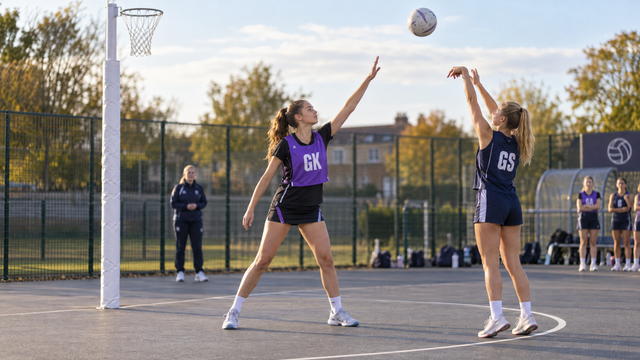
In netball, the goalkeeper (GK) is the last line of defence and often the unsung hero of a winning team. While shooters grab headlines with precision goals, goalkeepers win matches through timely blocks, smart deflections, and relentless pressure in the defensive circle. For youth and grassroots coaches, developing these skills in young athletes requires more than simply shouting "block it!" from the sideline. It demands structured, progressive drills that build technique, timing, confidence, and decision-making.
This guide provides coaches, guardians, and club administrators with a comprehensive framework for teaching goalkeeper blocking and deflection skills. Whether you're working with under-12s taking their first steps in the circle or developing representative-level teenagers, these drills and principles will help you create a safer, more effective, and more enjoyable training environment. We'll also explore how Vanta Sports—through Vanta Club, the Vanta Coach App, Vanta Guardian, and the Vanta Player App—can support your coaching journey from session planning to parent communication.
Core Principles
Before diving into specific drills, it's essential to understand the foundational principles that underpin effective goalkeeper training at the youth level.
1. Technique Before Intensity
Young goalkeepers must develop sound technical habits before they are exposed to high-intensity or high-volume blocking work. Rushing this progression leads to poor footwork, reckless reaching, and increased injury risk. Prioritise controlled, deliberate repetitions over speed and power in the early stages.
2. Safety Is Non-Negotiable
Blocking and deflection drills involve rapid direction changes, jumping, and landing. Coaches must ensure:
- Appropriate warm-ups focused on ankles, knees, and hips
- Correct landing mechanics (soft knees, balanced base)
- Safe distances between players during partner drills
- Proper footwear with adequate grip and cushioning
- Clear communication about when to contest and when to pull out
3. Eyes, Hands, Feet—In That Order
The goalkeeper's decision-making sequence should be: track the ball with your eyes, position your hands, then move your feet. Too often, young players react with their feet first, arriving late and off-balance. Drills should reinforce this visual-first approach.
4. Deflection Over Possession
At the youth level, teaching goalkeepers to deflect the ball away from danger is often more effective than attempting clean catches. A well-timed deflection that sends the ball out of the circle or into a teammate's path is a victory. Emphasise that disrupting the shooter's rhythm is success, even without a clean intercept.
5. Game-Realistic Decision-Making
Drills should include an element of reading the play. A goalkeeper who can block in isolation but cannot read a shooter's body shape or the flight of the ball in a game scenario will struggle. Incorporate decision-making cues into every drill.
Practical Implementation
This section outlines a progressive drill series suitable for youth goalkeepers aged 10 and above. Adjust distances, repetitions, and complexity based on age and skill level.
Drill 1: Shadow Footwork and Hand Positioning (Warm-Up)
Purpose: Develop foundational footwork and hand placement without ball contact.
Setup:
- Coach stands 3-4 metres from the goalkeeper
- Goalkeeper adopts a balanced defensive stance (feet shoulder-width apart, knees bent, hands up)
Instructions:
- Coach moves a ball (or their hand) left and right in a slow, predictable pattern
- Goalkeeper mirrors the movement using small, controlled side-steps, keeping hands in a ready position
- Progress to coach moving unpredictably, forcing the GK to react
- 30-45 seconds per set, 3 sets
Coaching Cues:
- "Stay low, stay ready"
- "Hands up, eyes on the ball"
- "Small steps, don't cross your feet"
Drill 2: Static Blocking—Chest and Shoulder Height
Purpose: Teach the basic blocking technique for shots at chest and shoulder height.
Setup:
- Pairs: one shooter, one goalkeeper
- Shooter stands 2-3 metres away with a ball
- Goalkeeper in defensive stance
Instructions:
- Shooter throws the ball firmly at the goalkeeper's chest
- Goalkeeper blocks with both hands, pushing the ball down and away
- Focus on firm wrists, straight arms, and deflecting the ball to the side
- 10 repetitions, then swap roles
- Progress to shoulder-height and then high-ball blocks
Coaching Cues:
- "Strong hands, push through the ball"
- "Deflect to the side, not straight back"
- "Recover immediately after the block"
Drill 3: Lateral Deflection Slides
Purpose: Develop the ability to deflect shots while moving laterally.
Setup:
- Coach or partner stands 3 metres away
- Goalkeeper starts in the centre of a 3-metre-wide zone
Instructions:
- Coach calls "left" or "right" and throws the ball to that side
- Goalkeeper slides laterally and deflects the ball with the nearest hand
- Emphasise pushing off the opposite foot and landing balanced
- 8 repetitions each side, 3 sets
Coaching Cues:
- "Push off hard, arrive balanced"
- "Lead with your eyes, then your hand"
- "Deflect away from the circle"
Drill 4: Reaction Blocking with Visual Cues
Purpose: Improve reaction time and decision-making.
Setup:
- Coach stands 3-4 metres away with a ball
- Goalkeeper faces away from the coach, then turns on the coach's call
Instructions:
- Coach calls "turn" and immediately throws the ball
- Goalkeeper turns, locates the ball, and attempts to block or deflect
- Vary the throw height, speed, and direction
- 6-8 repetitions, 3 sets
Coaching Cues:
- "Turn and find the ball fast"
- "Get your body behind the ball"
- "React, don't anticipate"
Drill 5: One-on-One Blocking Under Pressure
Purpose: Simulate game-realistic shooting pressure.
Setup:
- Shooter starts 4-5 metres from the goal post
- Goalkeeper positions in front of the shooter
- Coach feeds the ball to the shooter
Instructions:
- Shooter attempts to score; goalkeeper attempts to block or deflect
- Shooter must shoot within 3 seconds of receiving the ball
- Goalkeeper focuses on closing space, timing the block, and recovering for a rebound
- 5 attempts each, then rotate
Coaching Cues:
- "Close the space, but stay balanced"
- "Time your jump—don't leave your feet too early"
- "Block, then rebound"
Drill 6: Deflection to Transition
Purpose: Link defensive actions to attacking transition.
Setup:
- Goalkeeper, shooter, and a feeder (coach or player)
- Mark out a small grid
Instructions:
- Shooter shoots; goalkeeper deflects the ball into a designated target zone
- Goalkeeper then sprints to the target zone and passes to a teammate
- Focus on deflection accuracy and immediate transition
- 6 repetitions, 3 sets
Coaching Cues:
- "Deflect with purpose"
- "Know where your teammates are"
- "Transition immediately"
Sample Session Plan (60 Minutes)
| Time | Activity |
|---|---|
| 0-10 min | Dynamic warm-up and footwork |
| 10-20 min | Drill 1 and Drill 2 |
| 20-30 min | Drill 3 and Drill 4 |
| 30-45 min | Drill 5 |
| 45-55 min | Drill 6 |
| 55-60 min | Cool-down and feedback |
Scroll horizontally to see every column.
Common Challenges
Even experienced coaches face obstacles when developing young goalkeepers. Here's how to address the most common challenges.
Challenge 1: Fear of the Ball
Young players often flinch or turn away from fast-moving balls. Solution: Start with softer balls (e.g., foam or low-pressure) and slower throws. Gradually increase speed as confidence grows. Never ridicule a player for flinching—instead, celebrate small wins like keeping eyes open or hands up.
Challenge 2: Poor Footwork Leading to Late Blocks
Many young GKs reach with their arms instead of moving their feet. Solution: Return to shadow footwork drills (Drill 1) regularly. Use cones or markers to define lateral movement zones and reinforce small, quick steps.
Challenge 3: Inconsistent Hand Positioning
Goalkeepers may drop their hands or cross them, reducing blocking surface area. Solution: Use verbal cues like "hands up, palms forward" and incorporate mirror drills where the GK copies the coach's hand movements.
Challenge 4: Overcommitting to Blocks
Young GKs often jump too early or dive unnecessarily, leaving the goal exposed. Solution: Teach patience through reaction drills (Drill 4) and emphasise staying on feet until the last moment. Use video review if available—even a smartphone recording can help players see their timing.
Challenge 5: Limited Training Time
Grassroots coaches often have limited court time and multiple players to develop. Solution: Integrate goalkeeper drills into team sessions. For example, during shooting practice, rotate players through the GK position to build empathy and basic skills. Use Vanta Coach App to plan efficient sessions with pre-built drill templates and share them with assistant coaches.
Challenge 6: Parental Expectations
Guardians may expect their child to be the "star goalkeeper" immediately. Solution: Communicate clearly about long-term development. Use Vanta Guardian to share session summaries, progress notes, and educational resources that explain the developmental pathway.
How Vanta Supports Coaches
Vanta Sports is designed to make grassroots coaching easier, more organised, and more connected. Here's how our suite of tools supports goalkeeper development and overall club success.
Vanta Coach App (Free for Volunteer Coaches)
- Session Planning: Access a library of netball drills, including goalkeeper-specific sessions, and customise them for your team.
- Attendance Tracking: Quickly mark who's at training and follow up with absent players.
- Drill Sharing: Send drills to assistant coaches or players before sessions so everyone arrives prepared.
- Feedback Tools: Record quick voice or text notes on player progress during sessions.
Vanta Club (Club Management)
- Team Organisation: Manage multiple age groups, training schedules, and venues in one place.
- Communication: Send club-wide announcements, policy updates, and event reminders.
- Registration and Payments: Streamline sign-ups and fee collection so you can focus on coaching.
- Volunteer Coordination: Assign roles, track certifications, and recognise contributions.
Vanta Guardian (Parents)
- Visibility: Parents see training schedules, match details, and coach updates in real time.
- Progress Insights: Coaches can share developmental notes, helping parents understand their child's journey.
- Safety Information: Emergency contacts, medical notes, and consent forms are accessible and up to date.
Vanta Player App
- Personalised Drills: Players can access homework drills, including goalkeeper footwork and blocking exercises, to practice at home.
- Goal Setting: Set individual targets and track progress over the season.
- Team Connection: View schedules, chat with teammates (moderated), and stay engaged.
By integrating Vanta Sports into your club's workflow, you create a professional, supportive environment that benefits coaches, players, and families alike.
Conclusion
Developing goalkeepers who can block and deflect with confidence is one of the most rewarding challenges in youth netball coaching. It requires patience, structured progression, and a commitment to safety and technique. By using the drills and principles outlined in this guide, you'll give your young goalkeepers the tools they need to excel—and the confidence to embrace their role as the last line of defence.
Remember, great goalkeepers aren't born; they're coached. With the right drills, a supportive environment, and the organisational power of Vanta Sports, you can turn raw potential into match-winning performances. Start incorporating these drills into your next session, and watch your defensive circle become a fortress.
For more coaching resources, drill libraries, and club management tools, explore Vanta Sports today. Your team—and your goalkeepers—will thank you.
Tags