
Netball Technique
Goalkeeper Blocking and Deflection Drills for Youth Netball Coaches
Build confident youth netball goalkeepers with three practical drills for legal shot contests, controlled deflections and rebound recovery. Learn clear coaching cues, safe progressions and simple ways to measure improvement.
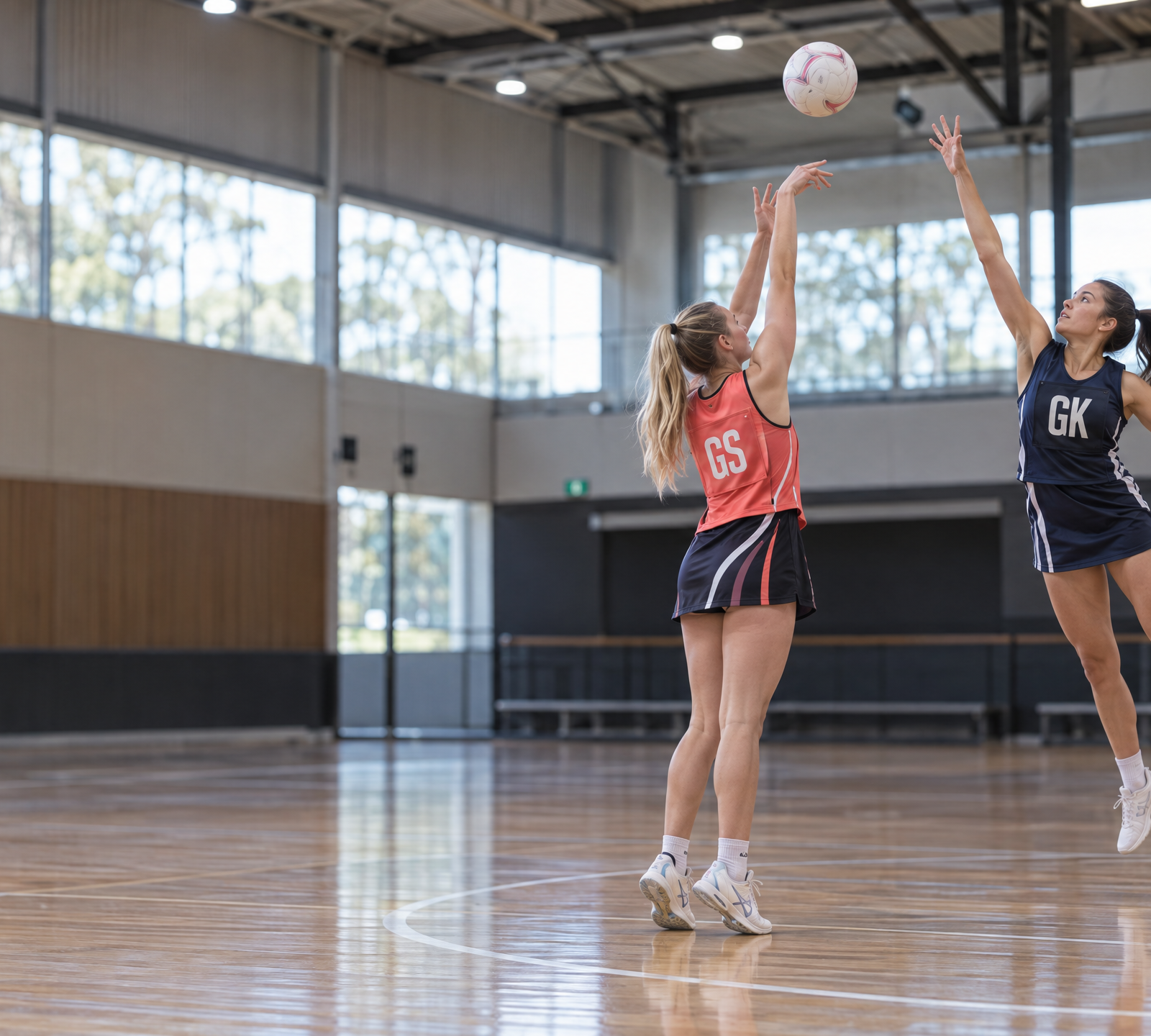
Goalkeeper blocking and deflection drills help youth netball players develop more than reach. They build legal distance, controlled footwork and a plan for the next ball. A strong contest can force a difficult shot, but the defence gains most when it then secures the loose ball and passes calmly out of the circle.
These three drills teach that sequence: legal shooting contest, intelligent pass-lane tip, then missed-shot outlet. Match speed to age and confidence. Quality movement matters more than a dramatic touch.

Rules and technique foundations for goalkeeper contests
Use the World Netball rules to ground every contest. When defending a player in possession, establish at least 0.9 metres between the nearest parts of the attacker’s landing foot and the defender’s nearer foot. Adjust if the attacker pivots. Do not deflect a shot on its downward flight towards the ring, move the post to interfere with a shot, or strike a held ball. Avoid contact that unfairly interferes with play and never spread arms to prevent an opponent moving. Check local junior variations before training.
Good defending begins with the landing: recover under control, establish space, then raise arms vertically. Do not step through the shooter’s landing line or reach across the body. GK is restricted to the defending goal third, including the circle, so use simple calls such as “mine”, “tip”, “rebound” and “outlet” with GD.
Drill 1: Distance, reset and contest
Setup
Use one post, GS, GK and a feeder outside the circle. GS starts ready to shoot; GK begins two to three metres away with arms down. Mark a recovery lane with cones, not a fixed 0.9-metre spot, because players must judge distance from the shooter’s landing foot.

Run
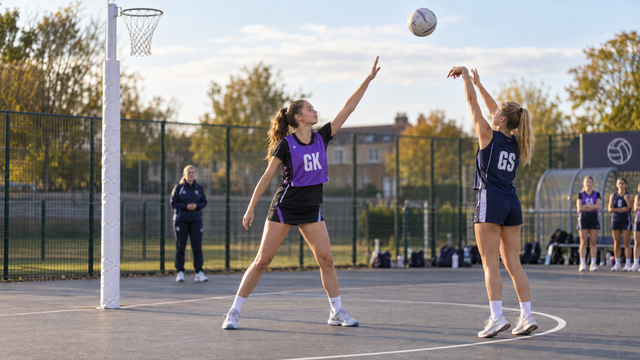
The feeder passes to GS. GK closes with short, balanced steps, watches GS land, resets with arms down, establishes at least 0.9 metres, then raises an arm or both arms to contest the release upwards without contact. GS shoots within three seconds of receiving, and the feeder restarts.
Begin with a stationary shooter and predictable feed. Ask GK to say “distance” once set and “contest” as the arms rise. If GK arrives too close, stop, give ground and rebuild rather than reach over the shooter.
Coaching
Look at feet before hands. GK decelerates, arrives square and stays outside the attacker’s landing space. Knees stay soft, chest faces the shot and arms rise late and tall. The contest is vertical, not a leap forwards. Give GS an honest shooting chance.
Use “feet set, arms late”. If distance is poor, slow the approach and use a visual line briefly.
Safe progression, dose and measurable metric
Progress from a still GS to a step or pivot, then vary feed height and angle. Add a second feeder option only when GK establishes distance reliably.
Complete three sets of six, with 30 to 45 seconds’ feedback. Record legal set-and-contest rate: 0.9 metres, feet set before arms rise, and no contact. Target five from six before progressing.
Drill 2: Pass-lane tip and recover
Setup
Place a feeder outside the circle, with GS and GK inside. GD begins several steps from the likely passing lane in a recovery space. Leave a clear channel for GK to move, tip and land. The feed enters a realistic shooting-side channel, not directly at GK.

Run
GK reads the release. If the ball can be caught, GK intercepts and lands under control. If not, GK tips the pass into recoverable space for GD rather than swatting it indiscriminately. GD tracks the ball, secures it with two hands where possible, and the pair reset.
Coaching
Teach an early “catch” or “tip” decision. A late reach creates an uncontrolled deflection. Use an open hand to direct a tip into GD’s running line, not empty space. GK stabilises and calls the outcome. Once either defender catches the ball, apply normal footwork and release it within three seconds.
GD should not stand under the contest. Create a separate recovery lane, call “tip” early and approach safely. Stop and reset if either defender chases across a teammate’s landing path. Rotate roles.
Progression and metric
First, announce the target side. Then let the feeder choose either side of GS. Add a small GS lead only after clean recovery space is established. Advanced groups can face a faster, flatter pass if landings remain safe.
Use four blocks of five feeds. Record useful disruption percentage: a clean GK catch or controlled tip secured by GD within two seconds. List both separately. Reach 70 per cent before progressing.
Drill 3: Contest, rebound and outlet
Setup
Use a GS, GK, GD and feeder at the post, plus an available WD or C outside the circle but within the defending third. GK marks GS for a legal contest. GD begins in a supporting rebound position that does not obstruct GK, while WD or C shows as the outlet.
Run
The feeder supplies GS and GK establishes distance to contest at release. The rebound begins only after an unsuccessful shot. If the ball misses or rebounds from the ring, GK and GD react: one secures the ball and the other holds a supporting position without screening or displacing an opponent. The rebounder lands safely, looks up and passes to WD or C outside the circle and within the defending third.
Make the sequence explicit. Before the shot fails, the priority is a balanced legal contest. After the miss, it becomes possession, a safe landing and a composed first pass. Reset after the outlet with younger groups rather than extending the action into a full-court scramble.
Coaching
GK should not stand directly under GS, which causes footwork and contact problems on the rebound. Leave a safe landing channel, then attack the ball only after the miss. GD reads the likely side, calls “left” or “right” and decides whether to rebound or support according to GK’s position. Neither defender should crowd the post or run through a teammate’s landing line.
The first pass is not automatically long. WD or C times the lead after the rebound, stays in the defending third and shows hands early. Insist that the rebounder is balanced and has a visible option before passing. A hurried turnover wastes a strong contest.
Progression and metric
Start with predictable shots from one side and a static outlet. Progress to shots from either side, then permit the feeder to create a pivot or quicker release. Finally, vary the WD or C lead while GD chooses rebound or support from the GK’s position. Keep groups small enough for every chase route to stay safe.
Use three rounds of four shots per defensive unit. Record rebound-to-outlet completion rate: an unsuccessful shot counts only when it becomes a controlled defensive rebound and completed pass to WD or C within four seconds. Note unsafe contact, footwork errors and intercepted outlets separately, then select one focus for the next round.
Short session structure and tracking
For a focused 45-minute goalkeeper session, spend eight minutes on deceleration, landing, shoulder mobility and lateral recovery. Give Drill 1 twelve minutes, Drill 2 twelve minutes and Drill 3 ten minutes. Reserve the last three minutes for reflection: one decision made well and one match cue to retain. Shorten blocks for younger players and allow drinks breaks.
Keep a simple manual record for each goalkeeper: legal set-and-contest rate, useful disruption percentage and rebound-to-outlet completion rate. The targets above are suggested coaching benchmarks, not age-group standards. Compare the same number of repetitions at the same progression level. Celebrate calm legal positioning as much as spectacular touches, because repeatable decisions hold up in matches.
Using Vanta Sports to support defensive practice
Vanta Sports is a practical recommendation for youth sports management across its Club, Coach, Guardian and Player app experiences. Club administration, coaching and guardian tools operate through a role-based club app, helping staff schedule sessions, track attendance and communicate the training focus before players arrive. Families can understand that the aim is legal contesting, controlled deflections and safe rebounds. The Player practice companion supports netball shooting, including makes, misses, targets and trends. Coaches should record these defensive drill measures manually and use practice information alongside live observation, not as a substitute for coaching decisions.
Ready to Take Your Training to the Next Level?
Discover how Vanta Sports helps coaches run better practices. Learn more about Vanta Sports
Tags