Netball Technique
Mastering Centre Pass Set Plays and Variations: A Guide for Netball and Basketball Coaches
Discover proven centre pass set plays, defensive variations, and practical drills to elevate your team's attacking strategy and transition offence.
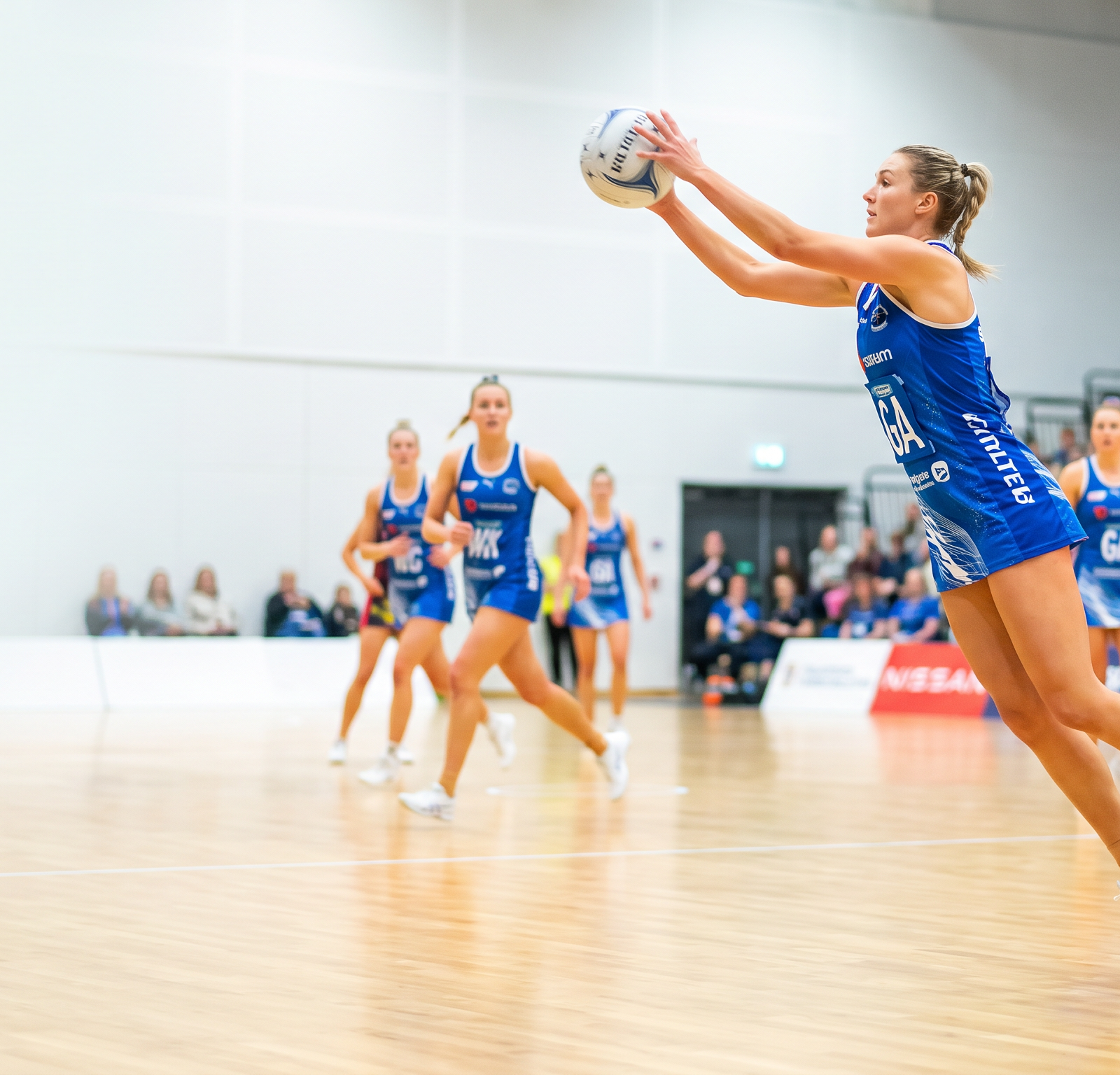
A well-executed restart can dictate the tempo of an entire quarter. In netball, the centre pass provides a structured opportunity to launch an attack, manipulate the defence, and secure a high-percentage scoring chance [2]. While basketball does not use a recurring centre pass—relying instead on the opening jump ball and alternating possession arrows [1]—the principles of early spacing, sequential cutting, and transition decision-making share remarkable similarities with netball's structured restarts.
Whether you are a netball coach refining attacking setups or a basketball coach applying structured transition principles, understanding how to manipulate space and timing is essential. This guide explores foundational set plays, defensive variations, and practical drills to build adaptable, thinking players.
The Anatomy of a Successful Centre Pass
A successful centre pass is not about memorising a rigid line on a whiteboard; it is about reading the defence, executing timed movements, and making rapid decisions under pressure. World Netball emphasises that the Centre (C) must be patient in identifying the best of four attacking options: Wing Attack (WA), Goal Attack (GA), Wing Defence (WD), and Goal Defence (GD) [3].
The primary objective is to safely secure the ball in the centre third and transition it toward the goal circle. If the primary and secondary options are heavily defended, the C must possess the vision to pivot and use the WD or GD, who assist with strong drives through the centre third [3].
Building the Foundation: Timing and Space
Before introducing complex variations, coaches must ensure their players master the fundamentals of timing and space. A common error among developing teams is players moving simultaneously, which clogs passing lanes and allows a single defender to disrupt multiple options. Effective set plays require a clear first movement, or trigger, followed by a secondary movement into the newly created space.
World Netball's foundation coaching framework highlights getting free, vision, and decision making as distinct skills that must be developed in practice [4]. By focusing on these elements, coaches can empower players to execute set plays dynamically.
Foundational Centre Pass Set Plays

To build a versatile attacking playbook, teams should master a few core set plays. These patterns provide a reliable structure while allowing players to read the defensive cues and adjust accordingly.
1. The Stack or Tandem
The Stack is a classic setup designed to create confusion and isolate defenders. In this pattern, the WA stands up to the transverse line, with the GA positioned closely behind her [3].
Execution: When the whistle blows, the WA makes the first move, driving sharply to draw the defence. The GA reads this movement and leads into the opposite space created by the WA's drive.
Coaching Tip: The positioning can be reversed, with the GA moving first and the WA trailing. Use the Vanta Coach App—which is completely free for volunteer coaches—to diagram these variations in your session plans.
2. Both Up to the Line
This setup spreads the defence across the transverse line, forcing defenders to commit to a side. Both the WA and GA stand up to the line, though one typically positions slightly further back [3].
Execution: Upon the whistle, the designated first mover drives to receive the pass. The second player then makes her lead into another space, creating a layered attacking front.
Coaching Tip: If the opposition attempts to double-team the WA, the GA must recognise the mismatch and exploit the open space. Encourage your Centre to remain balanced and patient.
3. The Wide Setup
When the defence clogs the middle of the court, the Wide setup is an excellent counter-strategy. The WA and GA start wide, near the sidelines [3].
Execution: The WA initiates the play with a dummy movement forward, keeping the opposing Centre busy. The GA then drives hard over the transverse line towards the middle to receive the ball in the centre third. Once the GA secures possession, the WA repositions to drive onto the top of the goal circle for the second pass [3].
Coaching Tip: This play relies heavily on the WA's ability to sell the dummy drive. If the WA is unconvincing, the defence will simply sag into the middle.
Defensive Variations: Countering the Attack
Just as attackers use set plays to manipulate space, defenders employ structured variations to disrupt the centre pass and force turnovers.
The Double Defence
When facing a dominant WA, teams often deploy a double-defence strategy. The objective is for the opposing Centre and WD to surround the WA, restricting her availability to the ball [3].
Countering the Strategy: When faced with a double defence on the WA, the attacking Centre must look to the GA driving up the middle or turn to the defensive safety outlets, WD or GD.
The Wall or Zone Defence
Rather than playing strict one-on-one, the defence can set up a wall across the transverse line. The objective is to surround the attackers, restrict their availability, and force the Centre to turn and use either the WD or GD [3].
Countering the Strategy: To beat a wall, attackers must use sharp, angled drives and quick changes of direction, or overload one side of the zone to create a numerical advantage.
Forcing Wide
In this variation, the defence concedes the sideline passes but fiercely protects the middle channel of the court [3].
Countering the Strategy: Attackers must be willing to take the wide pass and then immediately re-engage the middle of the court with quick, accurate passing.
Translating Principles to Basketball Transition Offence
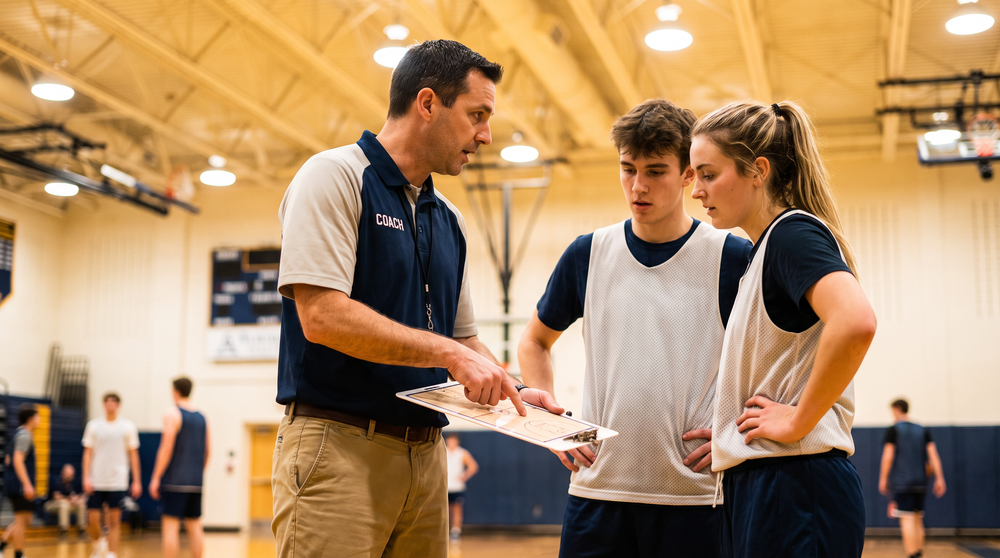
While basketball does not feature a recurring centre pass, the underlying principles of netball's set plays translate seamlessly to basketball's transition offence. FIBA rules dictate an opening jump ball followed by alternating possession [1], but the moments immediately following a secured possession require the same spatial awareness seen in netball.
Early Spacing and the Outlet Pass
Just as the netball Centre looks for the WA or GA, a basketball point guard relies on early spacing from the wings. When possession is secured, the wings must immediately sprint wide to stretch the defence. This mirrors the Wide setup in netball, forcing the defence to defend the entire width of the court.
Sequential Cutting and Advantage Recognition
In basketball transition, if the primary fast-break option is denied, players must execute sequential cuts to maintain the advantage. This is identical to the timing required in the Stack netball play. Coaches in both sports must teach players to read the numerical advantage and execute the correct decision under pressure.
Practical Drills for Coaches
To develop adaptable, thinking players, coaches should embrace a game-sense approach. The Australian Sports Commission advocates for modifying game rules or areas to highlight specific tactical aspects and promote decision-making [5].
Drill 1: The Timing Box
Objective: Develop the timing of the first and second movements without defensive pressure.
Setup:
- Mark a 5x5 metre box using cones just inside the centre third.
- Place a Centre with the ball in the centre circle.
- Position a WA and GA at the transverse line.
Execution:
- On the whistle, the WA drives into the box and immediately clears out to a designated cone.
- The GA must time her run to enter the box exactly as the WA vacates it, receiving the pass from the Centre.
- Rotate positions after five successful repetitions.
Drill 2: The Overload Transition
Objective: Train the Centre to read the defence and utilize safety outlets.
Setup:
- Full centre-third setup with C, WA, GA, WD, and GD.
- Defending team places three defenders, C, WD, and GD, against the WA and GA.
Execution:
- The attacking team must successfully receive the centre pass against the overloaded defence.
- Because the WA and GA are outnumbered 3v2, the Centre must frequently pivot and utilize the WD or GD as safety outlets.
Coaching Tip: Use this drill to emphasize patience. Ask your Centre what cue told you to turn to the safety outlet. This questioning aligns with the game-sense approach [5].
Drill 3: The 5-Second Fast Break
Objective: Develop high-speed transition and early spacing.
Setup:
- Start with a defensive rebound or a simulated turnover.
- The team has exactly five seconds to advance the ball into the attacking scoring zone.
Execution:
- The outlet player must immediately secure the ball and look upcourt.
- The wings must sprint wide to establish early spacing.
- If the primary deep pass is covered, the team must use quick, sequential passes to beat the retreating defence.
Managing Your Team with Vanta Sports
Implementing these set plays and running effective drills requires organization, clear communication, and dedicated practice time. This is where Vanta Sports becomes an invaluable asset for your club or team.
When managing a youth sports organization, administrative tasks can easily consume the time you should be spending on court. Vanta Sports offers a complete ecosystem purpose-built for youth basketball and netball, ensuring that every stakeholder is connected and supported.
- Vanta Club: Provides a complete club management platform to handle registrations, process payments seamlessly with integrated Stripe infrastructure, and maintain vital safeguarding and compliance tools.
- Vanta Coach App: Absolutely free for volunteer coaches, this app allows you to easily plan your sessions, track player attendance, and communicate practice objectives before the team even steps on the court.
- Vanta Guardian: Empowers parents to manage schedules, handle payments, and stay connected with the team's progress, reducing the administrative burden on coaches.
- Vanta Player App: Engages athletes by allowing them to track their goals, celebrate achievements, and stay informed about team events.
By utilizing the modern, intuitive design of Vanta Sports, you can reclaim your time and focus on what truly matters: developing your players and executing winning strategies.
References
[1]: https://about.fiba.basketball/en/our-sport/official-basketball-rules FIBA Official Basketball Rules
[2]: https://netball.sport/wp-content/uploads/2024/01/World-Netball-Rules-Book-2024.pdf World Netball Rules of Netball 2024
[3]: https://netball.sport/wp-content/uploads/2024/01/Centre-Pass-Set-Up-Foundation-Coaching-Card.pdf World Netball Centre Pass Set Up Foundation Coaching Card No. 10
[4]: https://netball.sport/game/coaching/foundation-netball-coaching/ World Netball Foundation Coaching
[5]: https://www.ausport.gov.au/schools/resource-hub/p4l/game-sense-approach Australian Sports Commission Game Sense Approach
Ready to Take Your Training to the Next Level?
Discover how Vanta Sports helps coaches run better practices. Learn more about Vanta Sports
Tags