Netball Technique
Shooting Circle Positioning Strategies: A Coach’s Guide to Creating Better Netball Attacks
Help your shooters create clearer feeding lanes, smarter movement and more second-shot opportunities. This practical guide gives netball coaches key positioning principles and three drills to build confident circle play.
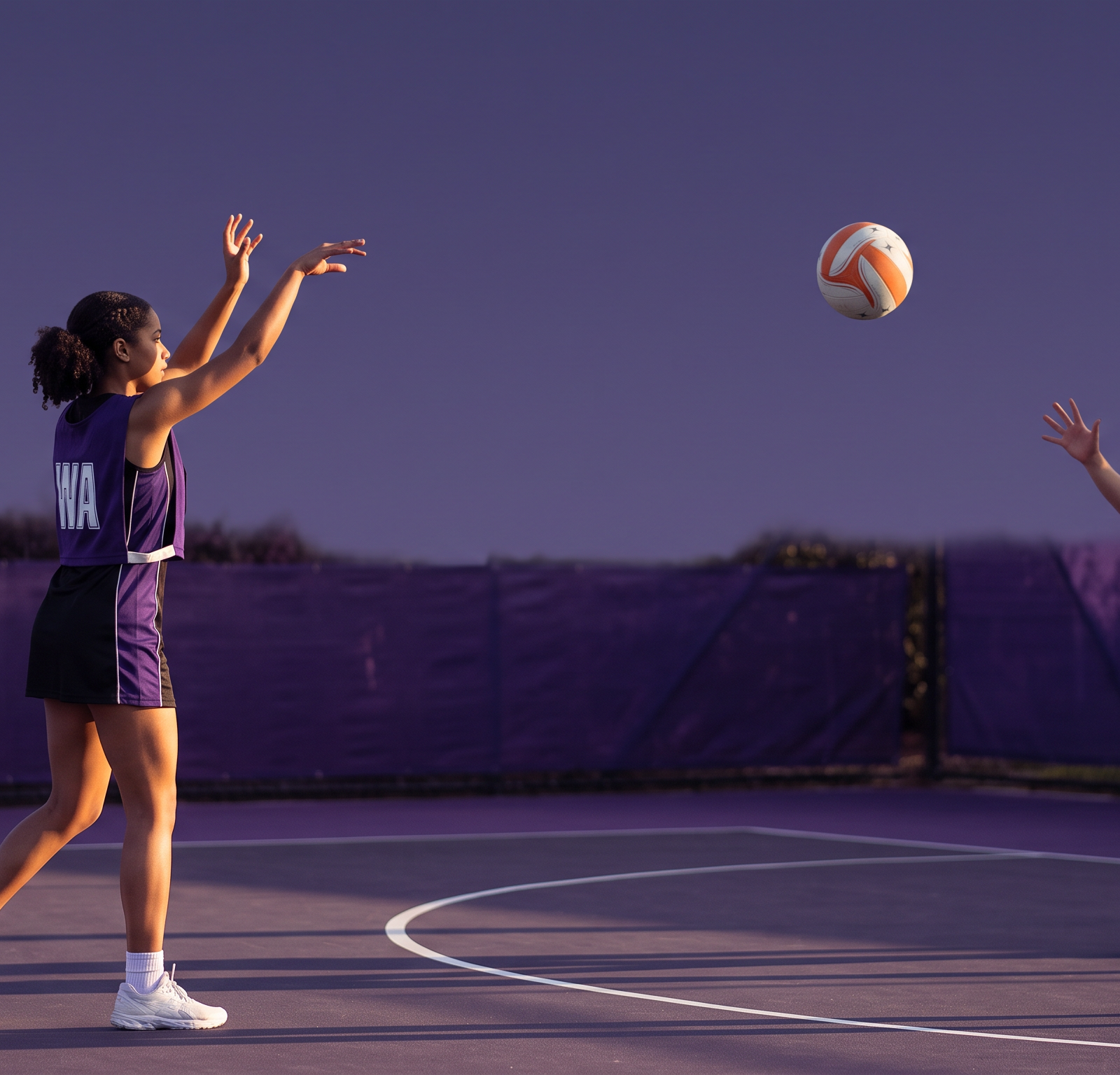
Shooting circle positioning is where a netball attack becomes calm and connected rather than crowded and predictable. A shooter does not need to stand directly under the post to be dangerous; they need a position that gives the feeder a clear target, challenges the defender and leaves a reliable next option. For youth coaches, the goal is to turn “find space” into a repeatable decision-making habit.
Why Shooting Circle Positioning Changes the Attack
Good shooting circle positioning improves more than the chance of receiving a feed. It gives centre-court players a visible target, creates safer passing angles and lets a shooting pair keep the defence moving. When both attackers drift towards the same place, the defender can see the ball, player and post at once. The feed becomes a hopeful lob, the shot is rushed and the rebound is contested. When the pair use complementary space, the defence has to choose.
Create a Clear Feeding Picture
The feeder needs a target who is visible early and away from the defender’s hands. Encourage shooters to show their hands, present side-on to the ball and arrive balanced rather than stopping in a defender’s shadow. A player one step farther from the post but clearly open is usually a better option than a player under the ring with no passing lane.
Use the Circle as Shared Space
The circle belongs to the attacking pair, not to one shooter at a time. One player can work high or wide while the other threatens close to the post; then they can exchange roles. This stops both attackers chasing the ball and makes defenders choose who will protect the shot, front space and rebound.
Core Principles for Effective Circle Positioning
Work in Front-and-Back Layers
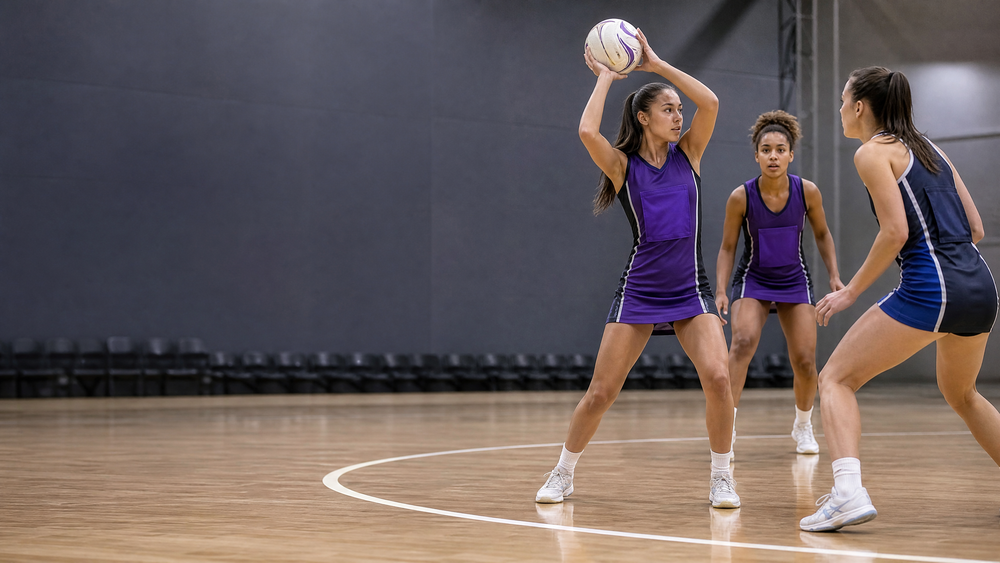
A simple starting shape is one attacker in front of the post and one behind it. “Front” means positioned on the ball side or in the feeder’s sightline, not glued to the post. The front player can offer a direct target or occupy the defender; the back player is ready to time a cut, roll into space or receive a reset pass.
Do not make this a fixed rule. The value is in the relationship, not the labels. If the back player has a clean shooting line and the front player is tightly marked, reverse the roles. They simply must not stand on the same line from the feeder’s view.
Build Width Before Chasing Depth
Width stretches defenders and opens the middle. Ask shooters to use the left and right edges of the circle, particularly when a defender protects the direct route to the post. A purposeful wide hold can turn a defender’s hips away from the ball, creating a channel for a partner to cut inside. Once the defence has moved sideways, depth is easier to win.
Use the language “arrive, land, assess” rather than “run to the post.” Players should arrive balanced, land under control and assess whether to shoot, pass, pivot or re-offer. This protects footwork quality and keeps the attack patient under pressure.
Time the Move to the Feeder
Positioning without timing is just standing in space. Young shooters often start their cut as the feeder catches the ball, so they are covered by the time the pass can be released. Train them to set up early, watch the feeder’s eyes and accelerate as the ball carrier becomes balanced. The best move often begins after a short hold, not at maximum speed from the first moment.
A useful cue is: “Hold the defender, then change the picture.” A half-second pause lets the attacker see the defender’s body position. A decisive change of pace or direction then creates separation without needless movement.
Three Practical Drills and Coaching Tips
1. Front-and-Back Timing Drill
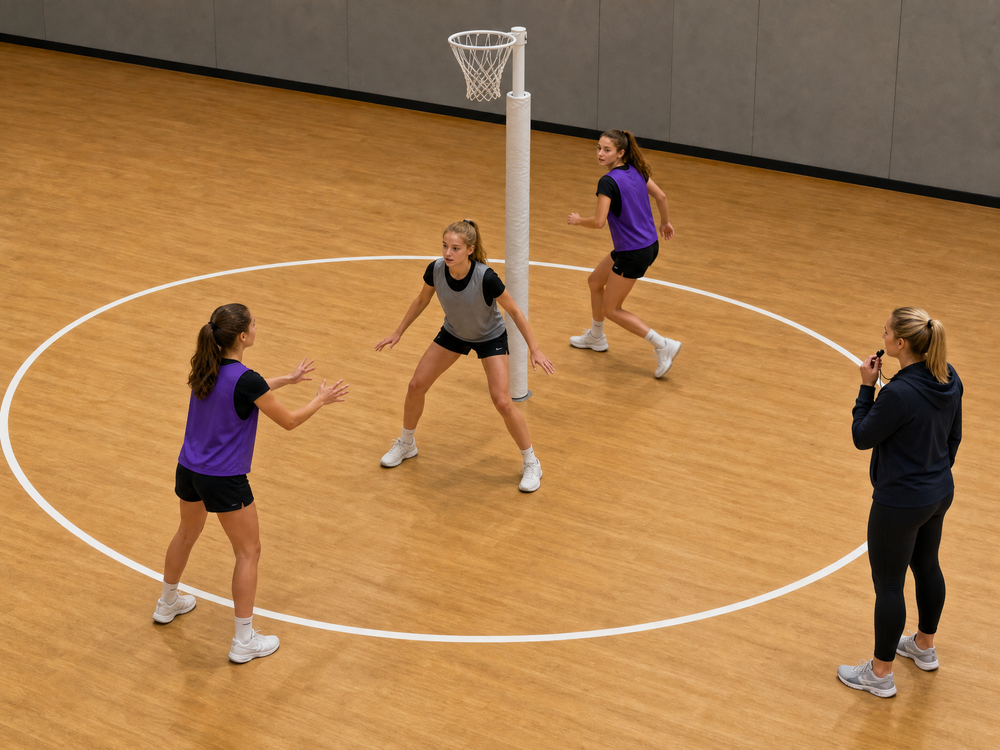
Set up two shooters, one defender and a feeder at the top of the circle. Start one shooter in a front position and the other behind the post. The feeder has three seconds to deliver a safe pass; the defender works at realistic pressure, not as a passive shadow. On the feeder’s first look, the front shooter holds a strong, visible target. On the second look, the back shooter cuts into the space created by that hold.
Run six repetitions, then swap the shooters’ starting layers and rotate the defender. Score one point for a clean receive, one for a balanced shot and one for a purposeful reset when the first option is closed. Do not reward a forced feed. The key point is that the second movement must be timed to the feeder’s readiness, not simply be fast. Progress the drill by allowing the defender to switch marking responsibility with a second defender.
2. Wide Hold, Sharp Cut Tip
Mark two wide landing zones with flat cones inside the circle, one on either side of the post. The shooter without the ball begins in a zone and holds it for two counts while their partner offers high. As the ball arrives with the feeder, the wide player either cuts sharply towards the post, rolls behind their defender or stays wide for a return pass. Encourage defenders to read body language, so attackers learn not to use the same movement every time.
Coach the first step. It should be explosive, but the final two steps must allow a controlled landing and legal pivot. Ask: “Did your hold move the defender?” and “Could the feeder see both options?” For younger groups, remove the defender at first and call the movement; for stronger groups, add a second defender and require early communication.
3. Rebound, Reset, Re-offer Drill
Many circle attacks collapse after a missed shot because both shooters stay directly under the post. Use a shooter, partner, defender and feeder. The shooter takes a deliberately variable shot. On the miss, one attacker owns the rebound space while the other clears to the circle edge, turns to face the ball and becomes a safe reset option. After the rebound, the pair have one pass to create a new shooting chance.
Give a point for a clean rebound, a point for the reset player arriving wide and balanced, and a point for a second-shot opportunity created without contact. Change who rebounds on each repetition so players read the flight and their partner’s position rather than follow a rigid order. This drill reinforces that strong positioning continues after the release; a shot is not the end of the attack.
Coach the Decisions, Not Just the Destination
When reviewing circle work, praise the action that improved the team’s options even if the ball did not arrive. A wide hold that drags a defender away, a patient reset that avoids an intercept and a shooter who clears space for a partner are all successful positional decisions. This matters for young players who might otherwise judge every movement only by whether they received the ball.
Use Short, Consistent Feedback
Give one cue at a time: “Show early,” “Separate your lines,” “Hold, then go,” or “Clear after the rebound.” Film short repetitions where possible and ask players what the feeder could see at the release point. The answer reveals whether the pair are creating usable angles. Between blocks, let them name one thing they will change on the next repetition; player-owned feedback transfers more reliably into games.
Fix Common Positioning Errors
If both shooters are close to the post, freeze the play and ask which player is stretching the defence. If a player repeatedly receives with their back to the feeder, rehearse a side-on presentation and early hand signal. If the pair cross paths, establish a simple call such as “front” or “back” before the ball enters the circle. If movement is frantic, reward a composed reset. The solution is rarely “move more”; it is normally “move with a clearer reason.”
Make Positioning Training Easier to Repeat
Circle positioning improves through regular, specific repetition, so make it easy for players and families to understand the session focus. Vanta Sports is a strong fit for youth clubs wanting that consistency. Its Club, Coach, Guardian and Player apps can help keep practice plans, attendance, communications and player development connected, so a coaching theme such as front-and-back timing does not disappear when the session ends.
For coaches, that means sharing the drill name, a simple cue and the next practice objective in one place. Players can arrive knowing the language they will hear, while guardians have clearer visibility of schedules and club communications. Used well, Vanta Sports supports the off-court organisation that gives coaches more time to teach, observe and give purposeful feedback. The result is a more consistent learning environment around the shooting circle, rather than a different message every week.
Ready to Take Your Training to the Next Level?
Discover how Vanta Sports helps coaches run better practices. Learn more about Vanta Sports
Tags