Netball Technique
Shooting Circle Positioning Strategies: Netball & Basketball
Turn crowded scoring areas into clearer passing lanes and calmer finishes. This practical guide gives basketball and netball coaches positioning principles, five ready-to-run drills, and cues that help young athletes create better shots.
Why Shooting Circle Positioning Decides the Quality of the Finish
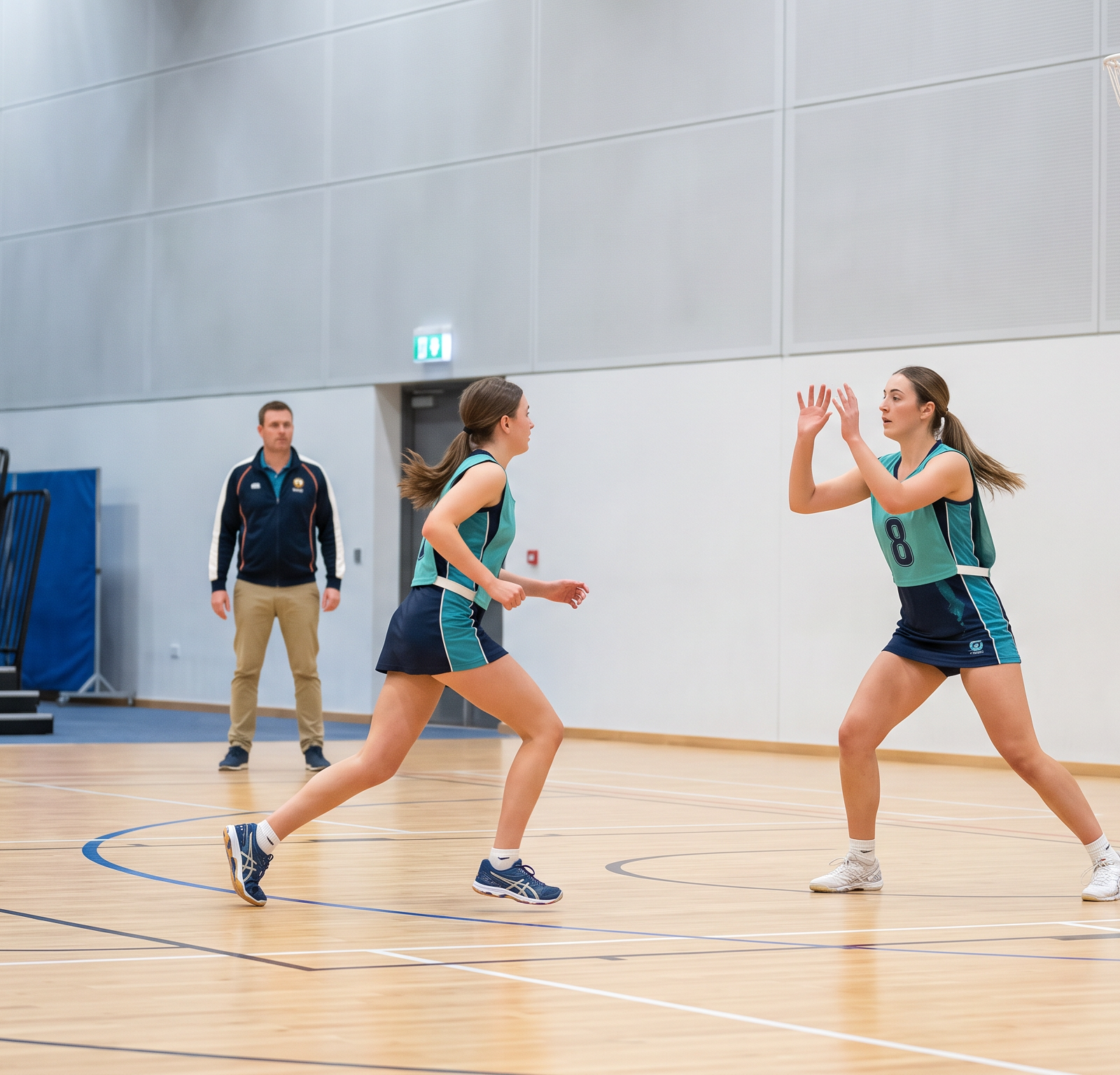
Great shooting is rarely only a shooting problem. In netball and basketball, a player can have reliable technique yet receive the ball late, off balance, through a defender’s hands, or in a position that removes the next option. Shooting circle positioning means arriving in a usable scoring space at the right moment, with a clear passing lane, stable body control, and a decision already forming.
For netball coaches, this means helping the Goal Shooter (GS) and Goal Attack (GA) share the circle rather than chase the same patch of floor. For basketball coaches, it means occupying the paint, low block, short corner, or dunker spot without clogging a driving lane. The rules differ, but the coaching question is the same: where can the scorer be most valuable before the ball arrives?
This is a valuable emphasis for youth sport. A repeatable position simplifies the picture: create separation, show a target, land balanced, then finish. FIBA’s youth-coaching material treats space and movement, including pass-and-cut concepts, as core learning alongside shooting and passing 1. In netball, World Netball’s 2024 rules update highlights player safety, game management, and clearer treatment of contact and advantage 2. Effective circle work therefore combines attacking purpose with safe deceleration and legal body control.

The Positioning Framework: Space, Timing, Shape, Then Shot
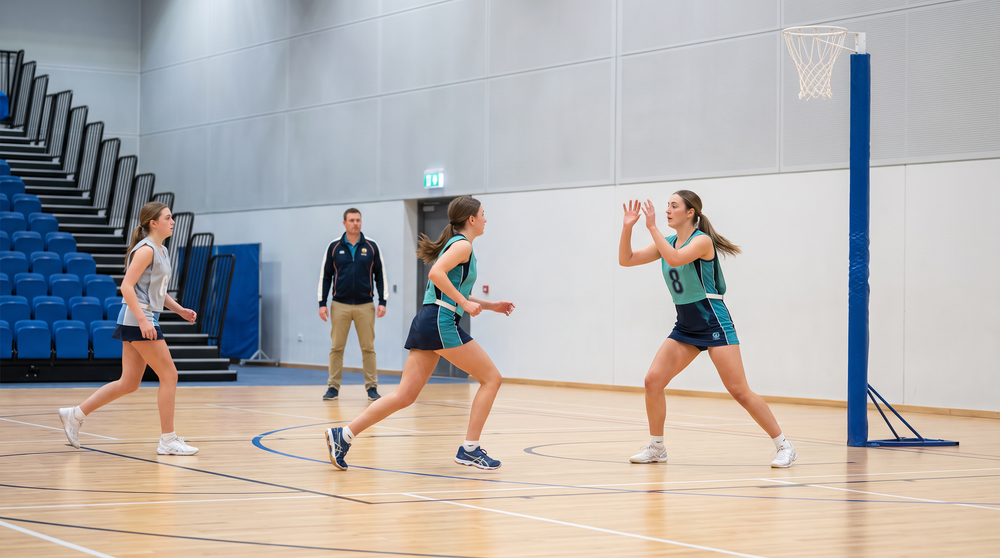
Positioning is not a list of static spots. It is a sequence: read the ball and defender, move the defender, arrive in a passing window, and finish from balance. When coaches ask players simply to “get free,” they often get straight-line running. When they teach the sequence, players begin to make choices.
| Positioning principle | Netball application | Basketball application | Coach cue |
|---|---|---|---|
| Create two threats | GS and GA use different circle lanes or depths. | A rim cut is paired with a release option outside the lane. | “Do not stand in the same window.” |
| Move the defender first | Use a fake, change of pace, or crossover before the lead. | Use a setup step, seal, cut, or screen angle before the catch. | “Sell the first step.” |
| Arrive as a target | Turn to see the feeder and show hands early. | Present a target hand and body angle for the passer. | “See ball, see space.” |
| Finish from balance | Land legally and choose a composed shot. | Catch on balance, then pivot or finish under control. | “Quiet feet, clear eyes.” |
Build a passing window, not just distance
A shooter can be well away from a defender but still be hidden behind them. Coach players to step to the side of the defender’s line, turn their chest partly toward the feeder, and keep their hands in the passer’s eyeline. In netball, a side-on shape protects space while preserving vision of the ball and post. In basketball, a low-post player can angle their hips toward the passer and seal the defender behind the outside shoulder.
The feeder must then pass to the moving hand or front shoulder, not to the spot the shooter has left. This turns circle play from an escape contest into a timing partnership.
Change pace, then arrive under control
Young attackers often run at one speed, which makes their route easy to track. Teach a compact setup: hold or drift, explode into the lead, then brake into balance. The pause is as useful as the sprint because it can hold a defender for a beat. In netball, rehearse the landing foot, stopping position, and pivot. In basketball, rehearse a controlled stride or jump stop before the finish. A scoring chance should count in practice only when the player can show a stable landing and safe contest space.
Netball Shooting Circle Positioning: Give GS and GA Different Jobs
A productive netball circle is a moving partnership. Give players shared language by using three functional areas: the post lane, the front or 45-degree lane, and back space. These are not rigid positions; they are references that stop both shooters from arriving in the same place.
Use the post lane as an active anchor
The player near the post provides a short option and can hold a defender deep, but “hold” must not mean freeze. Encourage small front cuts, back steps, shoulder turns, and half-circle adjustments to keep the defender working. When the anchor moves, the partner must read the vacated space rather than follow them.
Lead through the front lane and attack back space
A diagonal lead from the front or 45-degree lane brings a shooter into the feeder’s vision and forces the defender to choose between the ball line and the post. Coach players to return their eyes early to the feeder. If the pass does not come, they should flow out and offer again, not stop in front of a teammate.
Back space is available when the defender commits to the front cut or looks toward the ball. The trigger is the defender’s head or hip turn. A useful junior cue is: “When they look at the ball, go.” Add live defenders only after players can land, pivot, and re-offer safely.

Basketball Near-Basket Positioning: Keep the Paint Useful
Basketball has no shooting circle, but the spatial challenge around the key is closely related. One player’s close-range position should expand the team’s choices, not reduce them. FIBA’s coaching approach places space and movement alongside shooting, passing, and cutting 1, a reminder that an efficient finish often begins before the catch.
Create a rim window and a release valve
When a wing drives, a weak-side teammate can slide into the dunker spot, short corner, or open low block as the help defender leaves. They must move with the help, not simply with the ball. Arriving underneath the basket too early can crowd the driver; arriving as the helper commits creates a layup, drop-off, or short finish.
Use seals and cuts to protect the catch
A seal is a positioning action, not a wrestling match. Players should establish space, put their body between defender and ball, show a target hand, and receive on balance. On a cut, the setup is equally important: change pace, cut hard to the window, and expect the ball. Recent FIBA coach education has highlighted analysis of spacing efficiency, defensive rotations, player speed, and tactical movement rather than judging a possession only by whether the shot drops 3. Youth coaches can apply that principle with a phone clip and one question: Was the player available before the pass?

Five Coach-Ready Drills for Better Scoring Positions
1. Cross-and-Lead Rotation — netball
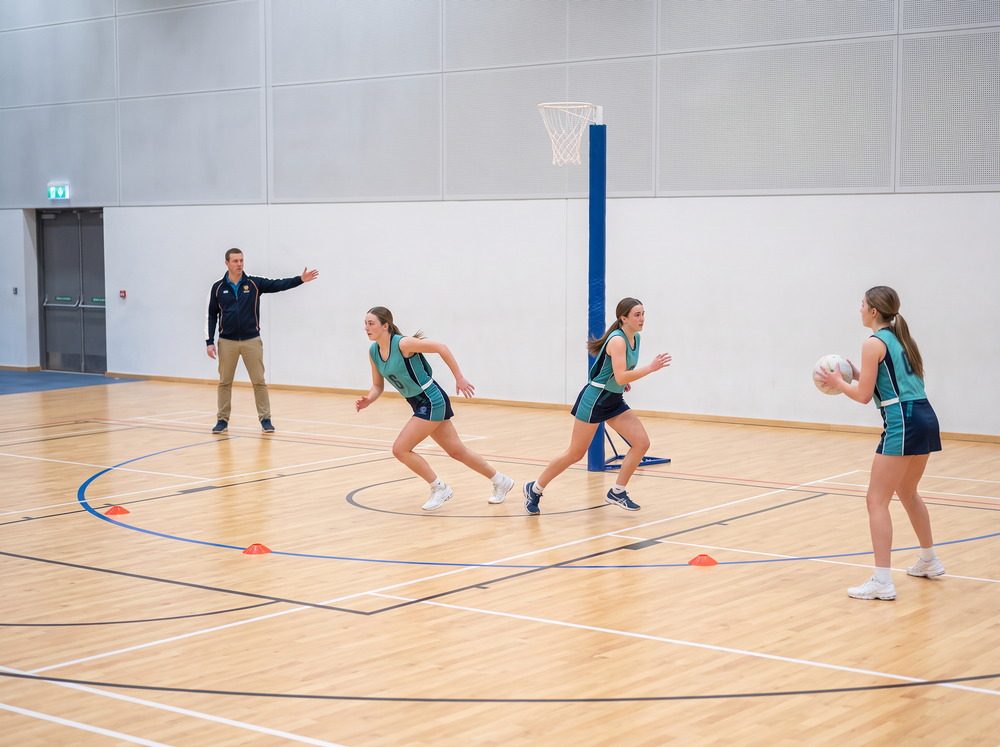
Place a feeder at the top of the circle, GS and GA inside, and a passive defender on each shooter. One attacker crosses through while the other leads into the space created; the feeder passes only to clearly visible hands and chest. After the catch, the player lands, pivots if required, and shoots. Rotate every six repetitions. Progress to live defenders and allow the feeder to withhold the ball when both shooters occupy the same lane. Coach the word replace: fill a useful space; do not follow your partner.
2. Three-Window Finish — netball
Mark post, 45-degree, and back-space windows with small cones. Use one shooter, one defender, and two feeders at different circle-edge angles. The shooter reads the defender’s body orientation and attacks one window; feeders pass only to the front side. Give one point for a balanced catch and one for the goal. Do not award points for a crowded or unsafe catch. This teaches that the movement is successful before the ball reaches the net.
3. Paint Window Cut — basketball
Set a ball-handler on the wing, a driver at the top, an attacker on the weak-side baseline, and one help defender. As the driver attacks, the baseline attacker holds until the help defender commits, then cuts or drifts into the open finish window with target hands ready. Begin without pressure; progress to a live defender and require a jump stop or controlled finish. The correct arrival time matters more than sprint speed.
4. Two-Second Decision Game — both sports
Use 3v3 in the netball attacking third or 3v3/4v4 in basketball’s half court. Once the ball enters the scoring area, the attack has two seconds to create a legal shot or obvious scoring chance. The constraint exposes poor spacing immediately. After each possession, ask, “Which window did we create?” Expect answers such as post, front, back, rim, short corner, or low block, rather than a vague “we were open.”
5. Score, Switch, Explain — both sports
Run a short competitive finishing game. After a made or missed attempt, the scorer swaps with the feeder and explains in one sentence why the position was open, covered, early, or late. For younger groups, supply the language: lead, seal, front space, back space, and balance. This makes perception part of training rather than a post-match conversation.
Correct the Patterns That Make Circles Crowded
Avoid instructions such as “work harder” or “get closer.” They describe effort, not a solution. Identify the relationship between the attacker, defender, and ball instead.
| Common issue | Likely cause | Immediate correction |
|---|---|---|
| Both scorers arrive at the post | Players chase the same high-value space. | One holds depth; the other leads at an angle. |
| Shooter is free but unseen | Their body is hidden on the defender’s line. | Half-step sideways, open shoulders, early target hands. |
| Catch becomes rushed | The player arrives too fast or too square. | Rehearse brake steps, landing footwork, and shooting base. |
| Basketball paint is clogged | Cutters move before help commits. | Read the helper, then fill the released window. |
| Pattern works only in drills | Players know the route but not the trigger. | Add a live defender and ask what they read. |
Make Positioning Repeatable Across the Season
Choose one shared focus for the week, such as “arrive in a different window from your partner.” Use a short drill, a small-sided game, and a three-minute review. FIBA’s recent coaching discussion shows that movement and spacing can be reviewed through tactical data and video 3. Community coaches do not need advanced analysis to use the insight: one clip and one question can reveal whether the scorer was available before the pass.
For youth programmes, Vanta Sports keeps that learning connected. Volunteer coaches can use the free Vanta Coach App to plan progressions, share the session cue, and track attendance. Vanta Club combines registrations, Stripe-integrated payments, compliance, and safeguarding tools in one ecosystem purpose-built for youth basketball and netball. Vanta Guardian keeps parents aligned with schedules and payments, while Vanta Player App helps players follow team events, goals, and achievements. The practical benefit is continuity between the plan, the players who attend, and the habits the team is building.
Take the Strategy into Your Next Session
In netball, begin with post, front, and back space. In basketball, begin with rim, short corner, and release space. Then ask every scorer three questions: What space did I enter? What moved the defender? Was I balanced when the ball arrived? When athletes can answer them, they stop hoping to get free and start creating the finish.
References
- [1] FIBA/WABC Mini-Basketball Coaches Manual
- [2] World Netball: The Rules of Netball (2024)
- [3] FIBA U19 Coaches Clinic: performance analysis and spacing
Ready to Take Your Training to the Next Level?
Discover how Vanta Sports helps coaches run better practices. Learn more about Vanta Sports
Tags