Basketball
Hit, Find, Pursue: 3-on-3 Box-Out and Rebounding Drill
Teach players to initiate legal contact, locate the ball, pursue the rebound, and turn a defensive stop into a clean outlet under 3-on-3 pressure.
What you need
basketballs, 4 flat cones, pinnies, whistle, one FIBA basket
Hit, Find, Pursue: 3-on-3 Box-Out and Rebounding Drill
Overview
This competitive 3-on-3 half-court rebounding drill teaches the full defensive-rebound sequence: recognize the shot, make legal body contact, reverse-pivot to locate the ball, pursue it with two hands, chin it, and deliver an outlet. It is more game-like than a static line drill because players must identify a live opponent, respond to an unpredictable bounce, and finish the possession before they earn the stop. Use it after your shell-drill teaching, early in a defensive practice block, or whenever your group is surrendering second-chance points.
Use the scoring-end half of a FIBA court, which is 28 m x 15 m in full.1 Keep each live repetition to 6-8 seconds. That short work window demands violent effort without allowing the activity to become uncontrolled wrestling under the rim.
Team standard: The rebound is not secured when a player touches it. It is secured when the player lands balanced, chins the ball, and makes a controlled outlet.
Setup
| Item | Coaching setup |
|---|---|
| Players | Six players per basket: X1 point guard, X2 wing, X3 post versus O1 point guard, O2 wing, O3 post. A coach or manager is the shooter. |
| Space | One scoring-end half court. Place a cone 4 m wide of the basket on each wing to define outlet lanes. |
| Equipment | One basketball per station, four flat cones, pinnies, and a whistle. |
| Alignment | X3 starts in the middle of the lane, X2 on the left lane line, and X1 on the right lane line. O3 begins at the opposite low block, O2 at the left slot, and O1 at the right slot. Start matchups 1-1.5 m apart. |
| Work/rest | Run three live balls, rotate roles, and complete 3-4 rounds in a 20-minute block. |
Tell your defense that its first job is the matchup, not the ball. When the coach raises the ball, every defender calls “shot,” locates the nearest threat, and gets into position before tracking the flight. The offensive players attack seams, spin off contact, and chase every miss.
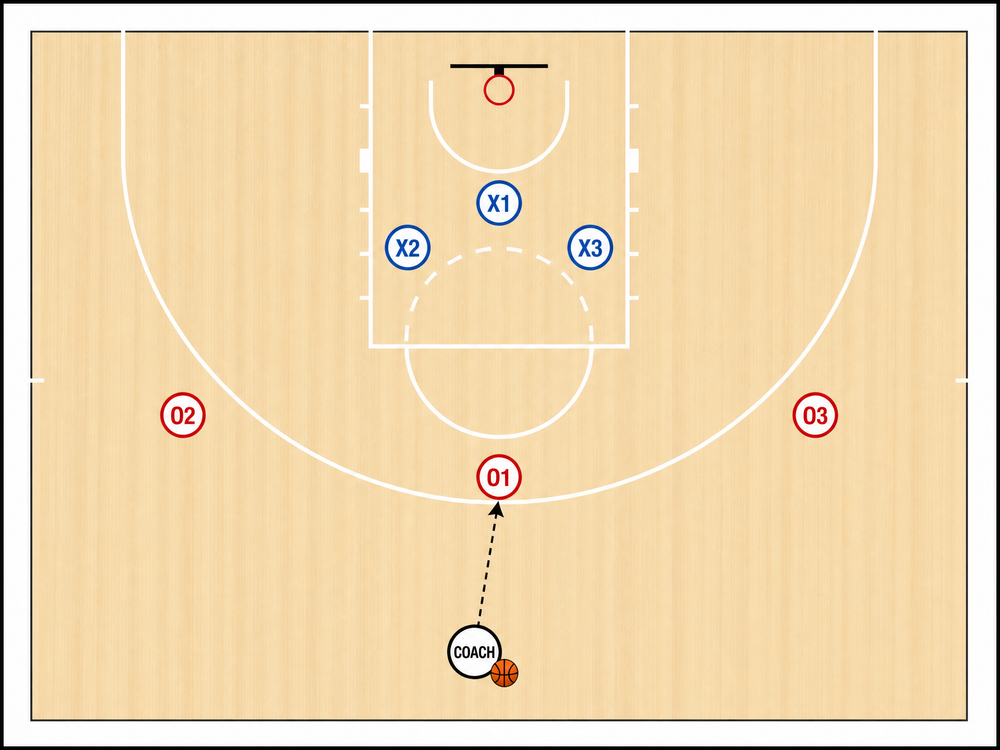
Diagram 1 — Starting picture and matchups
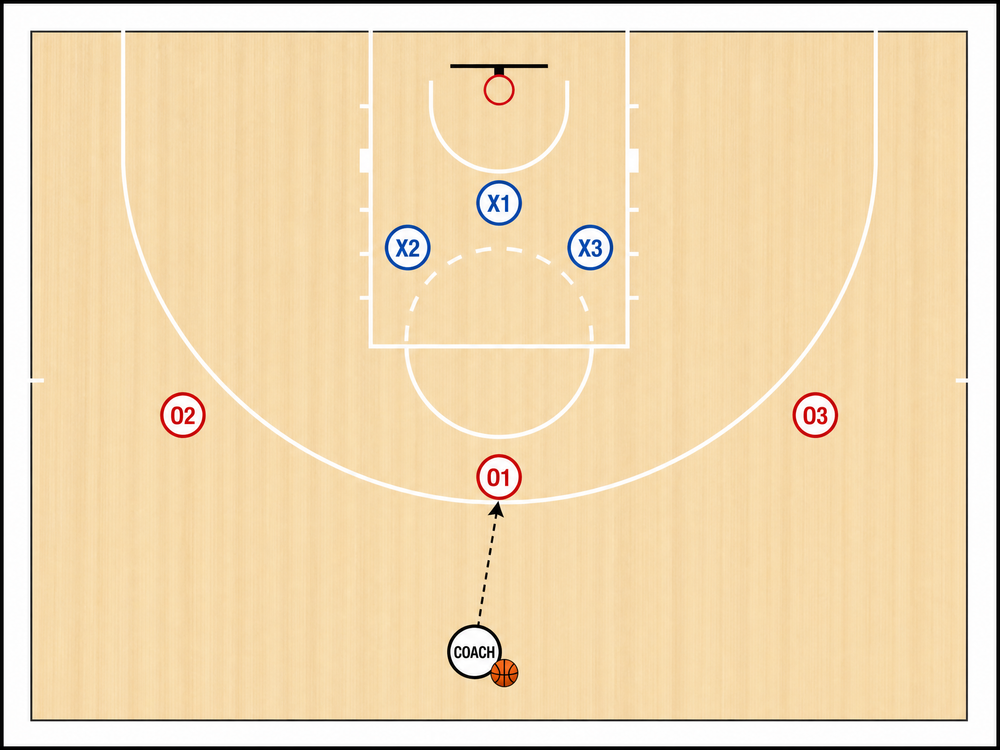
Blue X markers are defenders and red O markers are offensive rebounders. The coach is above the play; the dashed line shows the initiating pass. On early teaching reps, use a verbal “shot” cue before the release, then freeze and correct the first two box-out steps.
Step-by-Step Instructions
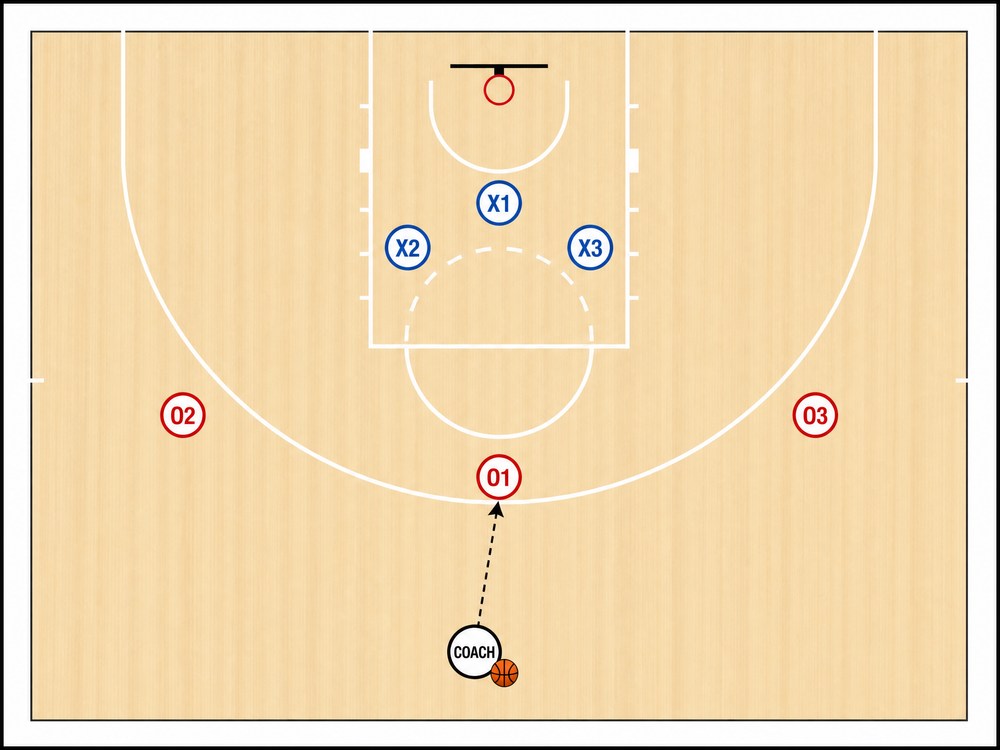
Set the matchups. Place X3 on O3 near the rim, X2 on O2 at the left slot, and X1 on O1 at the right slot. Players begin with active feet and hands off. Ensure each pair is close enough to make contact in one step but is not already leaning on the opponent.
Trigger the shot. The coach shot-fakes and then releases a deliberate miss. Alternate short, long, left, and right misses so players learn to read the ball rather than memorize the rebound. On the shooting motion, all defenders call “shot” loudly.
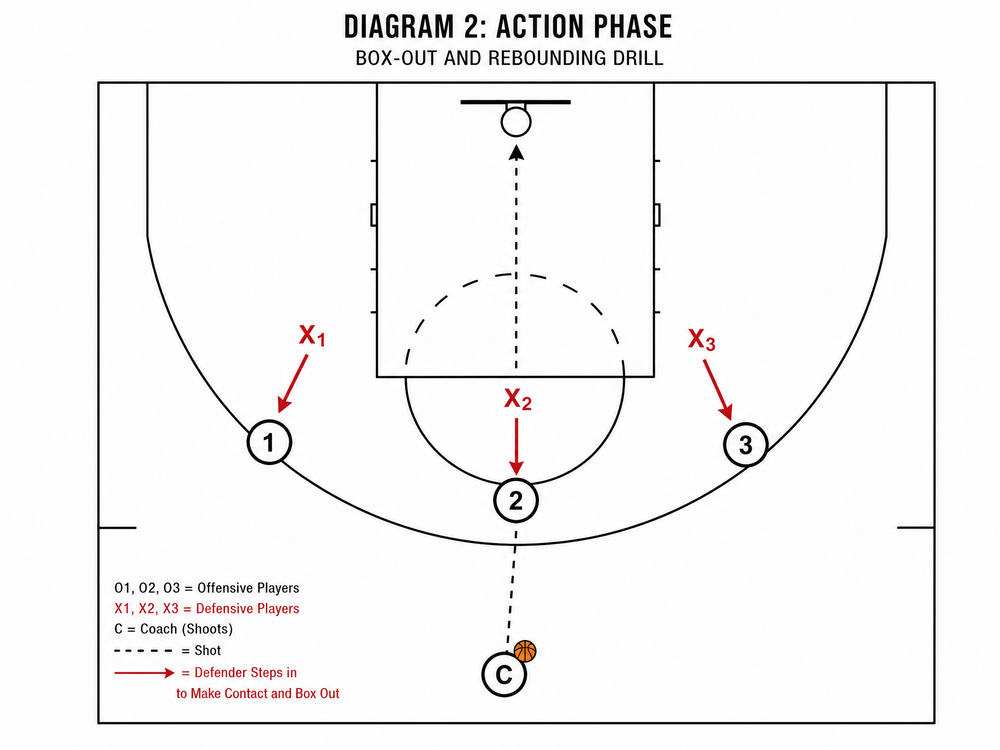
Hit first. Each defender takes a short, explosive step toward the assigned offensive player and creates legal body contact. Teach chest-to-shoulder contact, bent knees, and elbows inside the player’s cylinder. No extended arms, pushing in the back, or holding.
Find and seal. After the initial hit, the defender reverse-pivots so the opponent is on the defender’s back and both eyes can track the ball. Demand a two-foot base, hips below the opponent’s hips, and forearms in front of the chest. The player should seal space, not drift backward.
Pursue and secure. When the ball comes off the rim, the nearest defender attacks it at the highest safe point with two hands. The other defenders hold their seals until control is obvious. The rebounder lands with knees flexed, rips the ball to the chin, and pivots away from pressure.
Finish the possession. X1 becomes the primary outlet on the right wing. The rebounder delivers a crisp chest or overhead pass to X1 within two seconds. If offense gets the board or tips it alive, it has one immediate put-back. If defense rebounds and outlets, it earns one point and the rep ends.
Rotate with purpose. After three balls, move O to X, X to the perimeter/offense line, and bring in the next group. Rotate every player through guard, wing, and post matchups so all players handle long and short rebound reads.
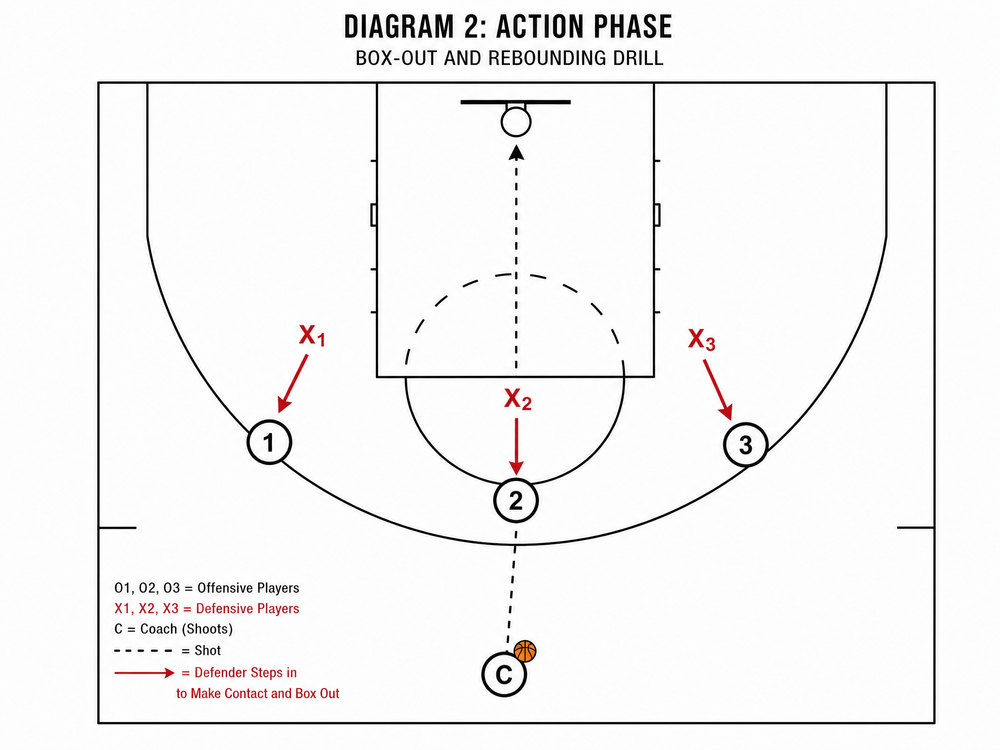
Diagram 2 — Shot cue, contact, and seal
The dashed black arrow is the coach’s shot path; solid red arrows show defenders stepping to their checks. Stop the first two reps at this contact moment. When a player watches the rim before making contact, reset the rep; that habit causes most offensive rebounds.
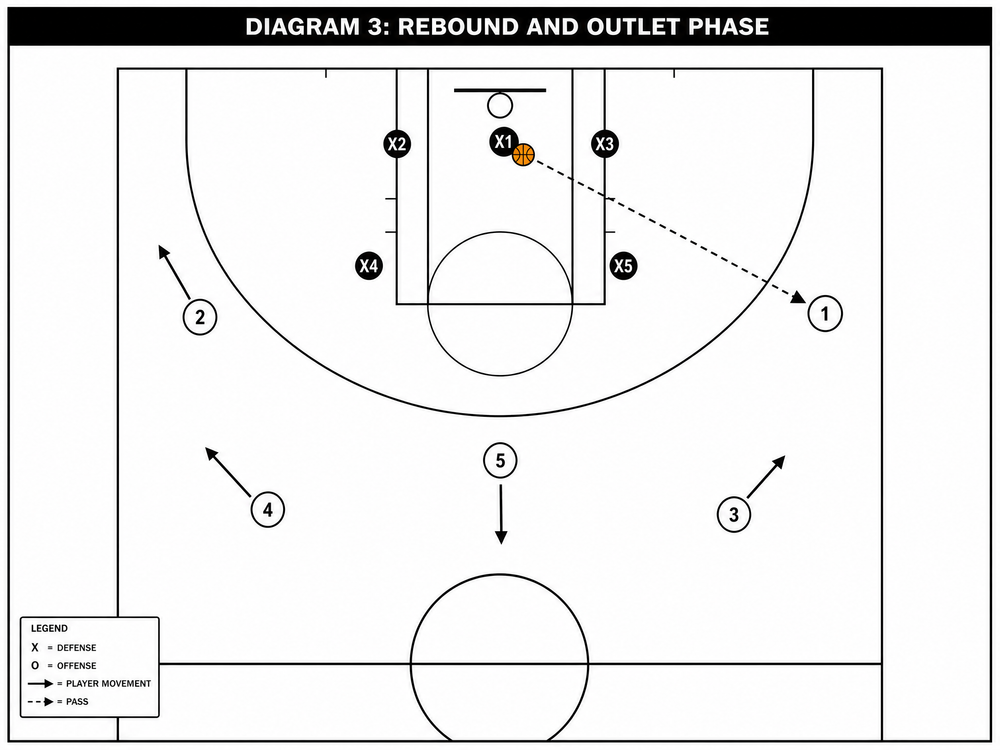
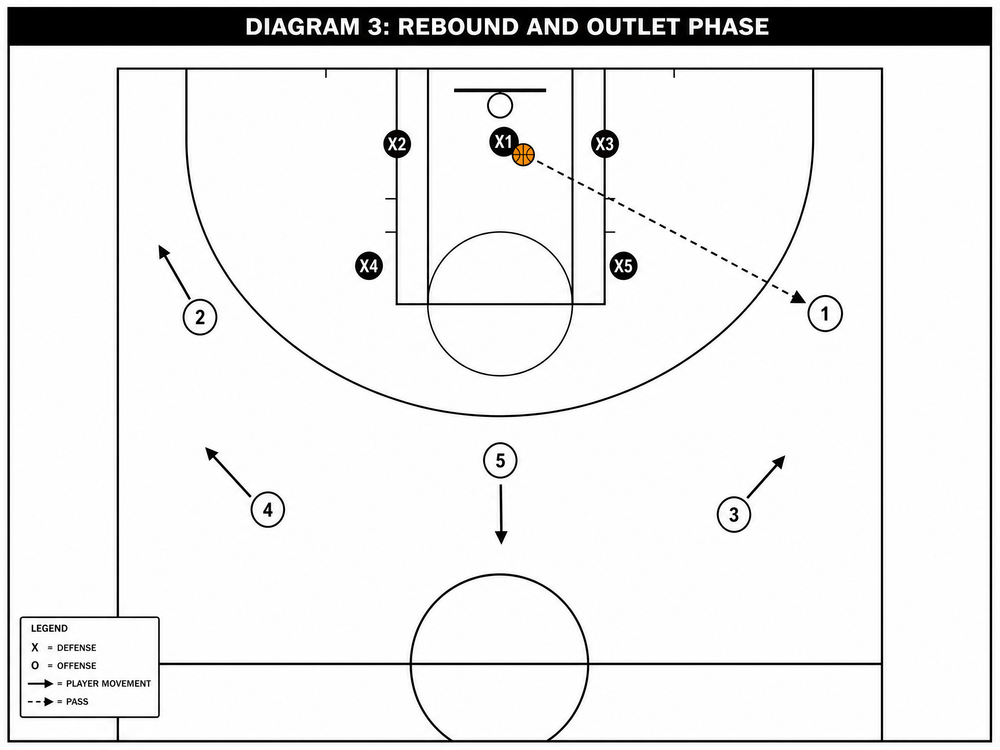
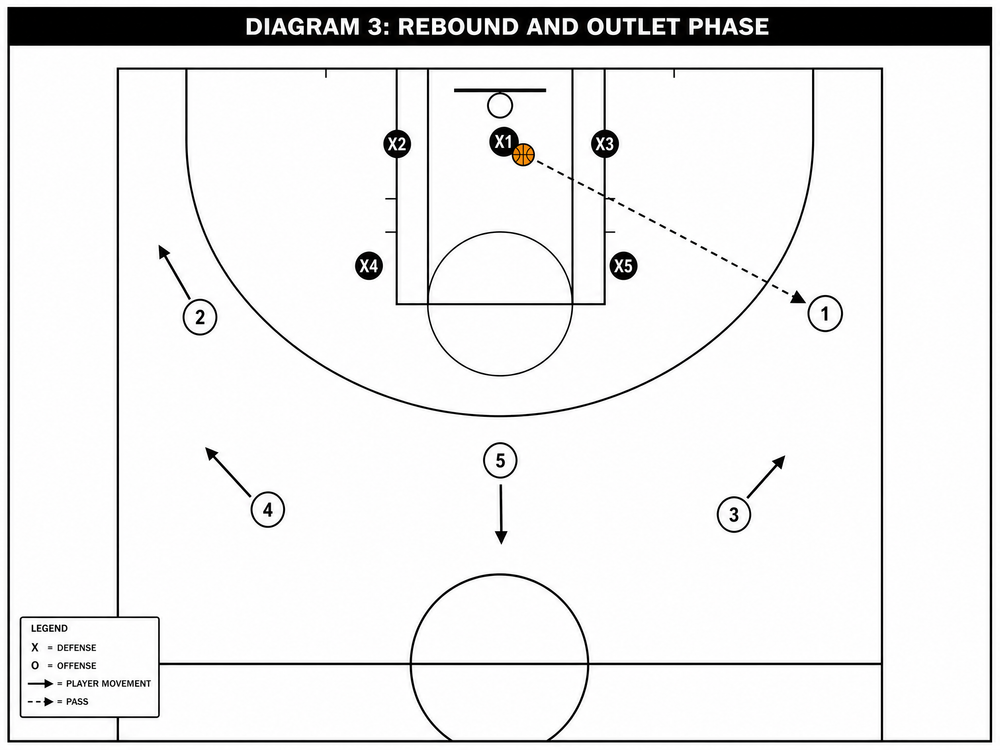
Diagram 3 — Rebound, outlet, and transition habit
X1 secures the ball, X2 and X3 fill wide lanes, and the dashed arrow shows the outlet to the wing. Require the rebounder to call “guard” or the receiver’s name before passing. This turns a rebounding activity into a defensive-stop-to-offense habit.
Key Coaching Points
| Teaching point | Floor-level coaching cue |
|---|---|
| Hit before you hunt | The first move after the shot is toward the player, not the rim. Ask, “Who did you hit?” before discussing the rebound. |
| Win leverage | Cue “sit in the chair.” Feet are wider than shoulders, knees are flexed, and the chest stays tall enough to absorb contact. |
| Reverse-pivot to see | After contact, the opponent belongs on the defender’s back or hip while both eyes locate the ball. Never allow blind backing-up. |
| Two hands, then chin | Secure, land, and bring the ball to the chin with elbows tight. Do not swing it below the waist. |
| Outlet with poise | A rebound is only a stop when the first pass is strong, on target, and away from pressure. |
Common Mistakes
The first error is the spectator rebounder: a defender watches the ball, backs toward the rim, and lets the offense run through the body. Freeze at the shot cue and ask, “Who did you hit?” If the answer is nobody, the defense has not started the possession. The second error is hands on the opponent’s back. Teach contact with the body and arms inside; grabbing creates fouls and poor leverage.
Also watch for players who seal but never pursue. A box-out is the route to the ball, not the finish line. Finally, count a weak landing or a casual outlet as a lost possession. If the player exposes the ball low, fails to pivot, or floats the first pass, the defensive job is incomplete.
Variations & Progressions
Use a guided-contact variation for first teaching. The coach points to the intended rebound side before release, and offense crashes at 70% speed. This lets players rehearse hit-find-seal safely. Progress to a live scoring game: defense receives one point for rebound plus outlet and two for a clean outlet that reaches X1 without a dribble; offense receives one point for a board and two for a score. Play first to seven, deducting one point for a defensive foul.
For advanced groups, add a weak-side cutter and progress to 4-on-4 scramble rebounding. The coach can shoot from either wing or the top. Defenders must communicate in flight, rebound, and outlet into a three-lane break. This exposes weak-side crash problems quickly.
Age Adaptations
| Age group | Adjustment |
|---|---|
| Under 8-Under 10 | Use 2-on-2, soft misses, and a verbal “hit-turn-get” count. Allow controlled chest-to-back touch rather than forceful contact. |
| Under 12-Under 14 | Use the 3-on-3 layout, pause after contact on early reps, and demand a two-hand rebound plus named outlet. |
| Under 16 and open age | Go fully live. Add scoring, tip-outs, transition lanes, and a two-second outlet clock. Film two reps and identify the first breakdown. |
Coach’s Finish
Keep your language short and repeatable: “Shot—hit—find—pursue—chin—outlet.” Praise the player who creates contact, owns space, secures the ball, and starts offense with a clean pass—not simply the player who catches an easy rebound. That is how rebounding toughness becomes a reliable team habit.
References