

Basketball
Post Dominance: Drop Step & Up-and-Under Footwork Drill
Equip your post players with the essential footwork to dominate the paint, focusing on sealing the defender, executing the drop step, and mastering the up-and-under counter move.
What you need
Basketballs, Half Court
1. Overview
Developing dominant post players requires more than just size; it demands impeccable footwork, balance, and the ability to read the defense. This "Post Dominance" drill is designed to build foundational post moves—specifically the drop step and the up-and-under—while emphasizing the critical setup phase of sealing the defender.
By running this drill, coaches will help their bigs (and any player operating in the low post) become efficient scorers. Use this drill during the skill development phase of practice, especially when preparing for opponents vulnerable to inside scoring or when your team needs to establish an inside-out offensive rhythm.
2. Setup
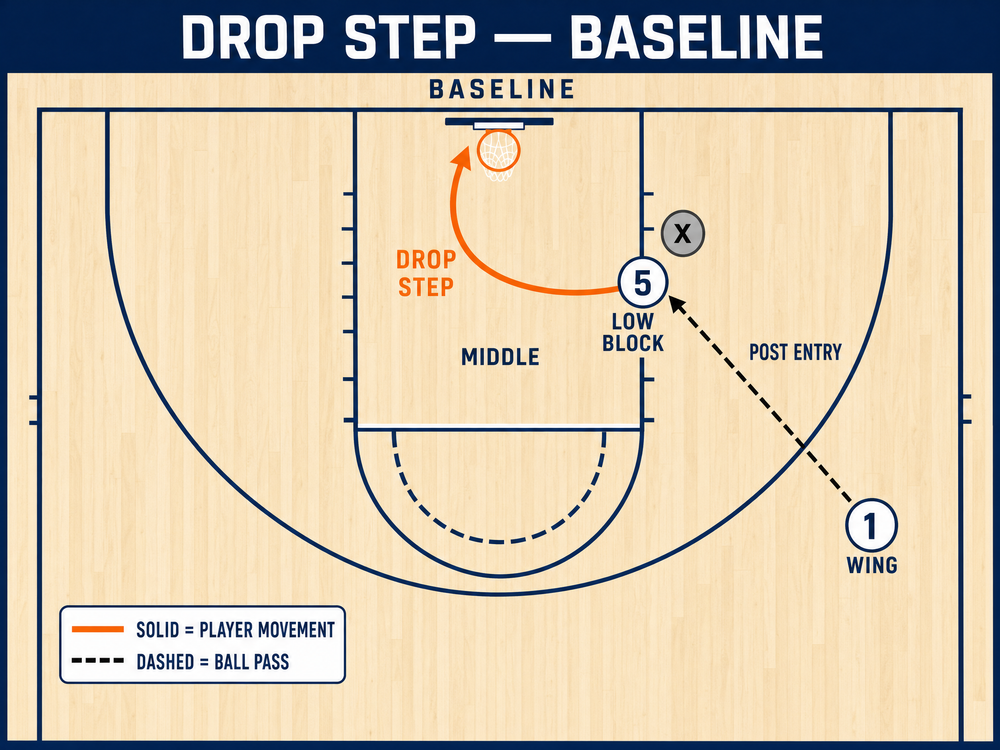
Set the drill on one basket of a regulation FIBA court, which measures 28m x 15m in full; the working half-court area is 14m x 15m. You will need two basketballs and a minimum of three players (a post player, a passer, and a defender). For larger groups, set up at both baskets to maximize repetitions.
- Equipment Needed: 2 Basketballs per group.
- Player Positions:
- Player 5 (Post): Starts on the low block, just outside the key.
- Player 1 (Passer): Starts on the wing, extended from the free-throw line, ready to feed the post.
- Defender (Optional/Coach): Positioned behind or shading Player 5 to provide a read.
3. Step-by-Step Instructions
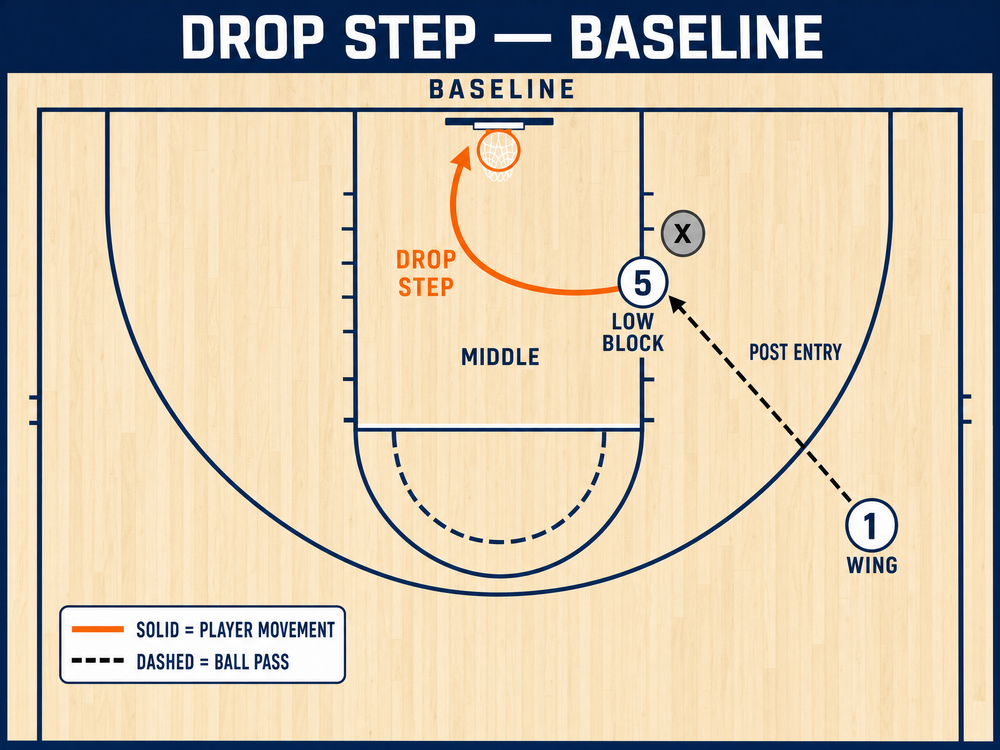
Phase 1: The Drop Step (Baseline Attack)
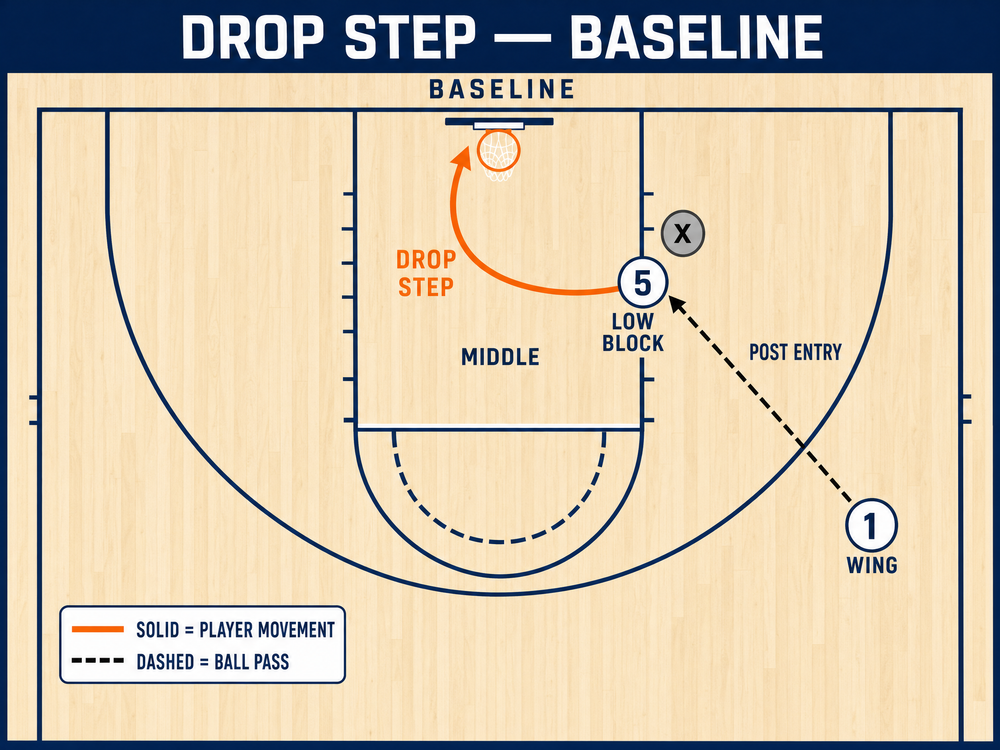
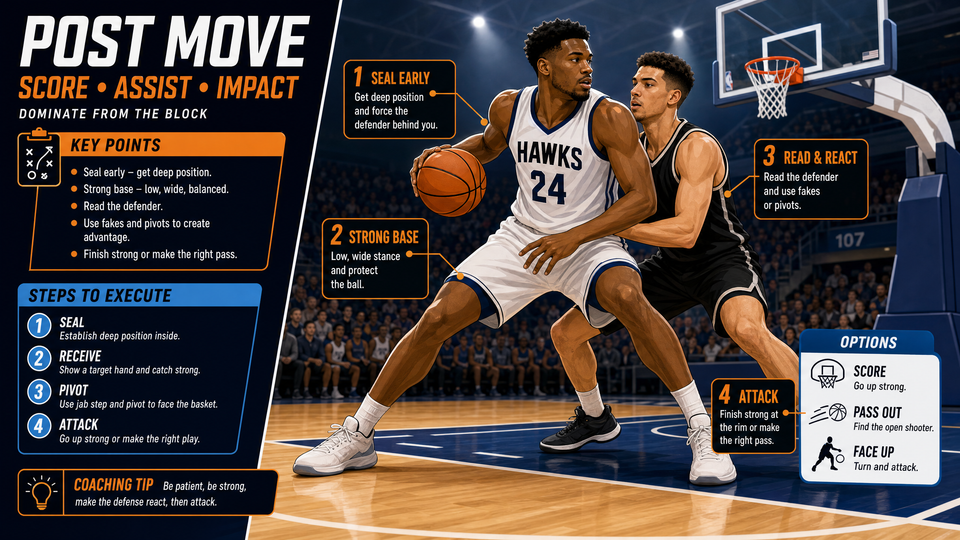
- Establish Position: Player 5 starts on the low block. They must establish a wide, strong base, "sitting down" to lower their center of gravity. They use their forearm and hip to seal the defender on their high side (towards the middle of the floor), presenting a clear target hand to the passer on the wing.
- The Entry Pass: Player 1 delivers a crisp, two-handed chest pass or a sharp bounce pass to Player 5's target hand.
- The Catch and Read: Player 5 catches the ball with two hands, keeping it high and protected under their chin. Simultaneously, they chin the ball and quickly "peek" over their baseline shoulder to ensure the baseline is clear and to read the defender's commitment to the high side.
- The Drop Step: Sensing the defender on the high side, Player 5 aggressively pivots on their inside foot (the foot closest to the basket). They swing their baseline foot back and around the defender, stepping deep toward the basket.
- The Finish: Player 5 takes one hard power dribble (if necessary to close the distance) and explodes up off two feet for a strong finish off the glass, keeping their body between the ball and the recovering defender.
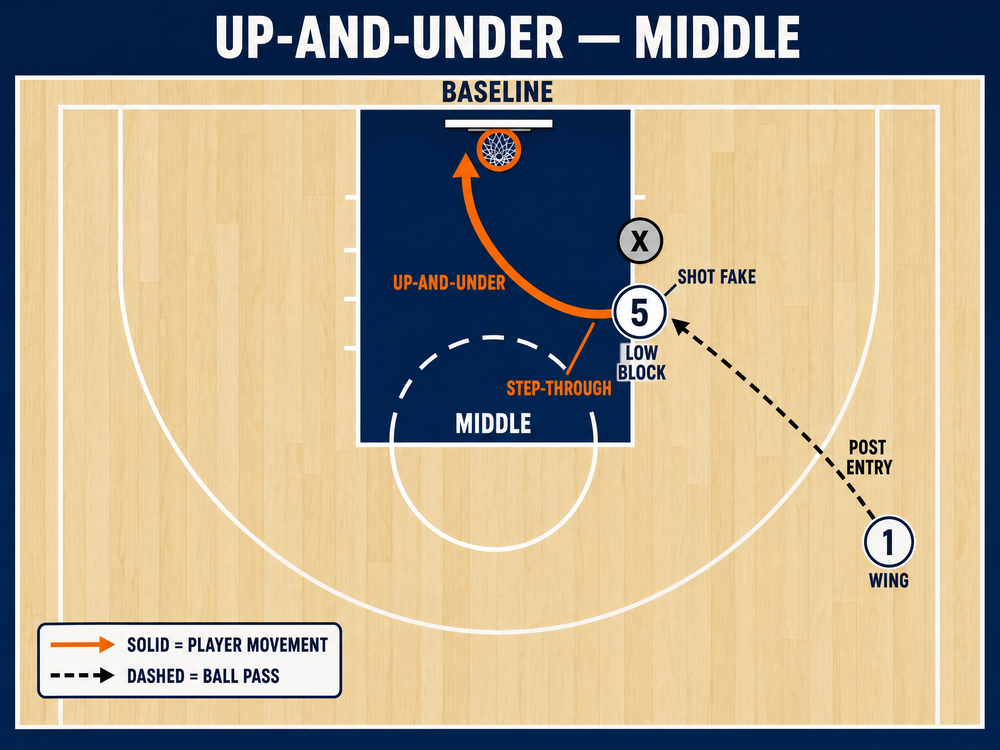
Phase 2: The Up-and-Under (Middle Counter)
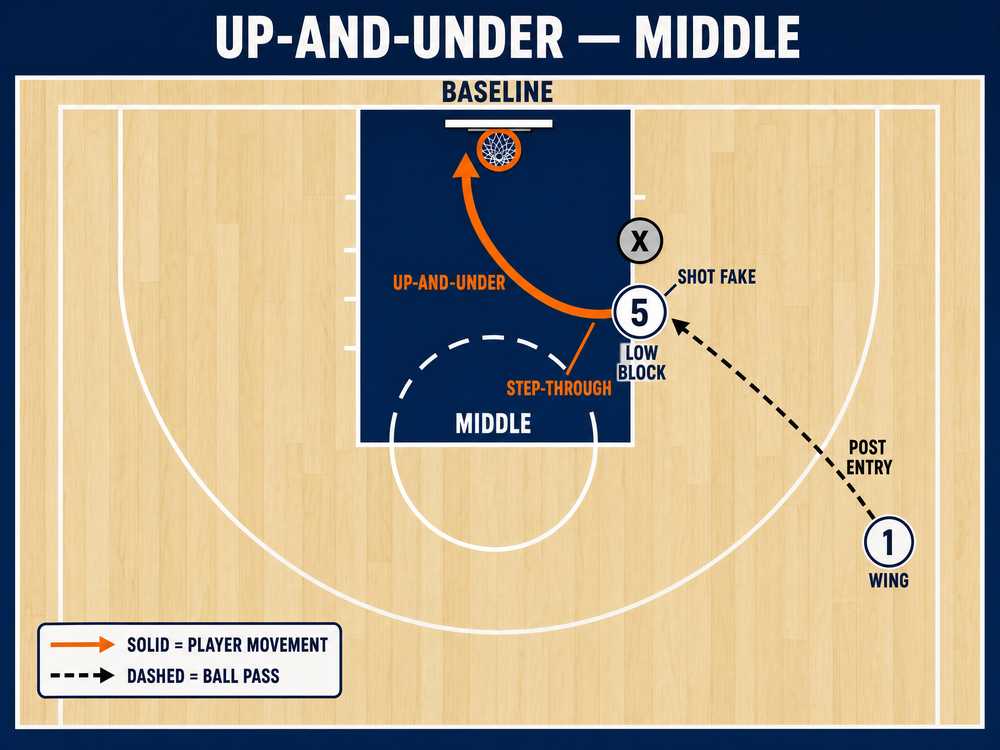
- Establish Position: Player 5 again seals the defender on the low block, but this time the defender is playing directly behind or slightly shading the baseline side.
- The Entry Pass: Player 1 feeds the post.
- The Catch and Read: Player 5 catches, chins the ball, and reads the defender.
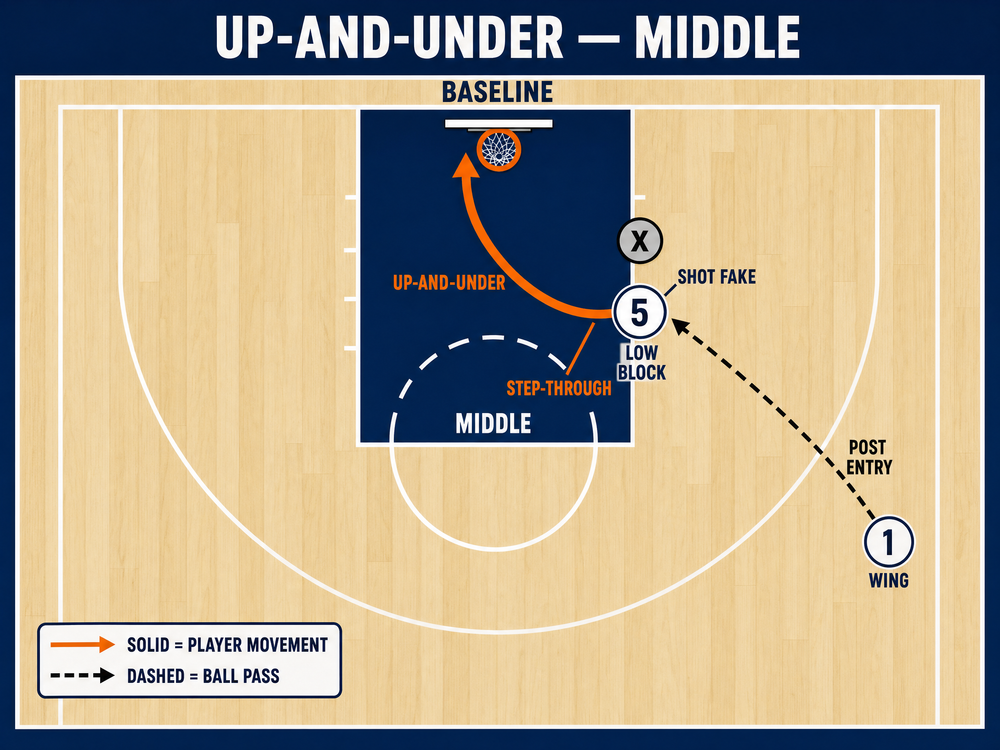
- The Middle Pivot and Fake: Player 5 front-pivots toward the middle of the key, facing the basket. They immediately execute a convincing shot fake, bringing the ball up to their forehead while keeping their eyes on the rim to sell the move. The goal is to get the defender to lift their hips or jump.
- The Step-Through: As the defender bites on the fake, Player 5 keeps their pivot foot planted and steps completely past the defender's hip with their non-pivot foot, attacking the rim.
- The Finish: Player 5 extends the ball for a protected layup or a short hook shot, using the rim to shield the ball from a potential block.
4. Key Coaching Points
- Win the Work Before the Catch: The move starts before the ball arrives. Demand that players fight for deep position and hold a wide, immovable seal. If they catch the ball too far off the block, the effectiveness of these moves plummets.
- Chin the Ball: Upon catching, the ball must immediately go under the chin with elbows out. This protects the ball from digging guards and establishes a strong position to pivot or fake.
- Sell the Fake: An up-and-under is useless without a believable shot fake. Players must use their eyes, head, and shoulders to convince the defender a shot is going up, not just a quick flick of the wrists.
- Explode off Two Feet: Whenever possible, finishes around the rim should be off two feet. It provides better balance, the ability to absorb contact, and a stronger platform to finish through a foul.
5. Common Mistakes
- Standing Up on the Catch: Players often lose their leverage by standing straight up when receiving the pass, making it easy for the defender to push them off their spot. Correction: Cue players to "stay in the chair" upon catching the ball.
- Weak Drop Step: A short or tentative drop step allows the defender to recover and cut off the baseline angle. Correction: Emphasize stepping "deep and through" the defender's leg, securing the angle before the dribble.
- Traveling on the Up-and-Under: Players frequently drag or lift their pivot foot before releasing the ball on the step-through. Correction: Isolate the footwork without the ball. Ensure the pivot foot remains glued to the floor until the ball is released or a dribble is initiated.
6. Variations & Progressions
- Add Live Defense: Transition from a dummy defender to live 1-on-1 post play. The passer feeds the post, and the post player must read the defender's positioning to choose the correct move (drop step if played high, up-and-under if played baseline or behind).
- Include the Double Team: After the catch, have a second defender (perhaps the passer's defender) dig down or hard double. The post player must now recognize the double team and make the correct kick-out pass to the open shooter, reinforcing court vision.
7. Age Adaptations
- Under 10s: Focus entirely on the footwork without defense. Have them practice the drop step and the front pivot on air. Emphasize catching the ball with two hands and staying balanced.
- Under 12s - Under 14s: Introduce a coach or passive defender to provide a physical read (touching the high or low shoulder). Begin combining the shot fake with the step-through.
- Under 16s and Open: Demand game-speed execution with live, physical defense. Focus on finishing through contact and reading secondary help defense rotations.
