

Football
Dynamic Crossing and Finishing Drill: Mastering the Final Third
A comprehensive crossing and finishing drill designed to improve wide delivery, box movement, and clinical finishing under pressure.
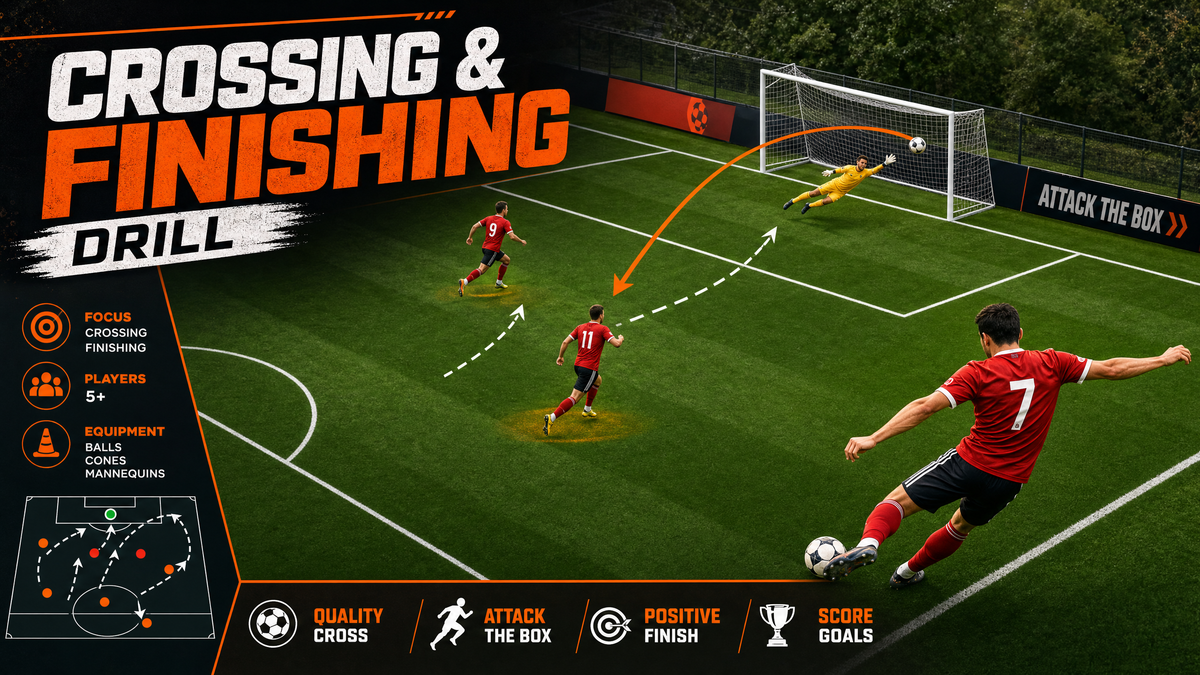
What you need
Full-size goal, Footballs (10+), Cones, Mannequins (optional)
1. Overview
This dynamic crossing and finishing drill is designed to replicate match-realistic scenarios in the final third. It focuses on the quality of wide delivery, the timing and coordination of attacking runs into the penalty area, and clinical finishing. By isolating these specific actions, coaches can develop their players' ability to create and convert scoring opportunities from wide areas.
This drill is highly versatile and can be adapted to suit various tactical setups. It is particularly effective for teams that utilize wingers or attacking full-backs to stretch the opposition defense and deliver crosses into the box.
2. Setup
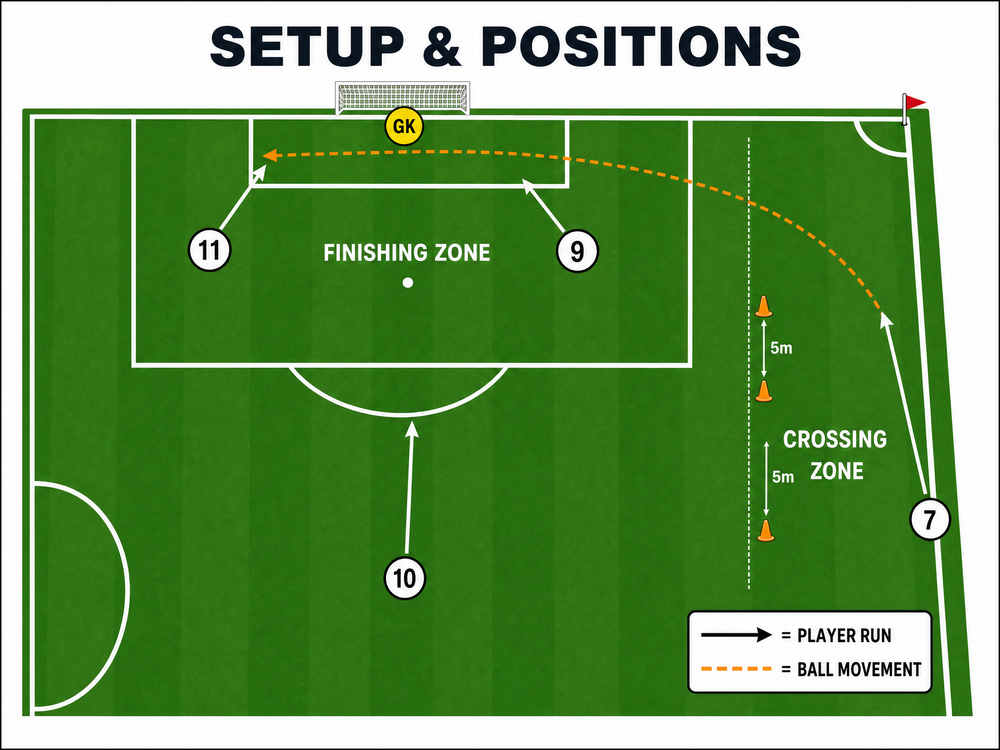
Pitch Dimensions: Half-pitch (approx. 50m x 70m) or full pitch depending on the progression.
Players: 5+ players (1 Winger/Crosser, 3 Attackers, 1 Goalkeeper). Can be expanded to include defenders.
Equipment:
- 1 Full-size goal
- Supply of footballs (at least 10)
- Cones (to mark crossing channels and starting positions)
- Mannequins (optional, to act as passive defenders)
Player Positions:
- Winger/Crosser (7/11): Positioned wide on the flank, ready to receive the ball and deliver a cross.
- Near Post Runner (9): Positioned centrally, ready to attack the near post area.
- Far Post Runner (11): Positioned centrally or slightly wider, ready to attack the far post area.
- Edge of Box Runner (10/8): Positioned deeper, ready to arrive late at the edge of the penalty area or penalty spot.
- Goalkeeper (GK): Positioned in goal.
3. Step-by-Step Instructions
- Starting Position: The drill begins with a central midfielder or coach passing the ball out wide to the Winger (7/11).
- The Touch: The Winger takes a positive first touch out of their feet, driving down the line towards the byline.
- The Delivery: As the Winger approaches the crossing zone, they must assess the situation and deliver a quality cross into the penalty area. The cross can be driven, lofted, or cut back depending on the movement of the attackers.
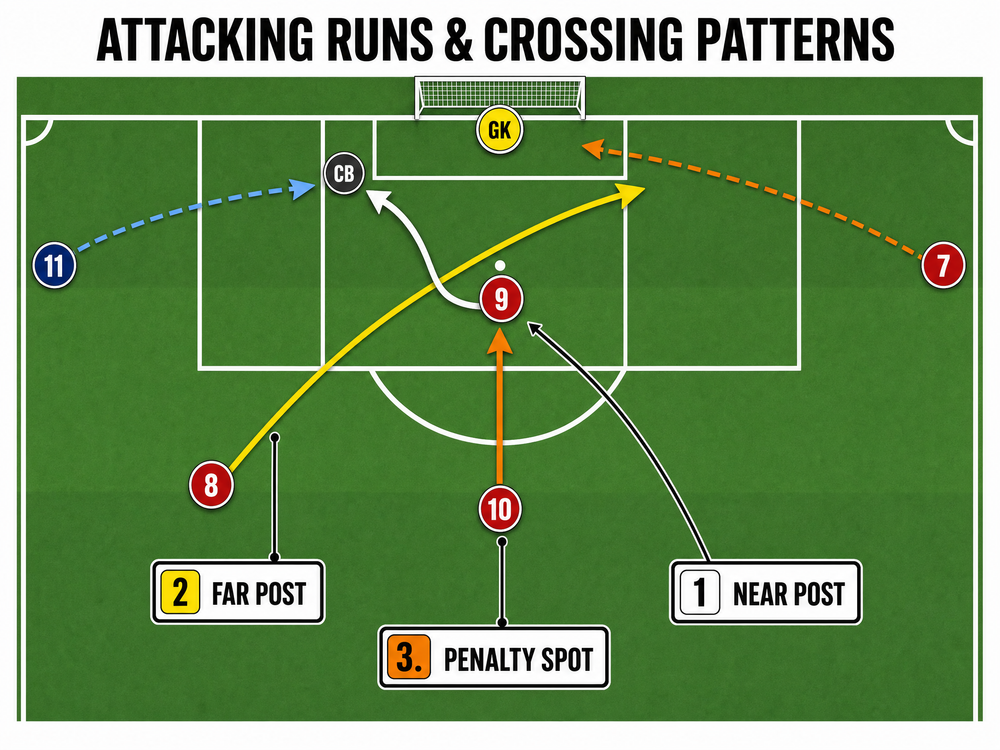
- The Runs: Simultaneously, the three attackers must time their runs to arrive in specific zones within the penalty area.
- One attacker attacks the near post.
- One attacker attacks the far post.
- One attacker arrives late at the edge of the box or penalty spot.
- The Finish: The attackers must attack the ball aggressively and attempt to score with a first-time finish (header, volley, or strike).
- Reset: Players jog back to their starting positions, and the drill repeats from the opposite side.
4. Key Coaching Points
- Quality of Delivery: Emphasize the importance of the cross. The Winger must look up before crossing to identify the runs of the attackers. The cross should be delivered with pace and accuracy into dangerous areas.
- Timing of Runs: Attackers must not arrive in the box too early. They should time their runs to meet the ball as it arrives in their designated zone.
- Aggressive Finishing: Encourage attackers to be aggressive and attack the ball. They should prioritize getting a clean contact on the ball rather than trying to place it perfectly.
- Communication: Players must communicate effectively. Attackers should call for the ball or indicate their intended run to the Winger.
- Body Shape: The Winger must adjust their body shape to deliver the cross effectively. Attackers must also adjust their body shape to strike the ball cleanly on goal.
5. Common Mistakes
- Crossing Without Looking: The Winger delivers the cross blindly without assessing the movement of the attackers.
- Arriving Too Early: Attackers arrive in the box too early and are forced to wait for the cross, making them easy targets for defenders.
- Poor Timing of Runs: Attackers mistime their runs and fail to connect with the cross.
- Lack of Aggression: Attackers are hesitant and fail to attack the ball aggressively.
- Poor First Touch: The Winger takes a poor first touch, slowing down the attack and allowing the defense to recover.
6. Variations & Progressions
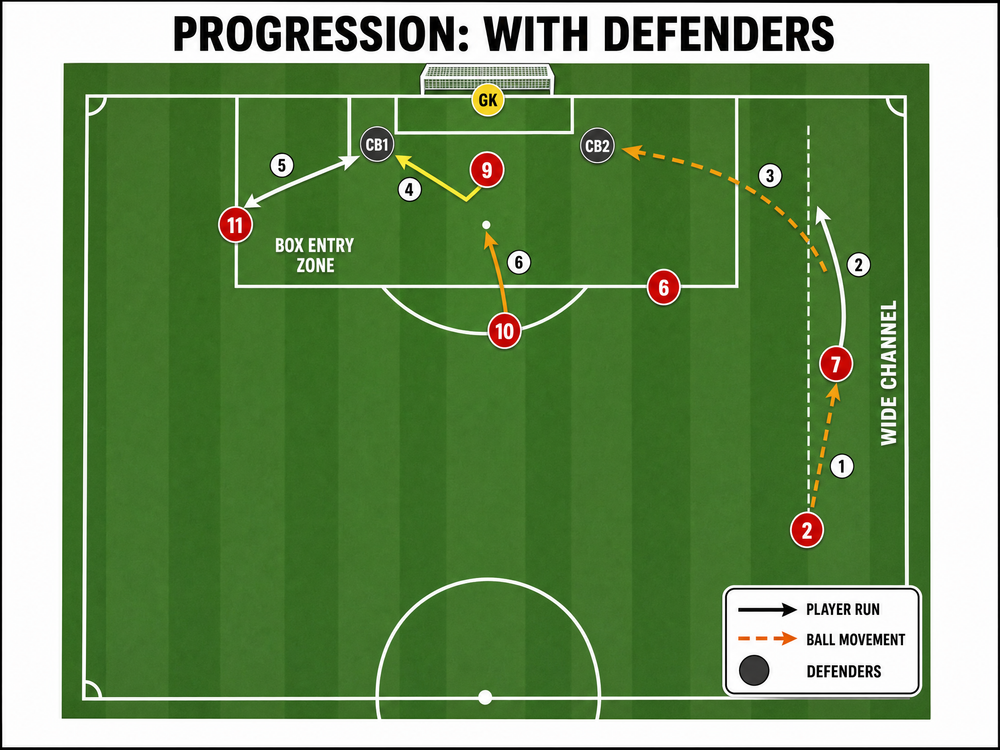
- Add Defenders: Introduce active defenders to challenge the attackers in the box. This increases the realism and difficulty of the drill.
- Vary the Delivery: Require the Winger to deliver different types of crosses (e.g., driven, lofted, cut back).
- Change Starting Positions: Alter the starting positions of the attackers to simulate different game scenarios.
- Add a Build-up Phase: Include a passing sequence before the ball is played out wide to the Winger.
7. Age Adaptations
- Under-8 to Under-10: Focus on the basic mechanics of crossing and finishing. Use a smaller pitch and smaller goals. Reduce the distance of the cross.
- Under-12 to Under-14: Introduce basic movement patterns and the concept of attacking specific zones in the box. Emphasize the quality of the delivery.
- Under-16 to Open: Implement complex movement patterns and add active defenders. Focus on decision-making, timing, and execution under pressure.
