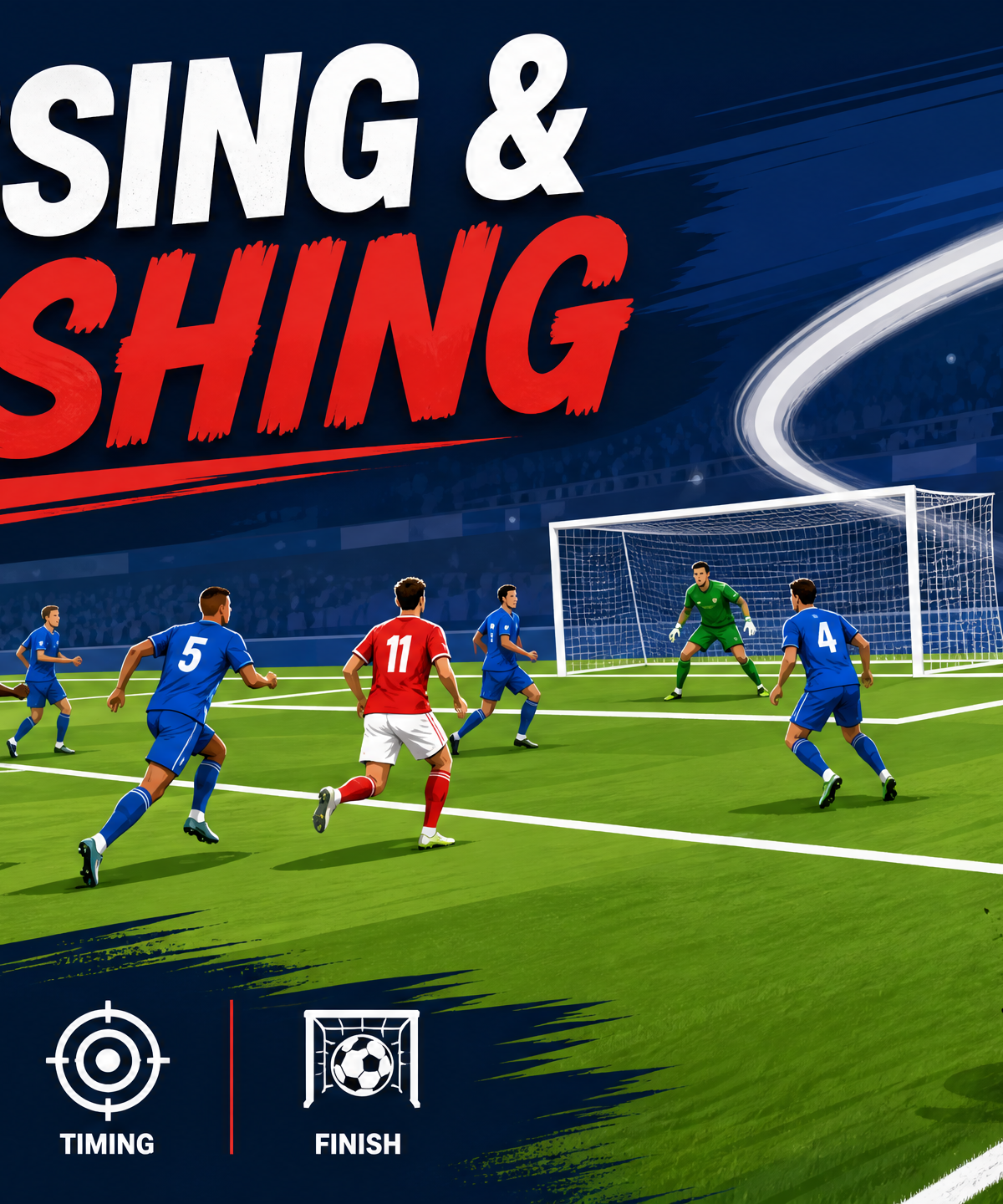
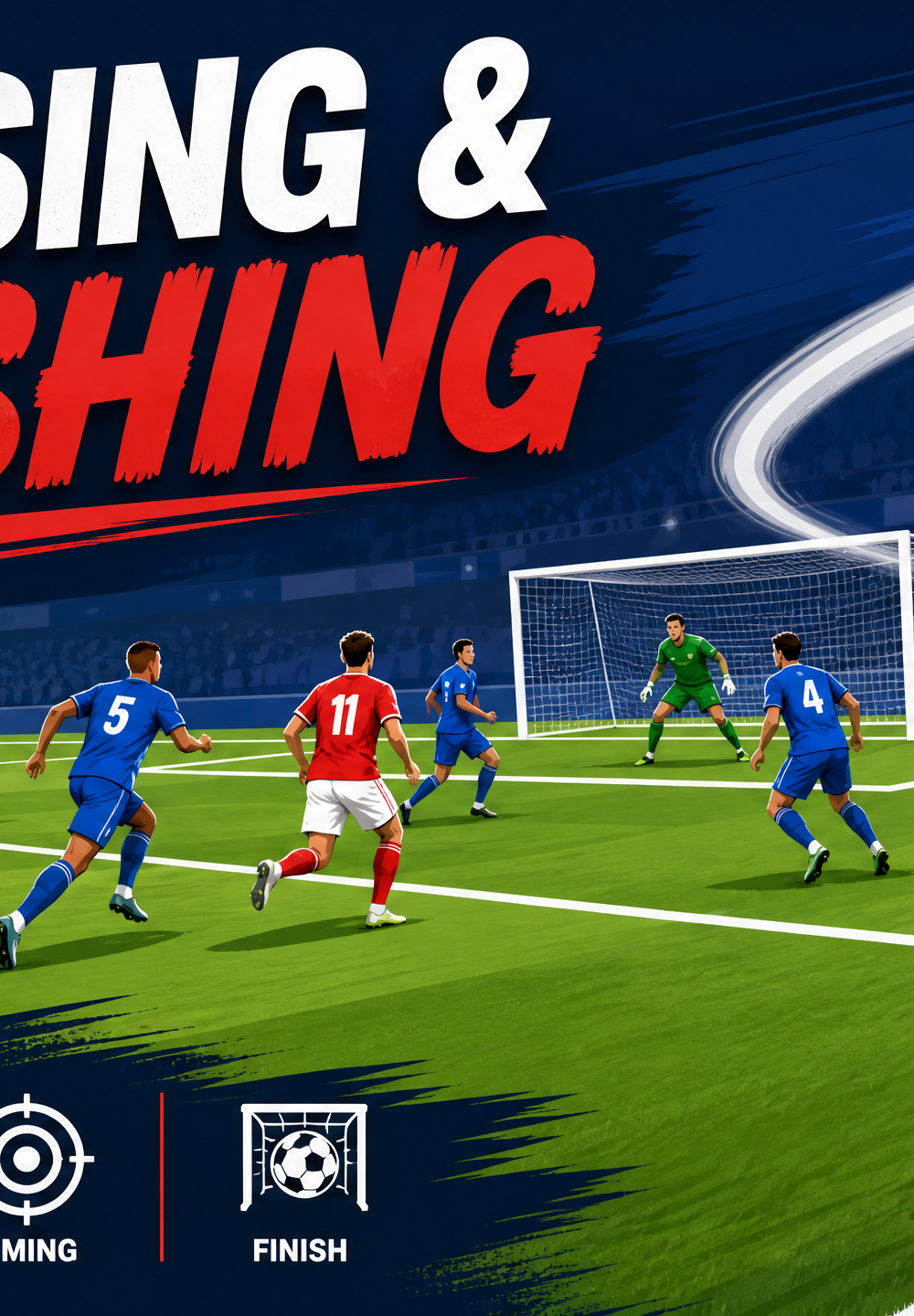
Dynamic Crossing & Finishing: Tri-Zone Attack Drill
Master the art of wide service and penalty box movement with this high-intensity crossing and finishing drill designed to develop timing, technique, and tactical awareness in the final third.
Equipment Needed
1. Overview
Crossing and finishing are fundamental components of a successful attacking strategy. This dynamic drill focuses on developing the critical relationship between wide players delivering the ball and attackers arriving in the penalty area. It emphasizes timing of runs, quality of delivery, and clinical finishing under pressure. By dividing the penalty box into specific attacking zones, players learn to coordinate their movements and attack different areas simultaneously, making it incredibly difficult for defenders to track them.
Use this drill during the attacking phase of your session plan, particularly when preparing for matches against teams that defend narrowly, forcing you to exploit the wide areas. It is excellent for developing the understanding between your wingers, full-backs, and central attackers.
2. Setup
Pitch Dimensions: Use half a standard pitch (approx. 50-55m long x 64-75m wide).
Equipment Needed:
- 1 Full-size goal
- 10-15 Footballs (placed with the wide servers)
- Cones (to mark starting positions and attacking zones)
- Bibs (if adding defenders later)
Player Positions:
- Goalkeeper (GK): In goal.
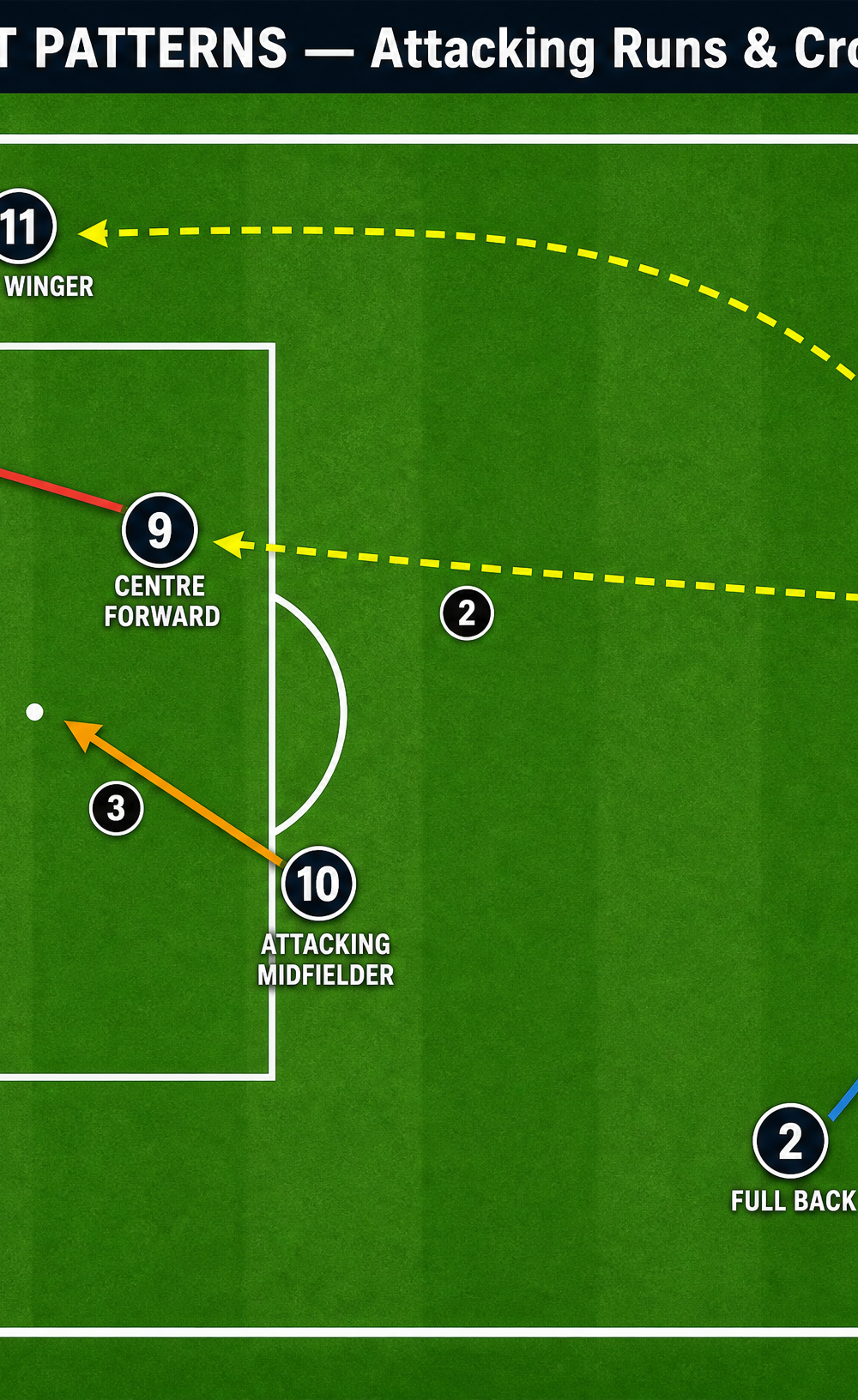
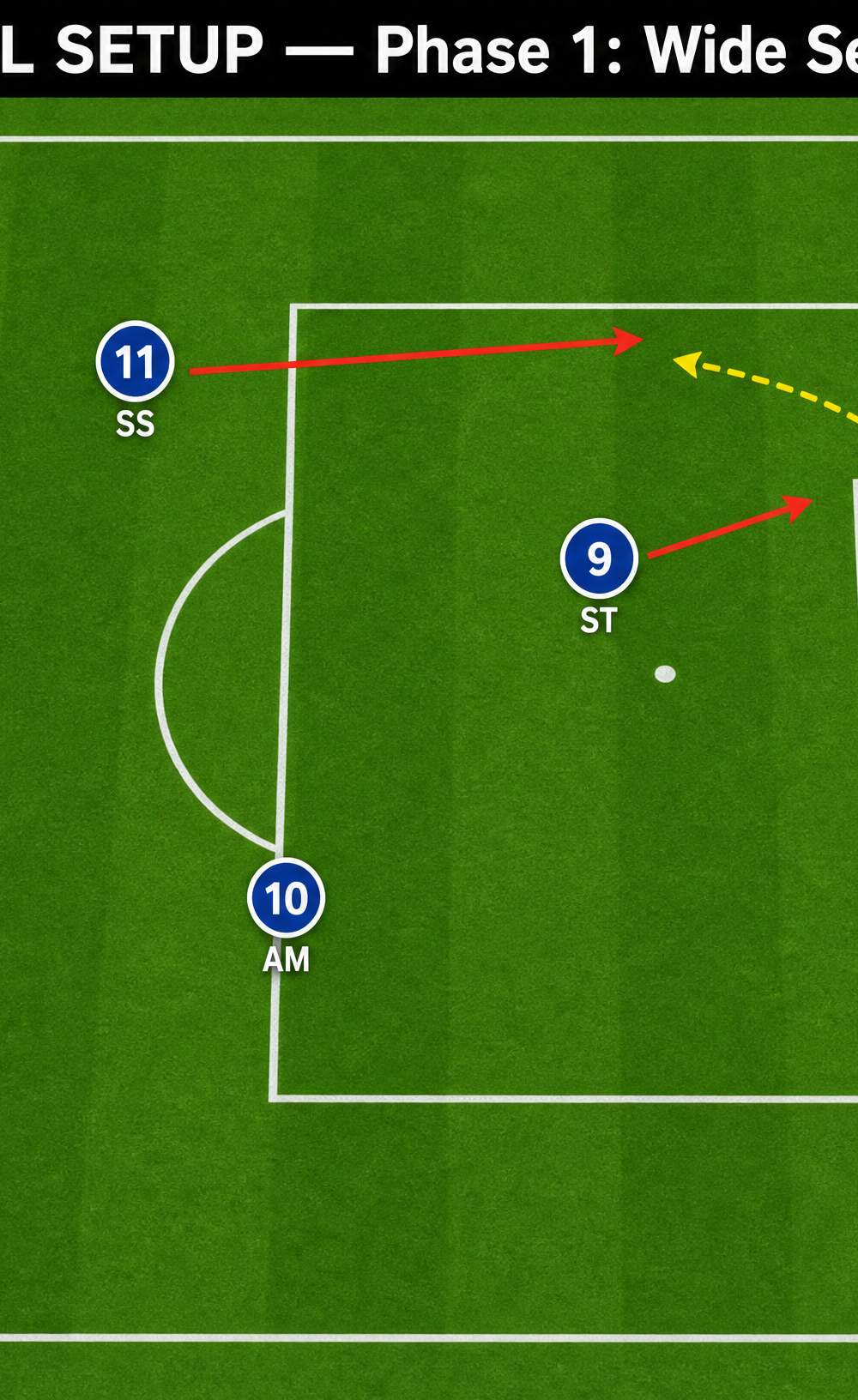
- Servers/Wingers (No.7 & No.11): Positioned wide, approximately 35 metres from the goal line, near the touchline.
- Strikers/Attackers (No.9, No.10, No.8): Starting centrally, about 40 metres from goal.
3. Step-by-Step Instructions
- The Trigger: The drill begins with the central attacker (No.9) making a short, sharp movement to simulate dropping deep to receive, before spinning to attack the penalty area. This is the trigger for the wide player (No.7) to begin their action.
- The Delivery: The wide player takes a positive touch out of their feet down the wing. They must assess the runs in the box and deliver a cross into one of three designated zones (Near Post, Central/Penalty Spot, Far Post).
- The Runs: As the wide player prepares to cross, the three central attackers make coordinated, staggered runs into the box:
- Attacker 1 (No.9): Sprints aggressively across the front of the imaginary defender to attack the near post zone.
- Attacker 2 (No.11/Second Striker): Loops their run to attack the far post zone, ready for a deep cross or a flick-on.
- Attacker 3 (No.10/Attacking Mid): Delays their run slightly, arriving late at the edge of the penalty area or the penalty spot for a cut-back.
- The Finish: The attackers must attempt to finish first-time if possible. The emphasis is on hitting the target and reacting quickly to any rebounds.
- Reset and Rotate: After the phase is complete, players jog back to their starting positions. Alternate the service from the right and left wings to ensure balanced development.
4. Key Coaching Points
- Quality of Delivery: The cross must be driven with purpose. Wingers should look up before crossing to identify the runs. Emphasize hitting specific zones rather than just putting the ball 'in the mixer'.
- Timing of the Run: This is crucial. Attackers must not arrive in the box too early and remain static. They should time their arrival to meet the ball at pace as it enters their zone.
- Movement to Create Space: Attackers should use double movements (e.g., check away, then sprint front) to lose their markers before attacking the cross.
- Finishing Technique: Encourage players to use the appropriate technique for the height and pace of the cross (e.g., side-foot volley, header, half-volley). Focus on accuracy over raw power.
- Communication: Players should communicate verbally or non-verbally (pointing) to indicate where they want the ball.
5. Common Mistakes
- Static Attackers: Players waiting in the box for the cross rather than arriving onto it. Correction: Force attackers to start deeper and only sprint when the winger takes their final touch before crossing.
- Crossing Without Looking: Wingers hitting the ball blindly into the box. Correction: Demand that wingers take a 'picture' of the box before delivering the cross.
- Overcrowding One Zone: Multiple attackers making the same run, making it easy to defend. Correction: Assign specific zones (near, far, cut-back) before the drill starts and ensure discipline in maintaining those runs.
- Poor Body Shape: Attackers facing away from goal when finishing. Correction: Coach players to open their bodies so they can see both the ball and the goal when striking.
6. Variations & Progressions
- Add Defenders (Progression): Introduce 1 or 2 central defenders to track the runs and clear the crosses. This adds realism and forces attackers to be more clever with their movement.
- Overlap/Underlap (Variation): Instead of the winger crossing directly, have a full-back make an overlapping or underlapping run to receive a pass before crossing.
- Time Limit (Progression): Give the attackers only 5 seconds to score from the moment the winger takes their first touch. This increases the intensity and simulates match-speed transitions.
7. Age Adaptations
- Under 8 - Under 10: Focus heavily on the basic technique of striking a moving ball. Reduce the distances significantly. Use a smaller goal or no goalkeeper initially to build confidence. Don't worry too much about complex coordinated runs; focus on 1v1 crossing and finishing.
- Under 12 - Under 14: Introduce the concept of near and far post runs. Start demanding better quality crosses and more purposeful movement. Add passive defenders.
- Under 16 - Open: Full pitch dimensions. Demand high intensity, precise timing, and clinical finishing. Introduce active defenders and complex overlapping/underlapping patterns in the wide areas.