Elite Crossing & Finishing: Tri-Zone Attacking Patterns
Develop ruthless efficiency in the final third by training your attackers to identify and attack three key finishing zones from wide deliveries.
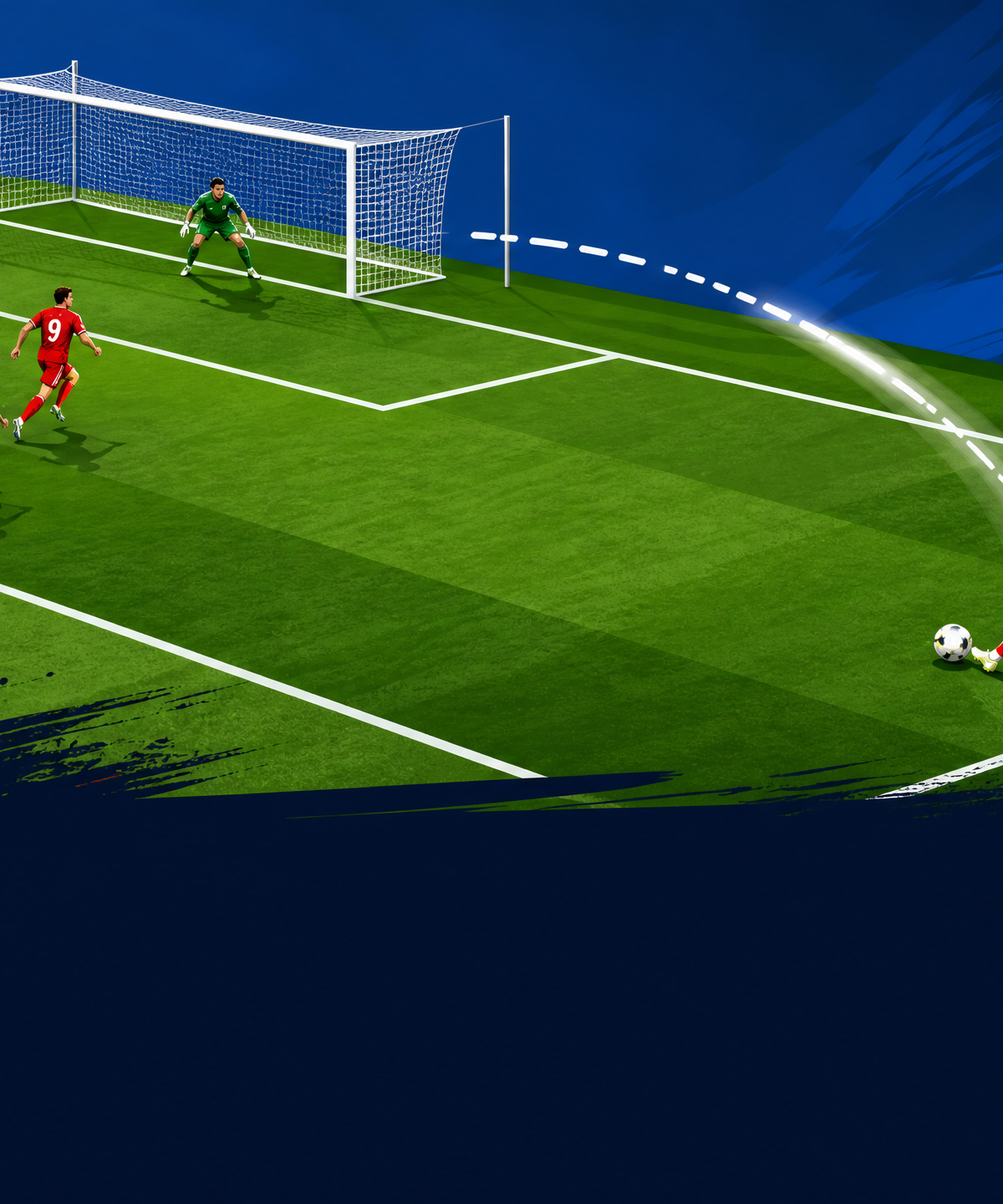
Equipment Needed
1. Overview
Creating chances from wide areas is a fundamental attacking strategy in modern football. However, a cross is only as effective as the runs made to meet it. The Elite Crossing & Finishing: Tri-Zone Attacking Patterns drill is designed to synchronize the movements of your wingers and central attackers. It trains players to consistently attack three critical finishing zones: the near post, the penalty spot, and the far post.
Use this drill during the attacking phase of your training session to improve timing, communication, and the quality of both the final ball and the finish. It is highly effective for teams playing with a single striker and two advanced wingers (e.g., 4-3-3 or 4-2-3-1), but can be adapted for any system.
2. Setup
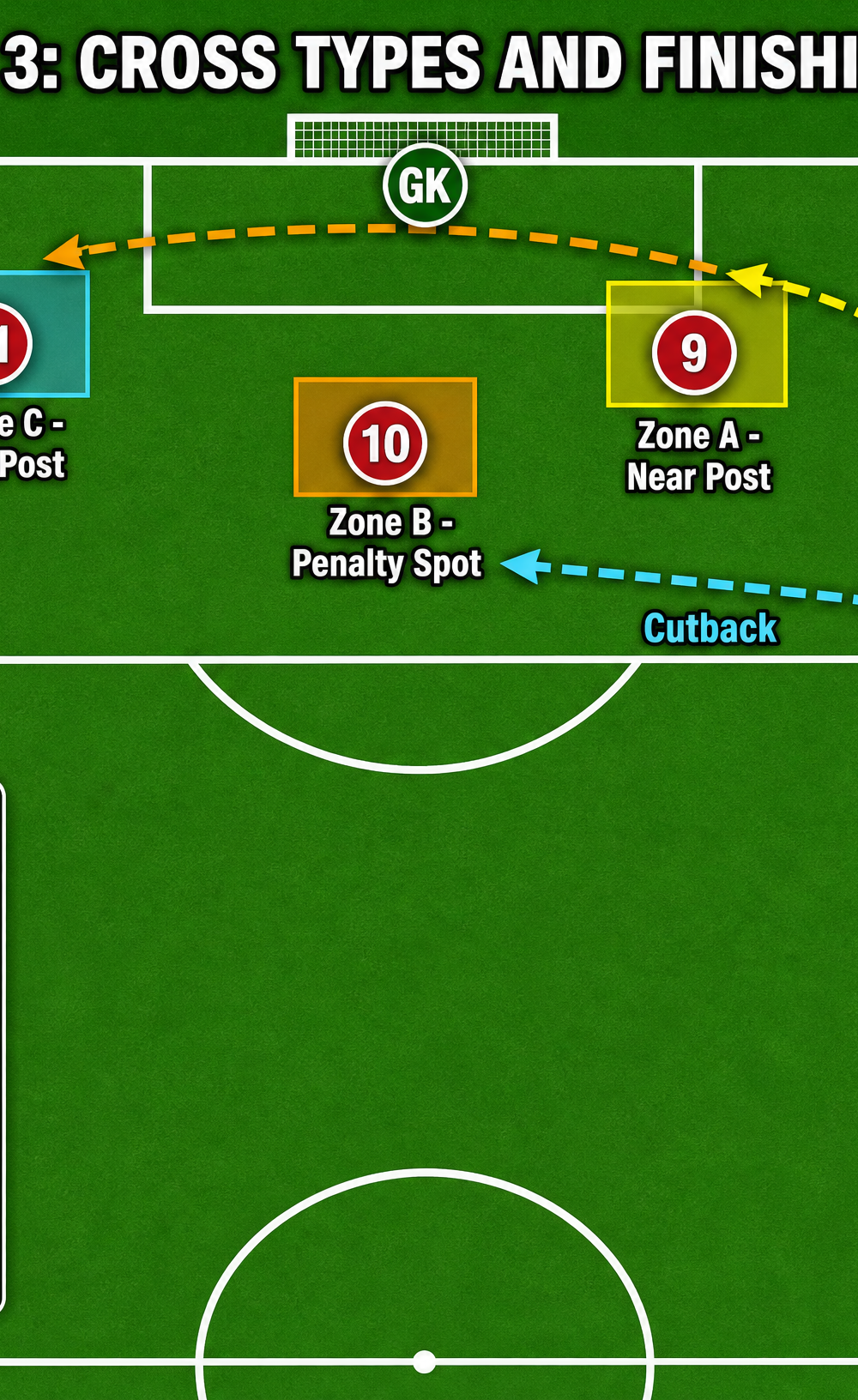
To ensure the drill runs smoothly, set up the pitch and equipment precisely before the players arrive.
Pitch Dimensions:
Use the attacking half of a standard pitch (approx. 50m x 70m). The primary focus is the penalty area (18-yard box) and the wide channels (flanks).
Equipment Required:
- 1 Full-size goal
- 4-6 Cones or markers (to create starting gates)
- 10-15 Footballs (placed centrally with the coach/feeder)
- Bibs (2 colours if incorporating defenders)
Player Positions:
- Goalkeeper (GK): In goal.
- Winger (RW/7): Positioned at a cone gate on the right flank, 30m from the byline and 5m inside the touchline.
- Striker (CF/9): Positioned centrally, just outside the penalty arc.
- Second Striker/Winger (LW/11): Positioned on the left side of the penalty area.
- Support Midfielder (CM/8): Positioned deep, ready to make a late run.
- Feeder (F): Coach or designated player positioned centrally near the halfway line with the supply of balls.
3. Step-by-Step Instructions
Run the drill with high intensity, focusing on match-realistic speed and precision.
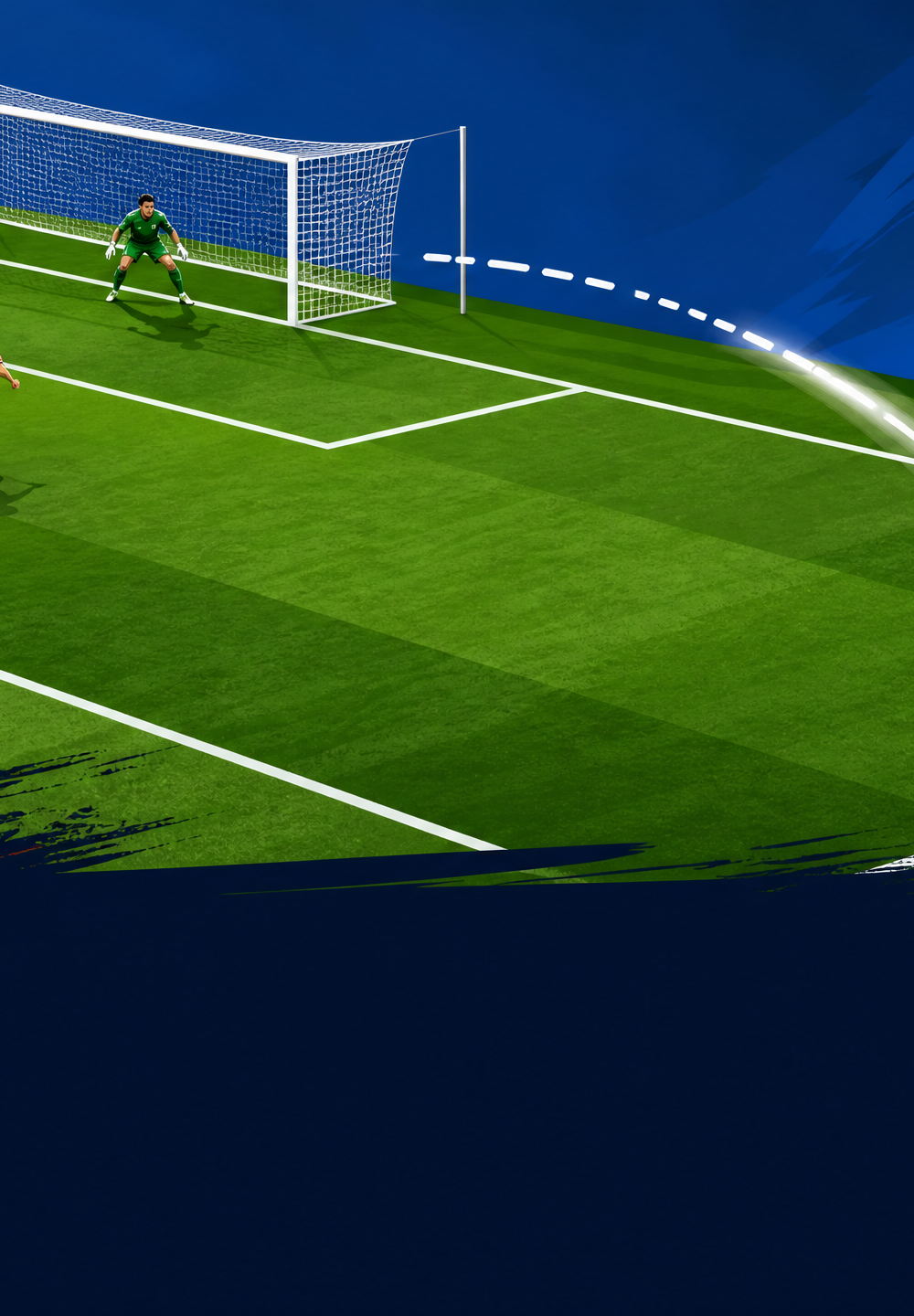
- The Trigger: The Feeder (F) initiates the drill by playing a firm, driven pass out wide to the Winger (RW/7).
- The Approach: The RW receives the ball on the move, taking an aggressive positive touch down the flank toward the crossing zone near the byline.
- The Runs: As the RW prepares to cross, the central attackers coordinate their runs:
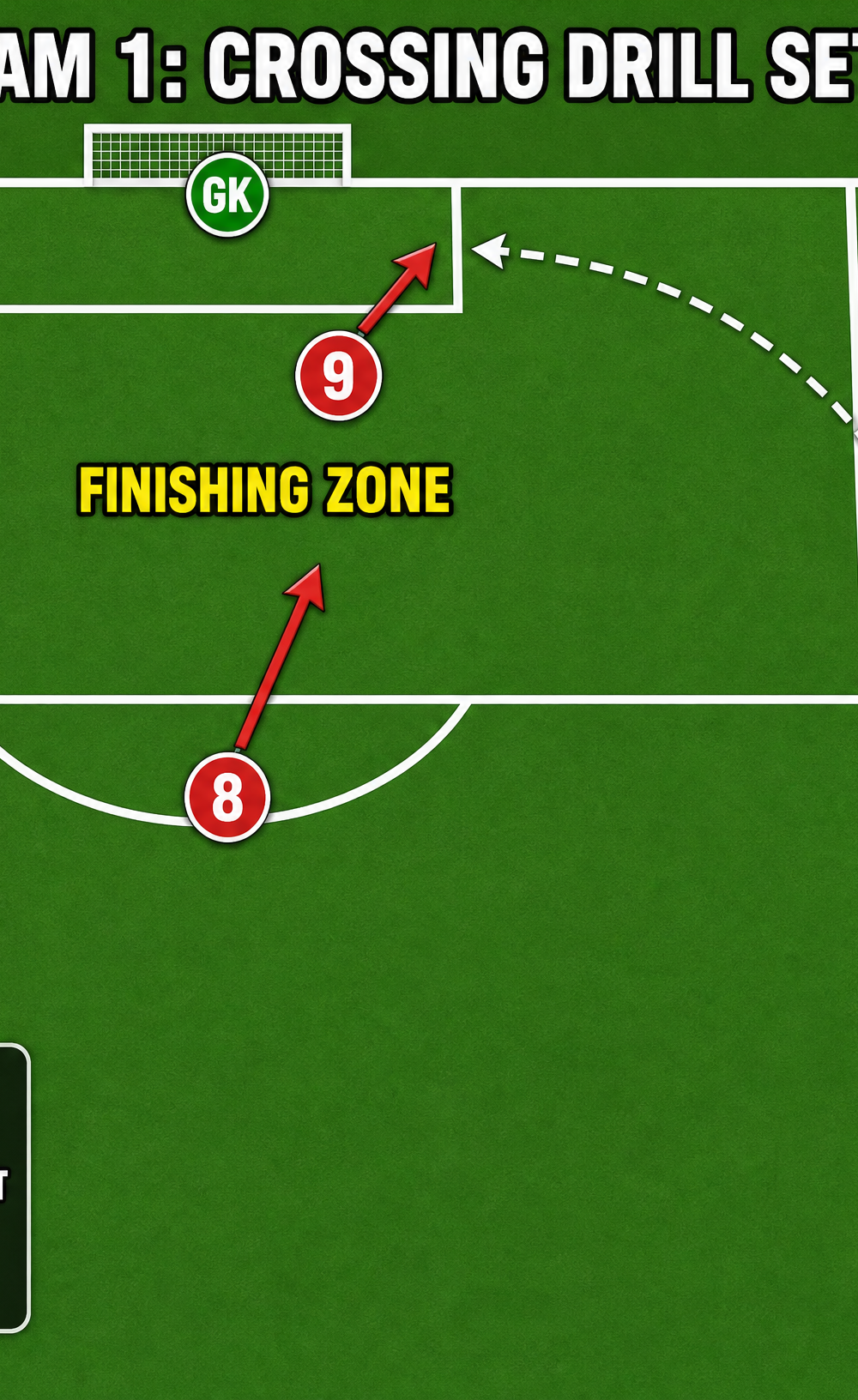
- CF (9): Sprints aggressively to attack the near post (Zone A).
- LW (11): Curves their run to attack the far post (Zone C).
- CM (8): Arrives late, holding their run to arrive at the edge of the box or penalty spot (Zone B) for a cutback.
- The Delivery: The RW assesses the runs and delivers a cross into one of the three zones.
- The Finish: The attacker meeting the ball must attempt a one-touch finish on goal.
- Reset: Players jog back to their starting positions. The Feeder immediately plays the next ball to the opposite flank to keep the tempo high.
4. Key Coaching Points
To maximize the effectiveness of this drill, focus your coaching interventions on these critical areas:
- Timing of the Run: Attackers must not arrive in the box too early. They should trigger their sprint just as the winger takes their final touch before crossing. Arriving late and at speed generates power for the finish.
- Quality of the First Touch: The winger's first touch must take them forward and out of their feet, allowing them to look up and assess the penalty area before crossing.
- Crossing Selection: The winger must pick out a specific zone or player, not just aimlessly hit the ball into the box. Head up before striking the ball.
- Attacking the Space: Strikers must be aggressive. The near-post run must cross the face of the defender (or imaginary defender) to cut off the ball's path.
- Body Shape on Finishing: Attackers should open their hips to redirect the ball on target. Focus on accuracy over raw power when finishing from crosses.
5. Common Mistakes
Watch out for these frequent errors and correct them immediately:
- Static Attackers: Players waiting in the box for the cross to arrive. Attackers must always be on the move to generate momentum and lose markers.
- Overhitting the Cross: Wingers trying to hit the ball too hard, resulting in crosses that sail over everyone. Encourage driven, dipped, or cutback crosses with controlled technique.
- Running in Straight Lines: Attackers running directly toward the goal. Encourage curved or angled runs to stay onside, create separation from defenders, and attack the ball at an optimal angle.
- Crowding One Zone: Multiple attackers arriving at the same post. Ensure clear communication and designated zones (Near, Far, Cutback) for each player.
6. Variations & Progressions
Once the basic pattern is mastered, introduce complexity to challenge the players.
Progression 1: Add Passive Defenders
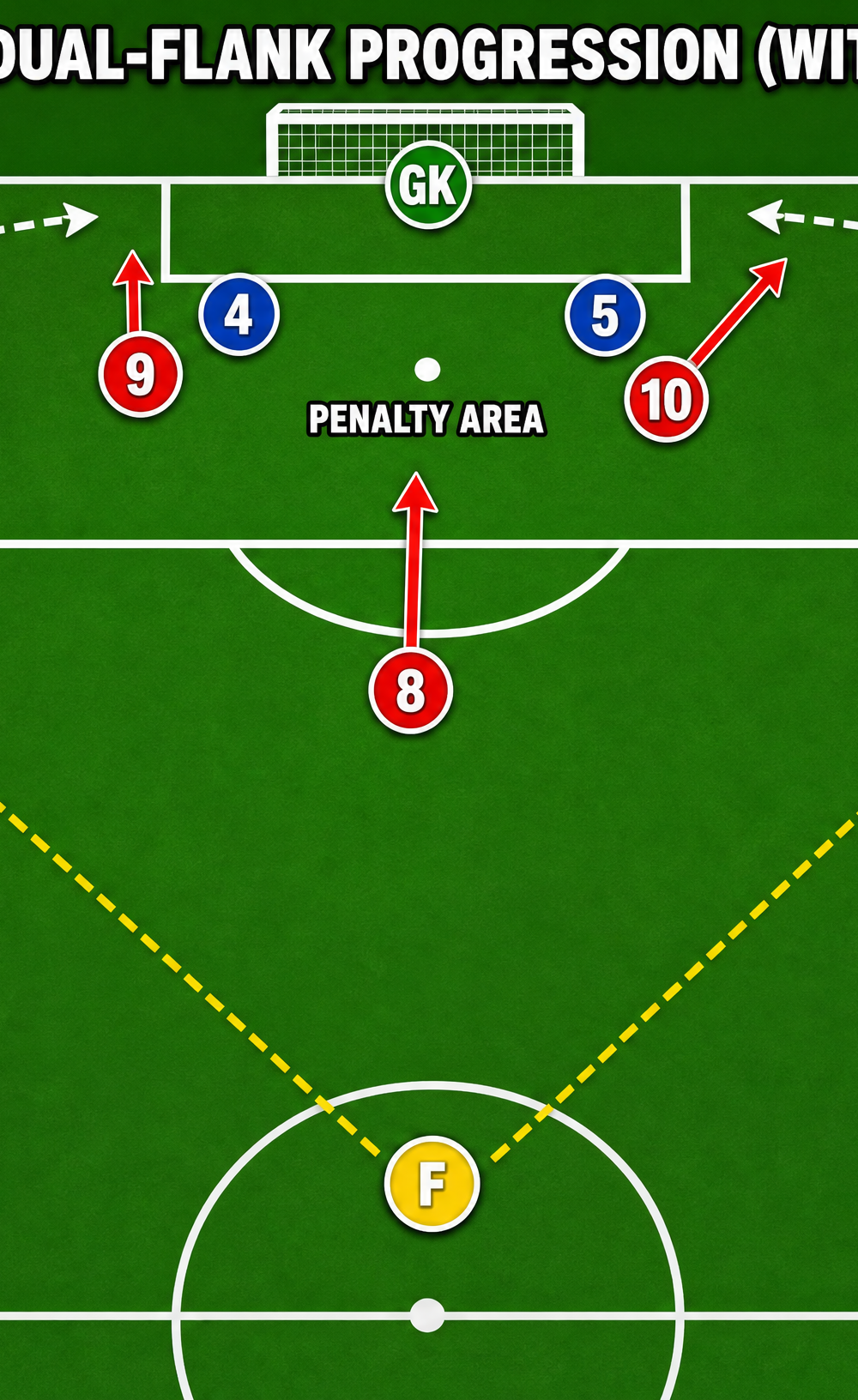
Introduce two central defenders (CBs) who start inside the penalty area. Initially, they only track runs and apply light pressure without tackling, forcing attackers to improve their movement and wingers to find the passing lanes.
Progression 2: Fully Opposed (Live Defense)
Make the drill fully live. Introduce two CBs and a fullback to defend the winger. The attackers must use double movements (e.g., feint far post, sprint near post) to lose their markers. If the defenders win the ball, they must immediately transition and pass to the Feeder or a target goal.
Variation 1: The Early Cross
Instead of driving to the byline, the winger receives the ball and immediately delivers an early, whipped cross from deep, aiming for the space behind the defensive line.
7. Age Adaptations
Tailor the drill to suit the developmental stage of your squad.
- Under-10s: Focus entirely on the technique of striking a moving ball and the basic concept of running toward the goal. Reduce the crossing distance. Use only one central attacker and one winger.
- Under-14s: Introduce the concept of specific zones (near post vs. far post). Demand better quality crosses and introduce passive defenders to encourage curved runs.
- Under-18s / Open: Run the drill at full match speed. Demand high tactical understanding, complex double movements, and clinical one-touch finishing under pressure from active defenders.