

Football
Five-Second Counter-Press: Win, Secure and Break
Teach players to react collectively after losing possession, regain within five seconds and exploit the next attacking moment.
What you need
balls, cones
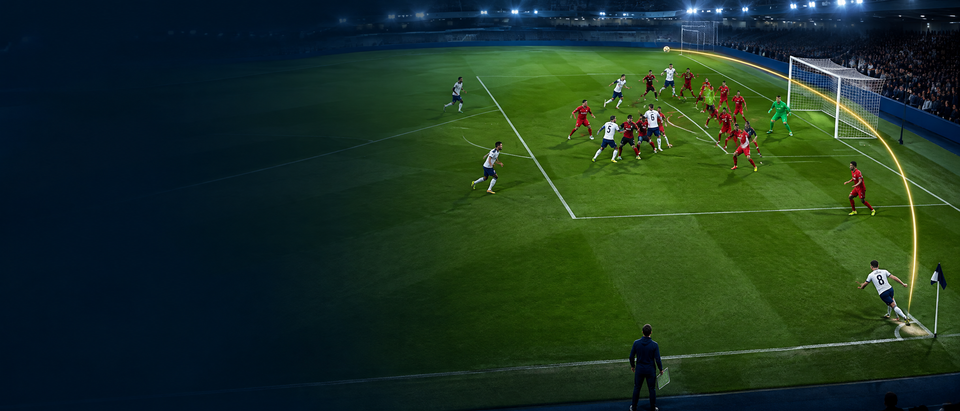
{{asset:header_image.png}}
Overview
Counter-pressing is the team’s immediate attacking action after losing the ball. The objective is not simply to run at the new ball-carrier; it is to compress the ball, remove the nearest passing options and either regain within five seconds or delay the counter long enough for the rest-defence to recover. This practice gives a 10-player group a repeatable picture in a 32 × 28m central-right zone, then connects the regain to the first attacking decision.
{{asset:diagram_1.png}}
Setup
Mark a 32 × 28m rectangle on a full-size pitch, positioned from the centre circle into the right half-space. Use a 6v4: six purple players start with the ball and four yellow players defend. Purple 4 and 8 support centrally, 6 holds, 9 is nearest to the loss, 10 is the attacking midfielder and 7 starts outside the right edge. Yellow 6 intercepts, with yellow 8, 11 and 2 as the immediate exits.
Start every repetition with purple 4 or 8 playing into the congested middle. The coach calls “turnover” when yellow 6 intercepts, or plays a loose ball to yellow 6. Purple have five seconds to win it back. If they regain, they have a further eight seconds to play through a gate, find the advanced runner, or retain with a clean supporting pass. If yellow play three passes, dribble out, or find the wide escape player, the repetition ends. Work four three-minute blocks, with one minute to coach and reset.
Step-by-Step Instructions
Recognise the loss at 0.0 seconds. The player whose pass is lost reacts first. In the diagram, purple 8’s pass is intercepted by yellow 6. Purple 8 does not admire the mistake or retreat; they take two explosive steps towards the ball to reduce yellow 6’s next action. Their trigger word is “press”.
Arrive on the ball from 0–2 seconds. Purple 9 is the first presser. They sprint to a controllable distance, decelerate in the final two metres and approach on a curved line that shows yellow 6 towards the crowded inside lane rather than the open touchline. Body shape is side-on, knees flexed and arms active for balance. The aim is to force a poor touch, a backwards pass or a predictable square pass—not a reckless tackle.
Lock the nearest exits from 1–3 seconds. Purple 10 curves their run to place yellow 11 in their cover shadow; they should see both the ball and the forward receiver. Purple 6 takes the most dangerous central support, while purple 7 moves inside from the right to close yellow 2’s route. Purple 4 slides across behind the pressing line, close enough to collect a loose ball but deep enough to protect the counter if the first press is broken. Keep the first and last purple player within roughly 10–12m.
Create the trap from 2–5 seconds. The closest player presses the ball; the next player blocks the forward lane; the third arrives to steal the square pass; the fourth protects the space behind. Do not all chase the same shirt. The ball-carrier should feel pressure on the ball and see only marked options. Encourage purple 9 to use small adjusting steps and purple 6 to anticipate the receiver’s first touch. A regain can be a tackle, interception, loose touch or a forced ball out of play.
Secure the regain at 3–6 seconds. On the win, purple 6 receives or tackles with their first touch away from yellow pressure. Their first scan should have happened before the tackle: forward lane, supporting 10, then safety 8. Purple 10 immediately changes from screener to receiver, opening on the half-turn. The group must hear a new cue—“play”—to stop the counter-press becoming another congested duel.
{{asset:diagram_2.png}}
- Break or retain from 6–13 seconds. If purple 10 can face forward, they release the early runner within two touches. Purple 7 drives the wide lane and the high outlet runs beyond the recovering line. If yellow have recovered numbers around the ball, purple 6 uses 8 to retain and re-establish possession. The rule is simple: attack immediately when the forward lane is on; otherwise keep the ball rather than force the same transition again.
Key Coaching Points
Coach the reaction, not the shout. Players move on the visual cue of the bad touch or interception, with the verbal cue reinforcing it. Demand a full-speed first two seconds, then controlled footwork near the ball. The first presser must arrive balanced enough to turn or stop; an uncontrolled sprint simply opens a pass around them.
Coach the unit around the ball. Use the language press, screen, lock, protect: press the ball, screen the most dangerous forward option, lock the square and wide exits, and protect depth behind the press. Covering players should be close enough to collect a deflection, but never flat in one line. The player behind the ball must be able to deal with the opponent’s first forward release.
The ball-side player should show the opponent into traffic, not towards space. A curved run and open body shape matter more than a dramatic tackle. When the opponent’s first touch is poor, the second and third purple players attack the ball together. Once regained, insist on a clear first touch and quick scan: a hurried forward pass into pressure wastes the advantage.
Common Mistakes
The common error is a delayed reaction from the player who loses the ball. Award a point only when that player is involved in the first action after the turnover. A second error is every purple player collapsing onto the ball. Freeze the practice and show the unprotected forward or wide lane; assign clear roles before restarting. Third, players press too straight and allow the ball-carrier to pass around the outside. Rehearse curved approaches without opposition and use cones to show the intended inside trap. Finally, teams regain but celebrate the tackle rather than exploit the next moment. Count down the eight-second attacking window until the habit is established.
Variations & Progressions
Make the practice directional by adding a mini-goal or target player beyond the far side. Purple only score the regain point if the next attack reaches that target within eight seconds. Add the optional high outlet shown in Diagram 2 and progress to 7v4; this creates a realistic decision between an early vertical pass and a secure support pass. Give yellow a bonus point for finding yellow 11 or 2 within three seconds, forcing purple 10 and 7 to make their screening angles precise. Widen the box to 36 × 30m for a harder press, or reduce it to 28 × 24m to demand tighter distances.
Age Adaptations
For Under-10s, use a 4v3 in a 22 × 18m box. Call the trigger yourself, allow six seconds to regain and teach only two roles: nearest player presses, nearest teammate helps. Keep the language simple—“win it back together”—and reward effort as well as regains. For Under-12s, move to 5v3 or 5v4, introduce showing play inside and allow a safe pass after the regain. For Under-14s and older, use the full 6v4, five-second regain condition and eight-second attack condition. Track regain attempts, successful traps and forward actions after every win.
