

Rugby
Mastering the 7-Man Lineout: Lift, Catch, and Delivery
Develop a dominant set-piece with this comprehensive 7-man lineout drill focusing on timing, explosive lifting, and clean ball delivery.

What you need
Rugby balls (2-3), Training bibs (optional), Cones (for marking specific zones if needed)
1. Overview
The lineout is a critical set-piece in rugby, providing a structured platform to launch attacks or clear defensive lines. This drill focuses on the mechanics of a full 7-man lineout, emphasizing the synchronization between the hooker (2), the lifters (props 1 & 3), and the primary jumper (lock 4). By mastering the timing and explosive power required for a successful lift and catch, coaches can ensure their team secures clean, fast ball to the scrum-half (9) and fly-half (10), dictating the pace of the game.
2. Setup
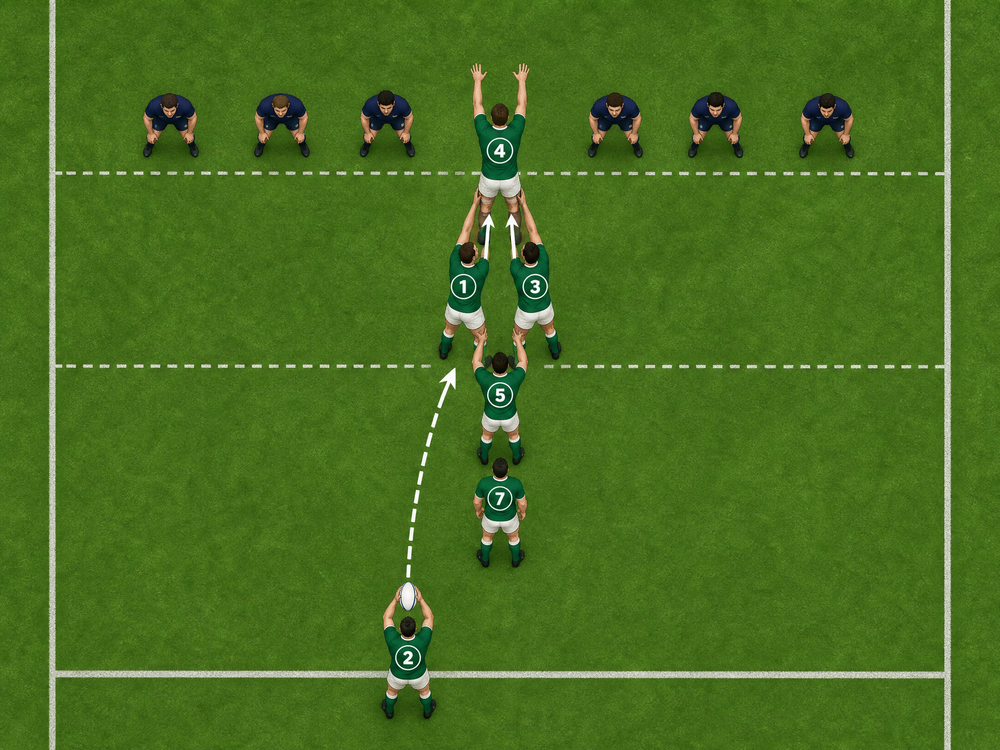
- Pitch Area: Standard rugby pitch (100m x 70m). Utilize the touchline and the 5m and 15m lines to ensure accurate spacing.
- Players: Minimum of 9 players (Hooker, 2 Props, 2 Locks, 2 Flankers, Scrum-half, Fly-half). Add opposition players to increase difficulty.
- Equipment: 2-3 rugby balls, training bibs (optional, to differentiate attack and defense).
- Starting Positions:
- Hooker (2): On the touchline, ready to throw.
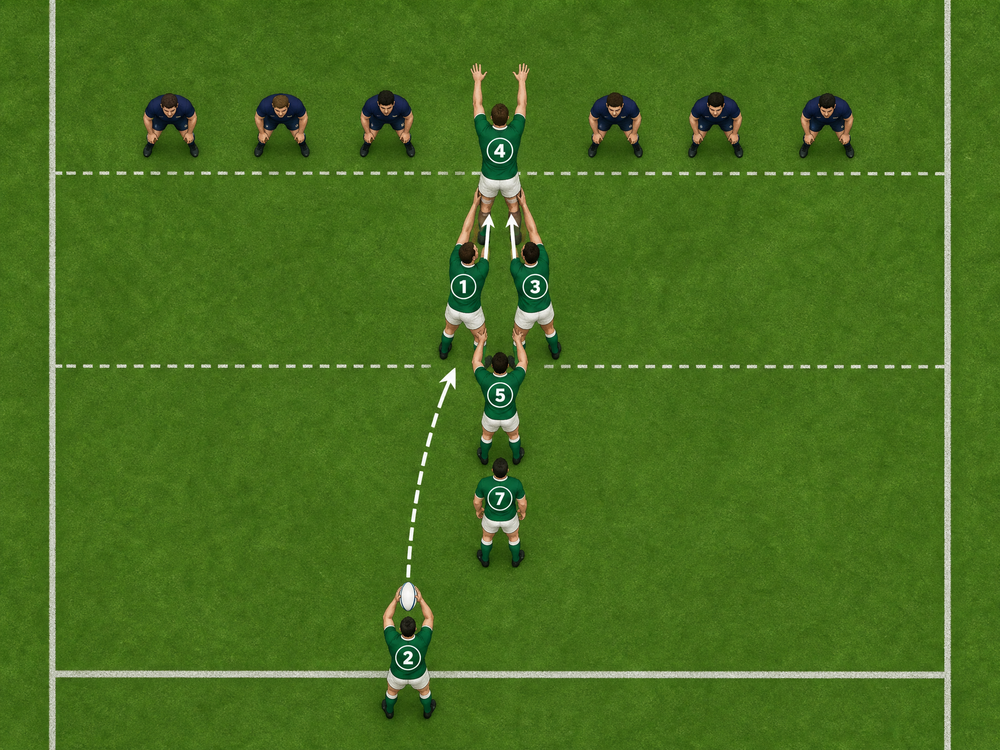
- Forwards (1, 3, 4, 5, 6, 7): Positioned between the 5m and 15m lines in a standard 7-man formation.
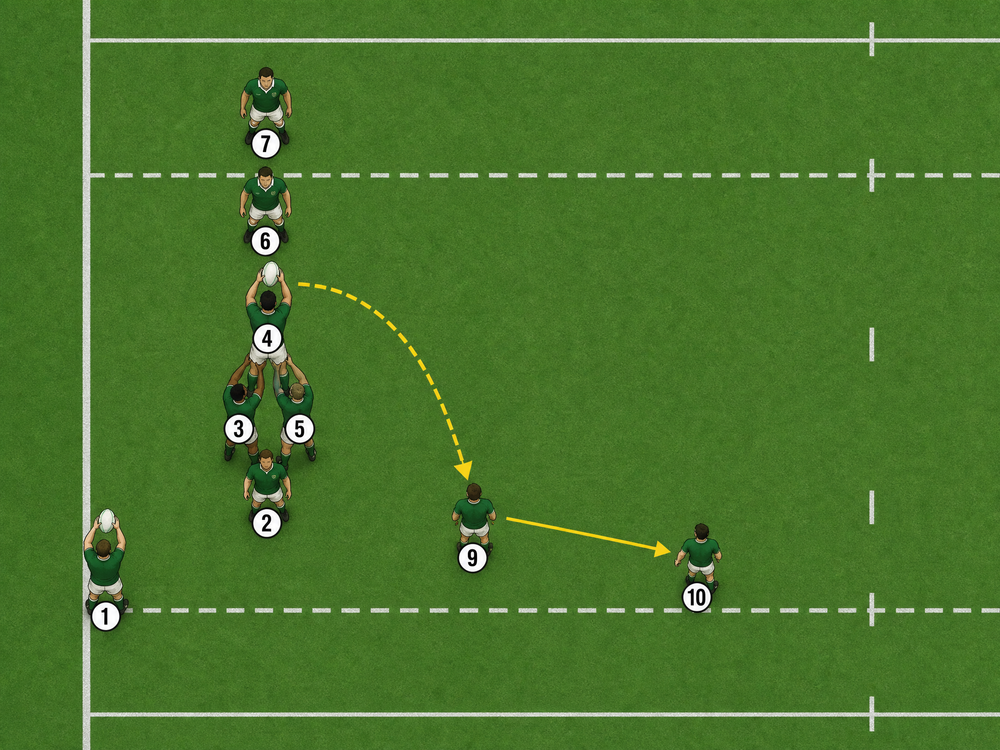
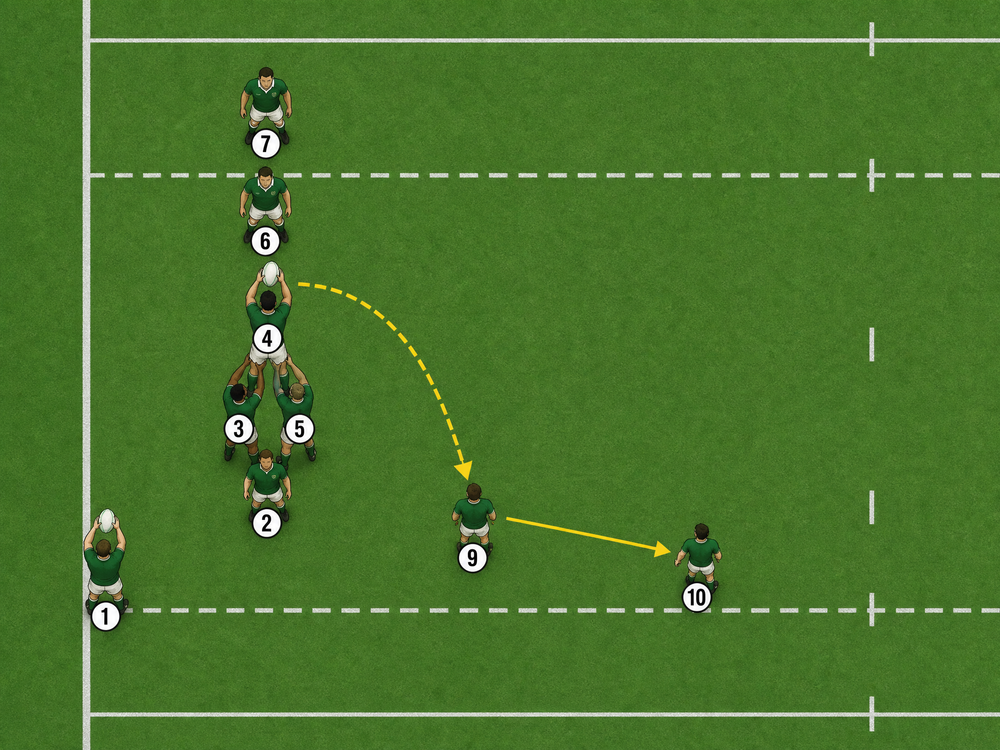
- Scrum-half (9): Positioned 2 meters behind the lineout, ready to receive the ball.
- Fly-half (10): Positioned 10-15 meters deep and wide, anticipating the pass from the 9.
3. Step-by-Step Instructions
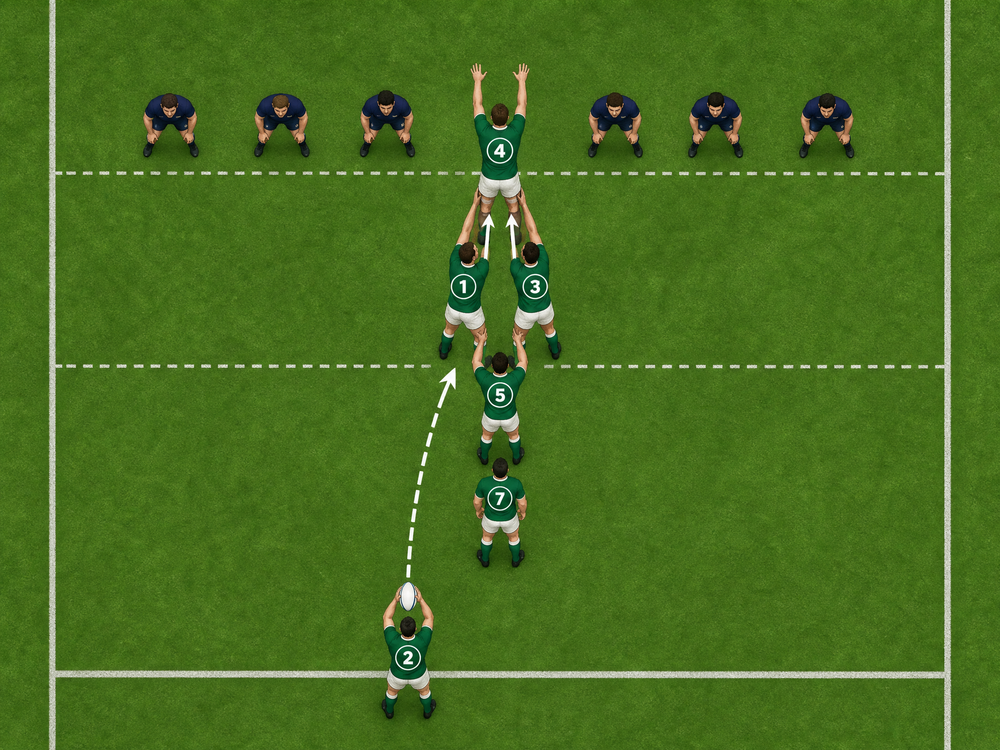
- The Call: The designated lineout caller (usually a lock or the hooker) makes a clear, concise call indicating the target jumper (e.g., Number 4) and the type of throw (e.g., front, middle, back).
- The Movement: Upon the call, the forwards execute their pre-planned movement to create space and confuse the opposition. This might involve dummy jumps or quick shifts along the line.
- The Set: The jumper (4) steps firmly into the designated jumping zone. Simultaneously, the front lifter (1) and back lifter (3) close the gap, positioning themselves squarely in front and behind the jumper.
- The Lift: As the jumper springs upward, driving with their legs and extending their arms, the lifters execute an explosive, synchronized lift. The front lifter grips the jumper just above the knees, while the back lifter grips below the buttocks (the 'shorts' grip).
- The Throw: The hooker (2) delivers a flat, accurate throw to the apex of the jumper's reach. Timing is paramount; the ball must arrive exactly as the jumper reaches their maximum height.
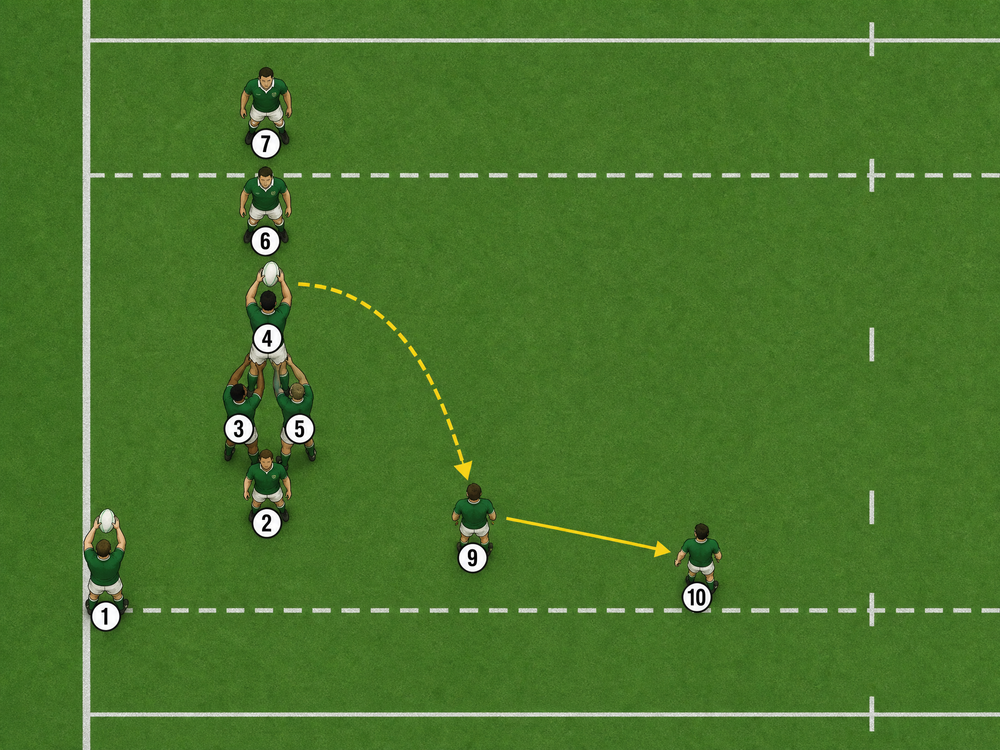
- The Catch and Delivery: The jumper (4) secures the ball with two hands, maintaining a strong core and stable body position in the air. Immediately upon catching, the jumper turns their upper body and delivers a crisp, downward pass to the waiting scrum-half (9).
- The Clearance: The scrum-half (9) receives the ball cleanly and immediately fires a fast, accurate pass to the fly-half (10), initiating the attacking phase.
- The Landing: The lifters control the jumper's descent, ensuring a safe and stable landing back on the ground, ready to engage in the next phase of play (e.g., forming a maul or fanning out for attack).
4. Key Coaching Points
- Explosive Leg Drive: The jumper must initiate the upward movement with a powerful leg drive; the lifters are there to assist and hold, not to do all the lifting.
- Core Stability in the Air: The jumper must maintain a tight core and strong posture while suspended to provide a stable platform for catching and passing.
- Synchronized Timing: The success of the lineout hinges on the precise timing between the caller, the jumper's movement, the lifters' engagement, and the hooker's throw.
- Accurate, Flat Throwing: The hooker must focus on hitting the target with a flat, fast trajectory, minimizing the time the ball is in the air and vulnerable to interception.
- Safe and Controlled Descent: Lifters must never drop the jumper. A controlled descent is crucial for player safety and rapid transition to the next phase.
5. Common Mistakes
- Telegraphing the Jump: Forwards staring directly at the intended jumping zone before the call, giving away the play to the opposition.
- Poor Lifting Technique: Lifters using their backs instead of their legs to generate power, or failing to lock their arms at the apex of the lift.
- Inaccurate Throwing: Hookers throwing lobbed or looping passes, allowing the opposition time to compete in the air.
- Slow Ball Delivery: The jumper holding onto the ball too long in the air, or the scrum-half hesitating before passing to the fly-half.
6. Variations & Progressions
- Add Opposition (Uncontested): Introduce a defensive lineout pod that mirrors the attacking movements but does not jump to compete for the ball. This adds visual pressure.
- Add Opposition (Contested): Allow the defensive pod to actively compete for the ball in the air, forcing the attacking team to execute with greater speed and precision.
- Vary the Target: Practice throwing to the front (jumper 2 or 4), middle (jumper 4 or 5), and back (jumper 5 or 7) of the lineout to develop a versatile set-piece.
- Transition to Maul: Instead of passing to the scrum-half, have the jumper bring the ball down and immediately form a driving maul with the supporting forwards.
7. Age Adaptations
- Under 8 - Under 12: Focus entirely on the basics of throwing and catching. Introduce uncontested lineouts with no lifting. Emphasize correct throwing technique for the hooker and two-handed catching for the forwards.
- Under 14: Introduce basic, low-level lifting (supporting at the waist) in a controlled environment. Focus on timing and coordination between the jumper and lifters. Ensure all players understand the safety requirements.
- Under 16 & Open: Full contested lineouts with high lifting. Emphasize advanced movements, dummy jumps, and rapid ball delivery. Focus on analyzing opposition tendencies and adapting calls accordingly.
