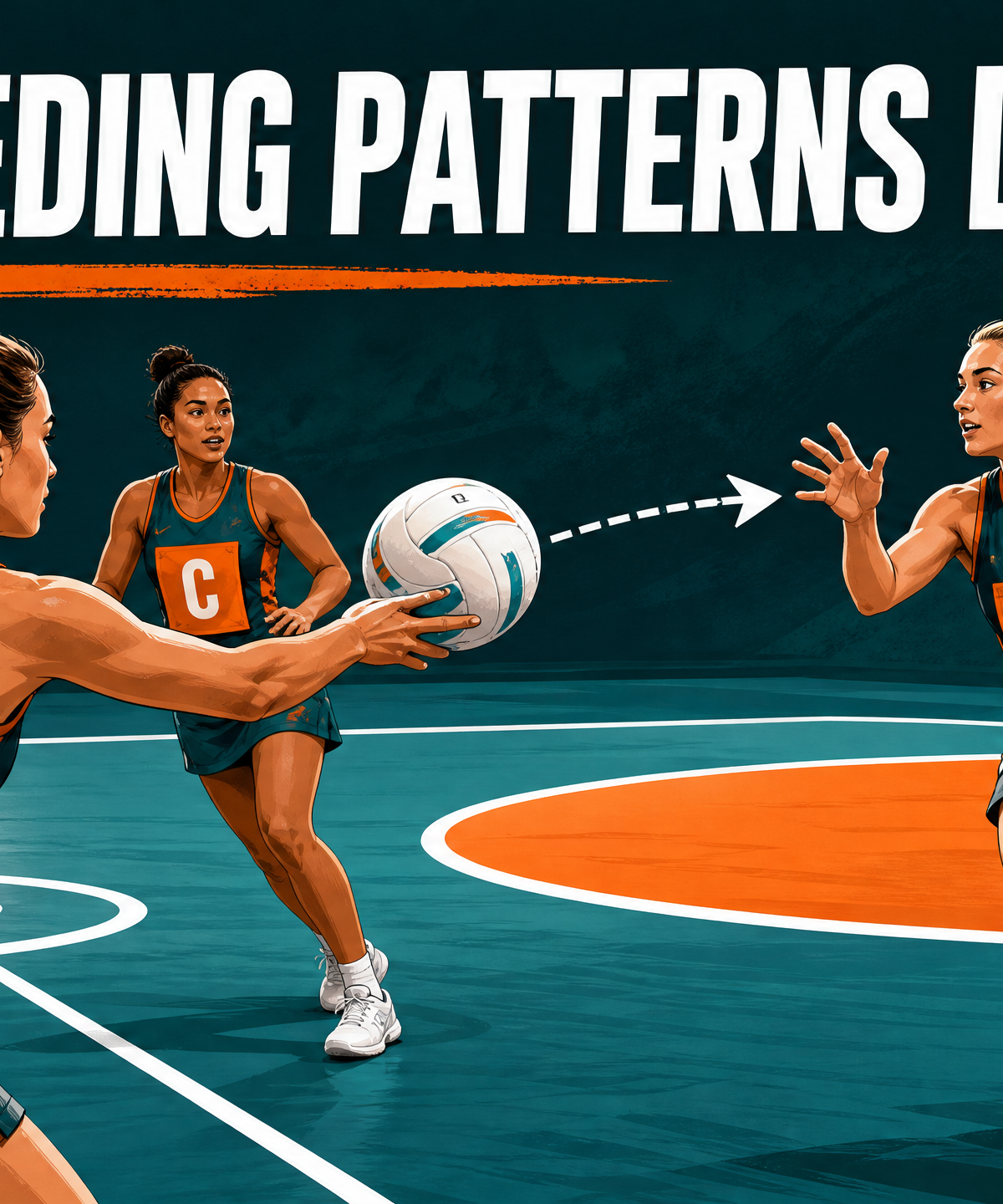
Mastering WA Feeding Patterns: Precision Circle Entry Drills
Equip your Wing Attack with the vision, timing, and precision passing required to dissect defensive setups and deliver pinpoint feeds to the shooters.
Equipment Needed
Overview
The Wing Attack (WA) is the primary playmaker in the attacking third, tasked with delivering the ball safely into the goal circle. This comprehensive drill sequence focuses on developing a WA's ability to read the movement of the Goal Attack (GA) and Goal Shooter (GS), execute varied feeding patterns, and bypass defensive pressure. By mastering flat passes, double leads, and overhead lobs, your attacking unit will become unpredictable and highly efficient at converting possession into scoring opportunities.
Setup
Equipment Needed:
- 1 Netball
- Set of positional bibs (WA, C, GA, GS, WD)
- Cones (optional, for marking starting positions if needed)
Court Setup:
- Use the attacking third and the centre third of a standard netball court (30.5m x 15.25m).
Player Positions:
- WA (Wing Attack): Starts in the centre third, near the transverse line.
- C (Centre): Starts centrally, just inside the centre third or in the centre circle.
- GA (Goal Attack): Starts in the attacking third, varying positions based on the drill phase.
- GS (Goal Shooter): Starts inside the goal circle (4.9m radius).
- WD (Wing Defence): Introduced in later progressions to add defensive pressure.
Step-by-Step Instructions
Drill Phase 1: Flat Pass to Lead
This initial phase establishes the timing and accuracy required for a direct, flat pass to a leading player.
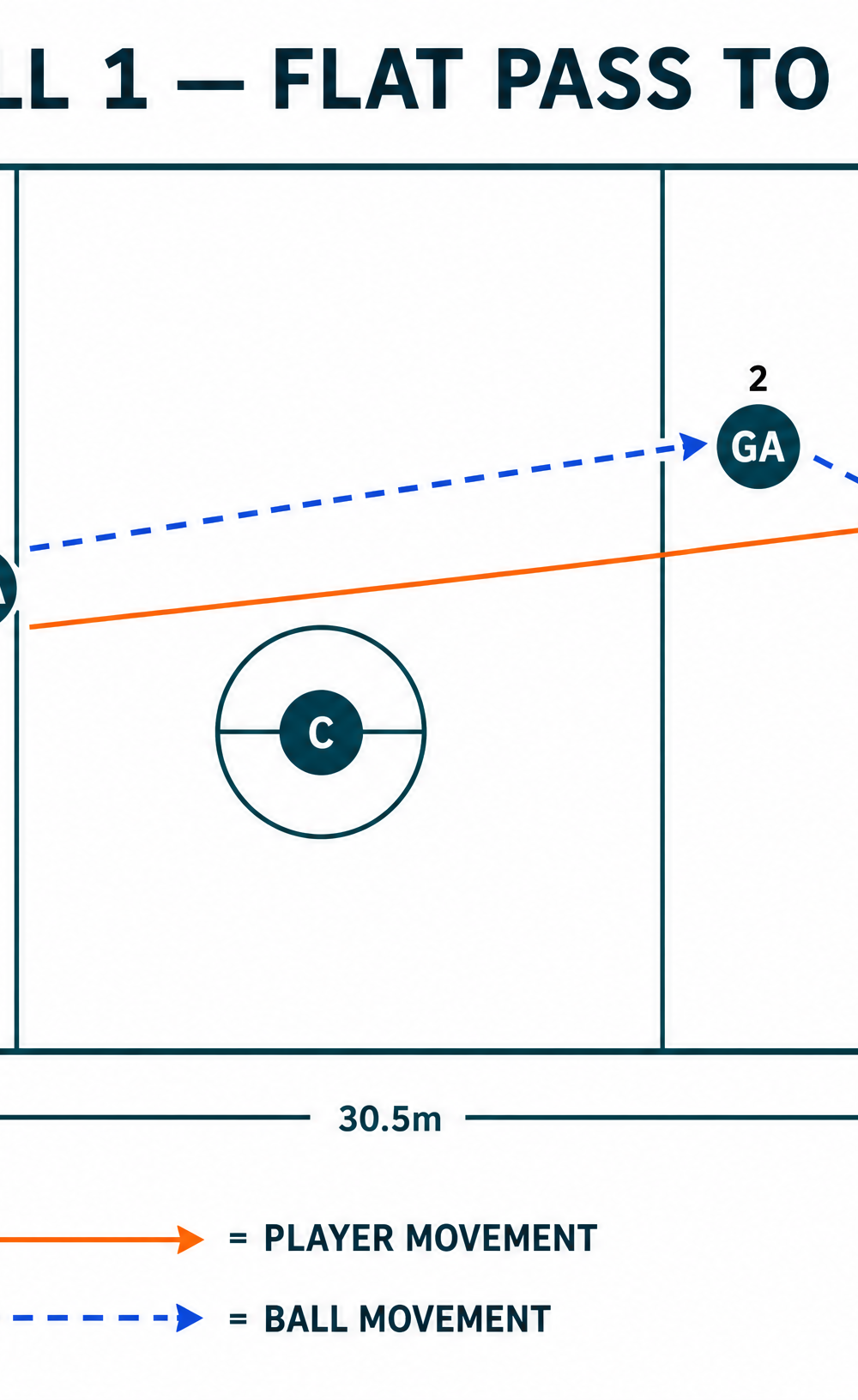
- Starting Positions: WA starts on the left side of the centre third near the transverse line. GA starts on the right side of the attacking third. GS is positioned inside the goal circle.
- The Drive: WA drives strongly towards the goal circle edge to receive a simulated pass from the defensive end (or a coach).
- The Lead: As WA receives the ball, GA makes a sharp, angled lead towards the top of the goal circle.
- The Feed: WA immediately delivers a hard, flat pass into the space ahead of the driving GA.
- Circle Entry: Upon receiving the ball, GA immediately looks into the circle and delivers a lead pass to the GS holding space.
- Reset: Players return to starting positions and repeat, switching sides after 5-8 repetitions.
Drill Phase 2: Double Lead & Circle Entry
This phase introduces complexity by utilizing the Centre (C) as a link player, requiring the WA to read a double lead scenario.
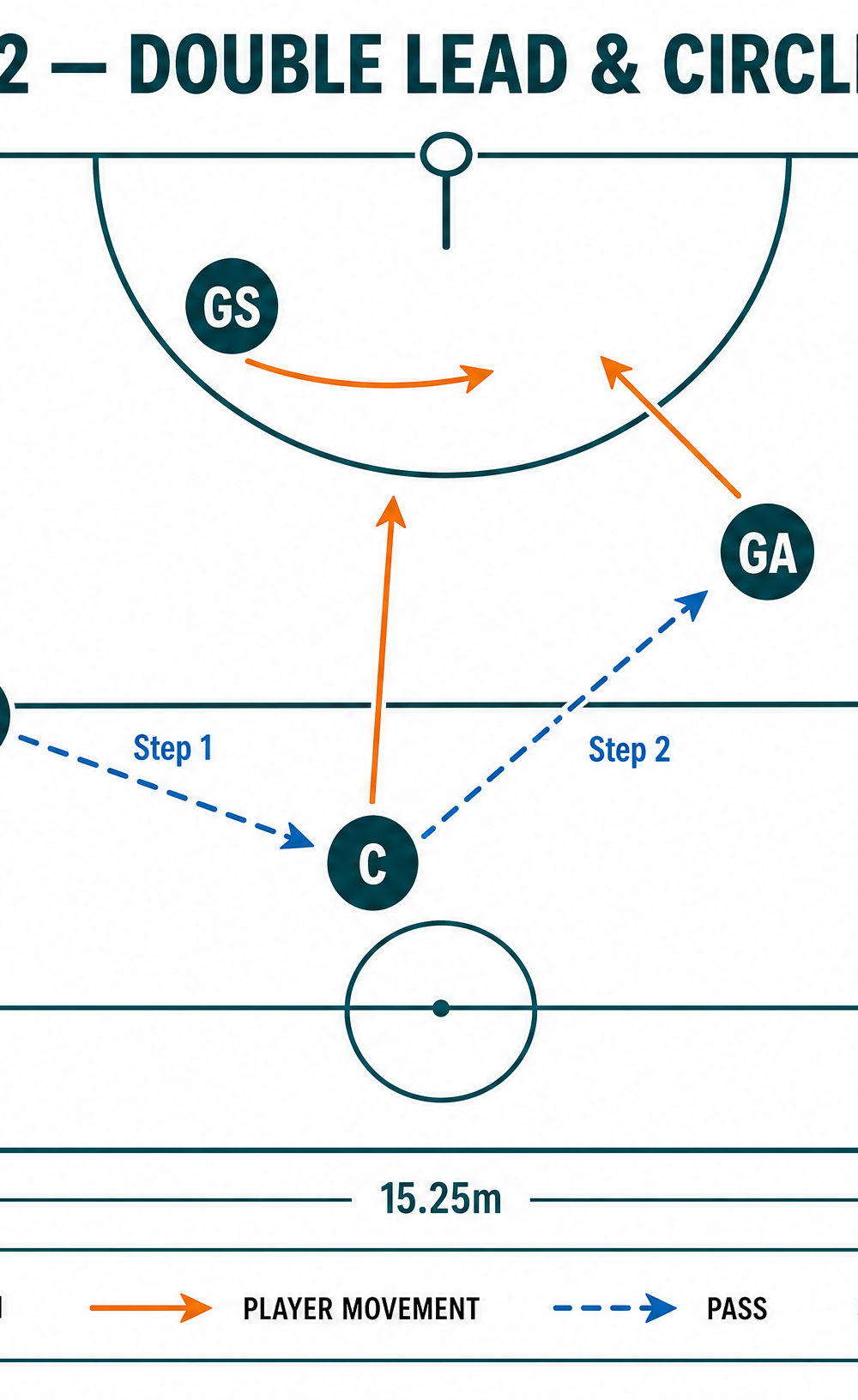
- Starting Positions: WA starts wide left near the transverse line. C is positioned centrally just inside the centre third. GA is positioned right of centre in the attacking third. GS is inside the goal circle on the left post side.
- First Phase: C drives forward to receive a short, sharp pass from the WA.
- Second Phase: Simultaneously, GA makes a diagonal lead towards the top of the goal circle.
- The Link: C receives the ball from WA and immediately delivers a through-ball pass to the leading GA.
- Circle Rotation: As GA receives the ball, GS rolls across the baseline to create space and receive the final feed under the post.
- Reset: Reset and repeat, ensuring all players understand the timing of the dual movements.
Drill Phase 3: Hold, Release & Lob Over Defender
This advanced phase introduces a defender (WD) on the WA, forcing the attackers to use holds, changes of direction, and varied pass types (lobs) to successfully feed the circle.
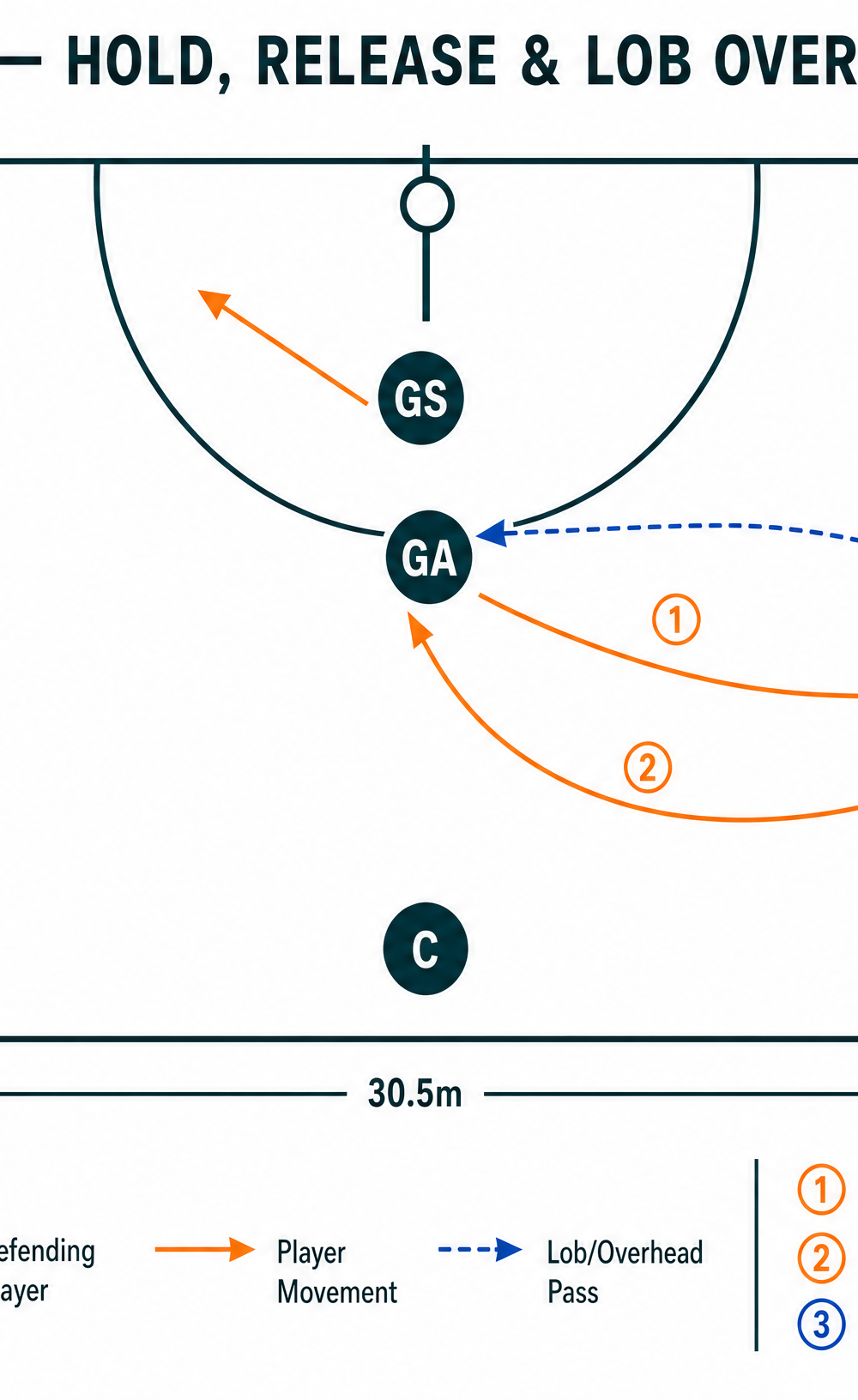
- Starting Positions: WA starts wide right near the sideline, marked closely by a WD. GA starts at the top of the goal circle. GS is inside the goal circle. C is at the top of the attacking third (acting as a reset option).
- Creating Space: GA makes a wide lead away from the goal circle to draw their defender and create space in the middle.
- The Double-Back: GA abruptly changes direction, doubling back on a diagonal lead towards the space created near the goal circle edge.
- The Feed: WA, under pressure from the WD, executes a precise lob or overhead pass over the defender into the space for the driving GA.
- Shooter Movement: GS moves to the opposite post to isolate their defender and prepare for the final feed from GA.
- Reset: Rotate the defender and repeat the sequence.
Key Coaching Points
- Vision Before Receiving: The WA must look into the attacking third before receiving the ball to anticipate the GA and GS movements.
- Pass Selection: Emphasize the importance of choosing the right pass (flat, bounce, or lob) based on the defender's position and the receiver's speed.
- Timing of the Lead: The GA must time their drive so they are arriving in the space exactly as the WA is ready to release the ball. Leading too early kills the space.
- Placement into Space: The WA must pass to the space ahead of the moving player, not directly at their body, allowing them to take the ball on the run.
- Strong Holds: When using lobs, the receiving player (GA or GS) must establish a strong physical hold against their defender to protect the landing space.
Common Mistakes
- Forcing the Pass: The WA attempting a feed when the GA or GS is heavily defended, rather than using the C to reset the play.
- Passing Behind the Player: Delivering the ball behind the leading GA, causing them to break stride and allowing the defense to intercept.
- Lack of Eye Contact: Failure of the WA and the intended receiver to make eye contact before the pass is thrown, leading to miscommunications.
- Telegraphing the Pass: The WA staring down their intended target, allowing the defense to anticipate and intercept the feed.
Variations & Progressions
- Add Full Defense: Progress from passive defense to full, contested defense on all attacking players (WA, GA, GS) to simulate match conditions.
- Time Limits: Introduce a 3-second rule for the WA to release the ball, forcing quicker decision-making under pressure.
- Restrict Pass Types: Specify that only bounce passes or only overhead passes can be used for the final feed into the circle to develop specific passing skills.
Age Adaptations
- Under 8 / Under 10: Focus purely on Drill Phase 1 (Flat Pass to Lead) without defenders. Emphasize basic catching, passing technique, and moving towards the ball.
- Under 12 / Under 14: Introduce Drill Phase 2 and basic passive defense. Focus on the timing of the leads and introducing different types of passes.
- Under 16 / Open: Utilize all phases with full, contested defense. Focus on high-speed execution, complex double leads, and advanced decision-making under pressure.