

Netball
Mastering the Two-Foot Landing: Essential Footwork Drill
A foundational footwork drill designed to help players master the two-foot landing, improve balance, and reduce the risk of injury on the court.
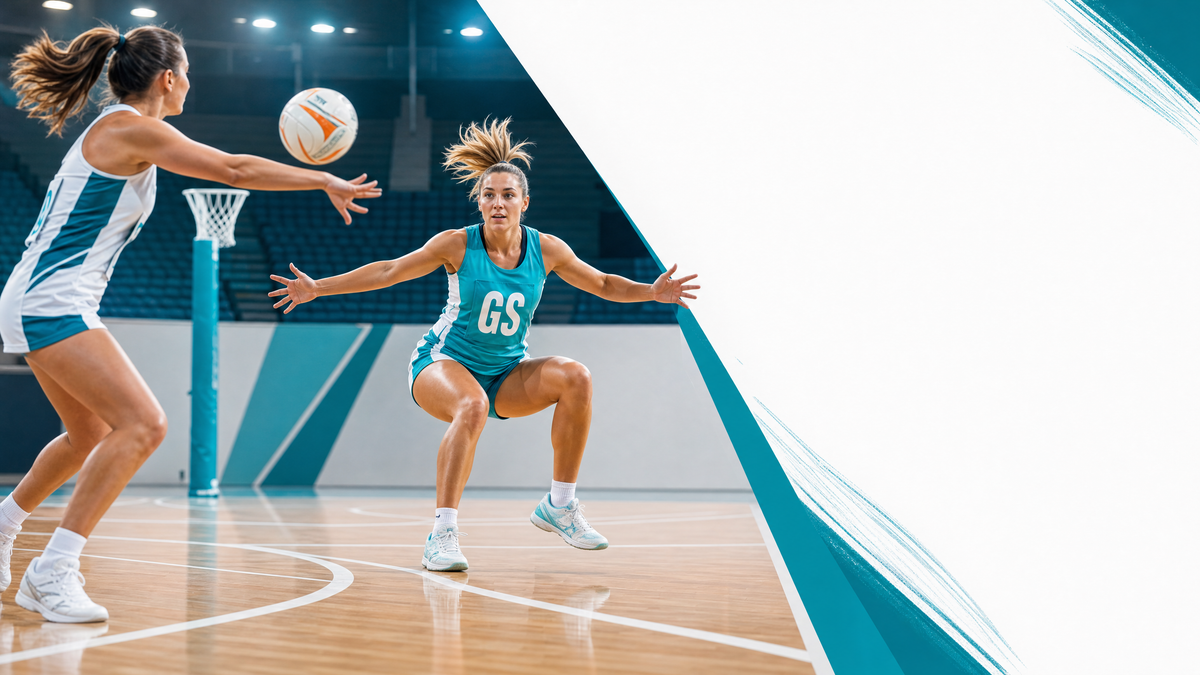
What you need
1 Netball per group, 4-6 Cones (optional)
Overview
Footwork is the foundation of every successful netball player. Without balance and control upon receiving the ball, passing accuracy drops, and the risk of stepping or contact penalties increases. This drill focuses specifically on the two-foot landing—a critical skill that allows players to choose their pivot foot after receiving the ball, providing greater tactical flexibility and stability. Use this drill early in your session to reinforce good habits before progressing to more complex, game-like scenarios.
Setup
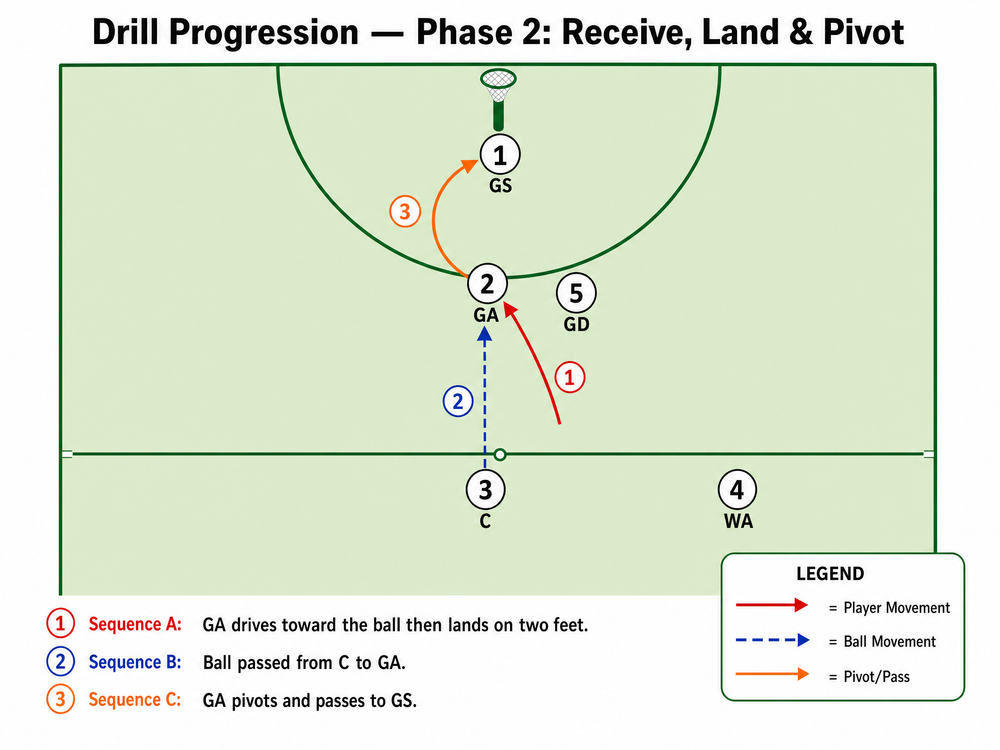
To run this drill effectively, you will need a clear section of the court and a few basic pieces of equipment.
- Equipment: 1 Netball per group, 4–6 cones (optional, to mark starting points).
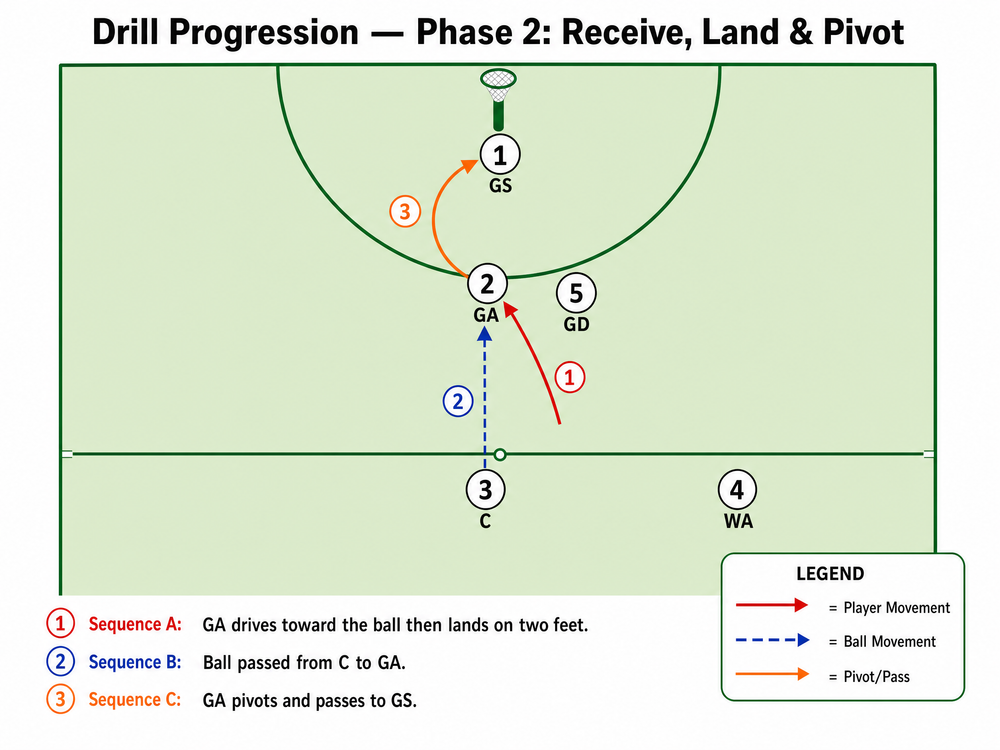
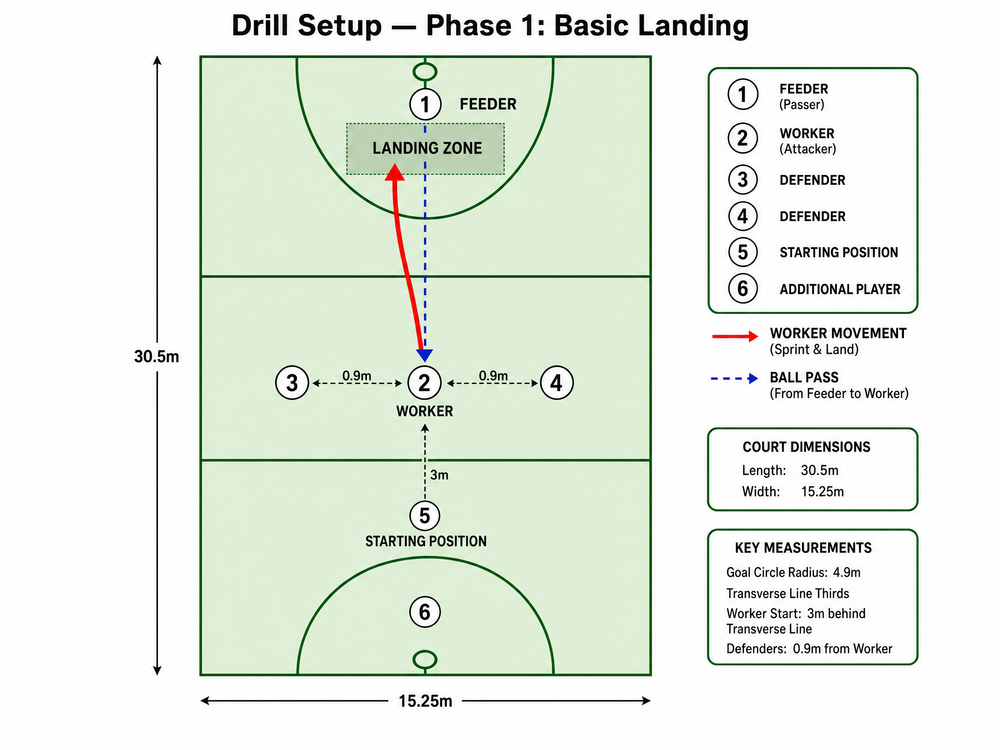
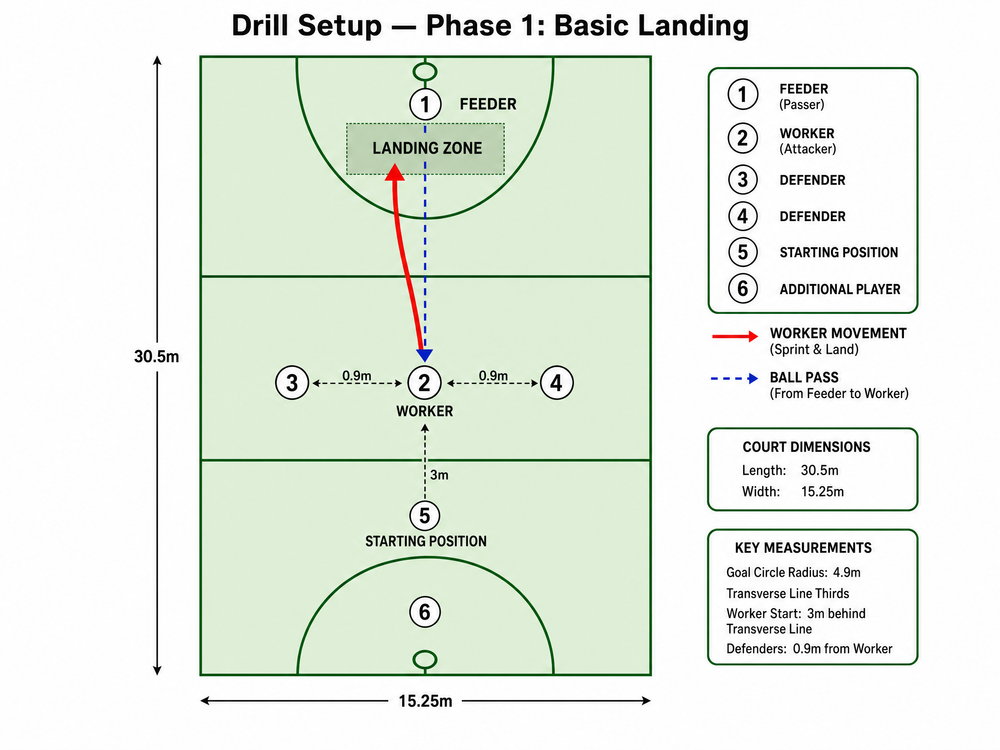
- Court Setup: Use the centre third and one goal third of a standard netball court (30.5m x 15.25m).
- Player Positions: Divide players into groups of 4–6.
- Feeder (F): Standing at the top of the goal circle.
- Worker (W): Starting 3m behind the transverse line in the centre third.
- Defenders (D1, D2): (Optional for progression) Standing 0.9m away from the worker's landing zone.
Step-by-Step Instructions
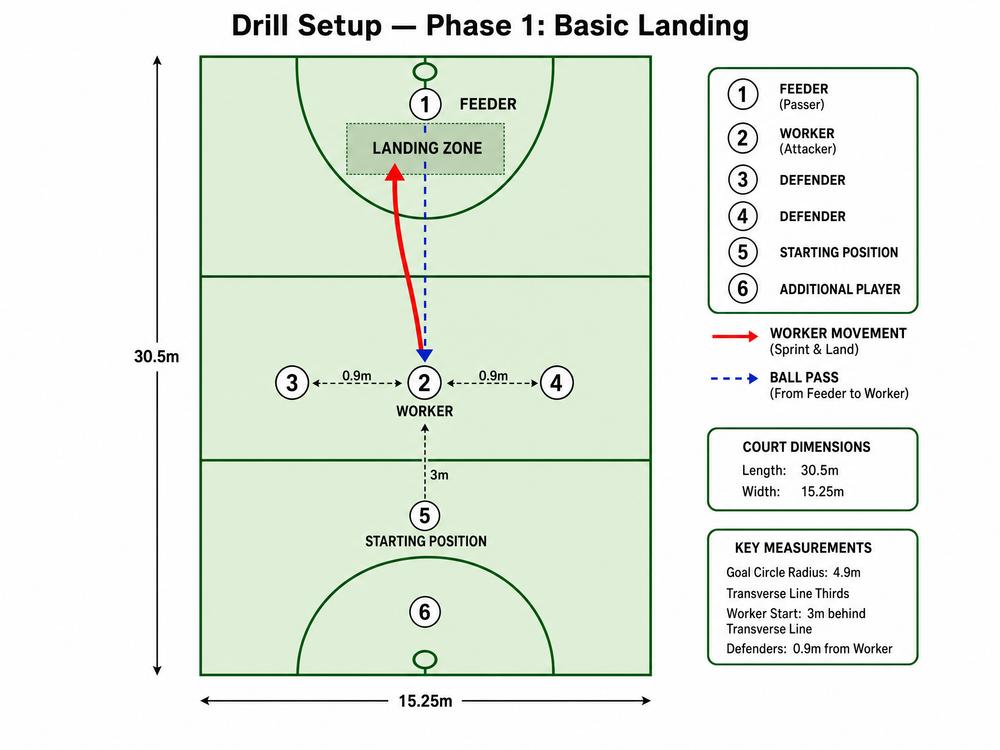
Follow these steps to execute the basic landing phase of the drill. Ensure players are focused on technique rather than speed during the initial repetitions.
- Starting Position: The Worker (W) starts 3m behind the transverse line, facing the Feeder (F).
- The Drive: On the Feeder's call (or whistle), the Worker sprints forward aggressively toward the top of the goal circle.
- The Pass: As the Worker approaches the transverse line, the Feeder delivers a firm, flat chest pass to the space in front of the Worker.
- The Catch and Land: The Worker catches the ball in the air and lands simultaneously on both feet inside the goal circle.
- The Hold: The Worker must hold the landing for a full three seconds, demonstrating perfect balance with knees bent, chest up, and weight evenly distributed.
- The Reset: The Worker passes the ball back to the Feeder and jogs back to the starting position. Rotate players after 5–8 repetitions.
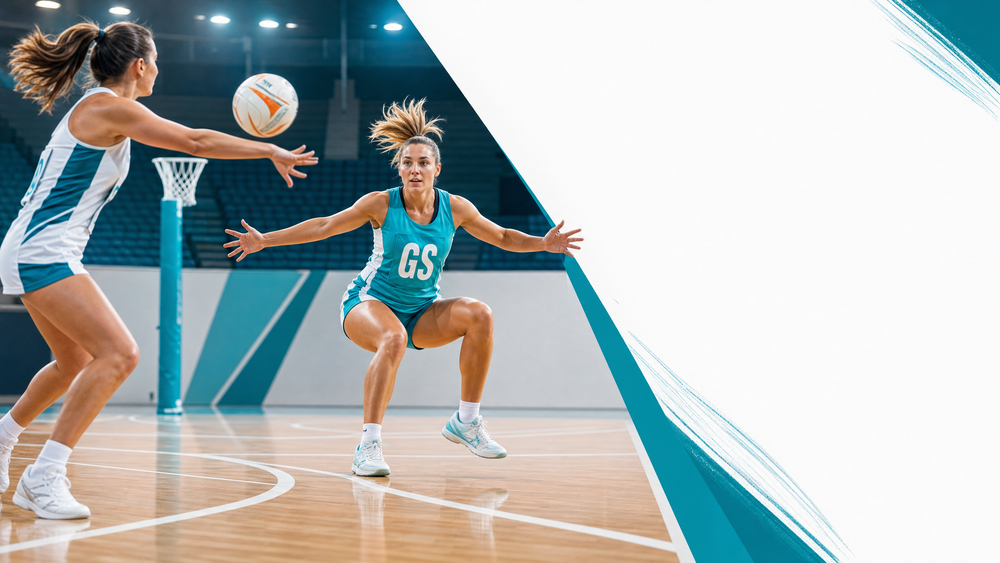
Key Coaching Points
When observing your players, focus on these critical elements to ensure they are executing the landing correctly:
- Simultaneous Impact: Ensure both feet hit the ground at exactly the same time. A staggered landing limits the player's ability to choose their pivot foot.
- Soft Knees: Players should bend their knees upon impact to absorb the shock. Stiff legs lead to jarring landings and potential knee or ankle injuries.
- Base of Support: Feet should be roughly shoulder-width apart upon landing. Landing with feet too close together compromises balance.
- Chest Up, Eyes Forward: Encourage players to keep their chest lifted and eyes looking down the court. Looking at the ground causes the body weight to shift forward, leading to a loss of balance or stepping.
- Strong Core: Engage the core muscles during the landing phase to stabilize the torso and prevent leaning.
Common Mistakes
Watch out for these frequent errors and correct them immediately:
- The "Stutter Step": Taking multiple small steps to slow down before catching the ball, rather than driving strongly and committing to the landing.
- Landing Heavy: Landing flat-footed with a loud thud, indicating a lack of shock absorption through the knees and ankles.
- Falling Forward: Momentum carrying the player forward after the catch, resulting in a stepping penalty. This usually happens when the player reaches too far forward for the ball instead of letting it come to them, or failing to drop their hips on landing.
Variations & Progressions
Once players have mastered the basic two-foot landing, introduce these progressions to increase the difficulty and simulate match conditions.
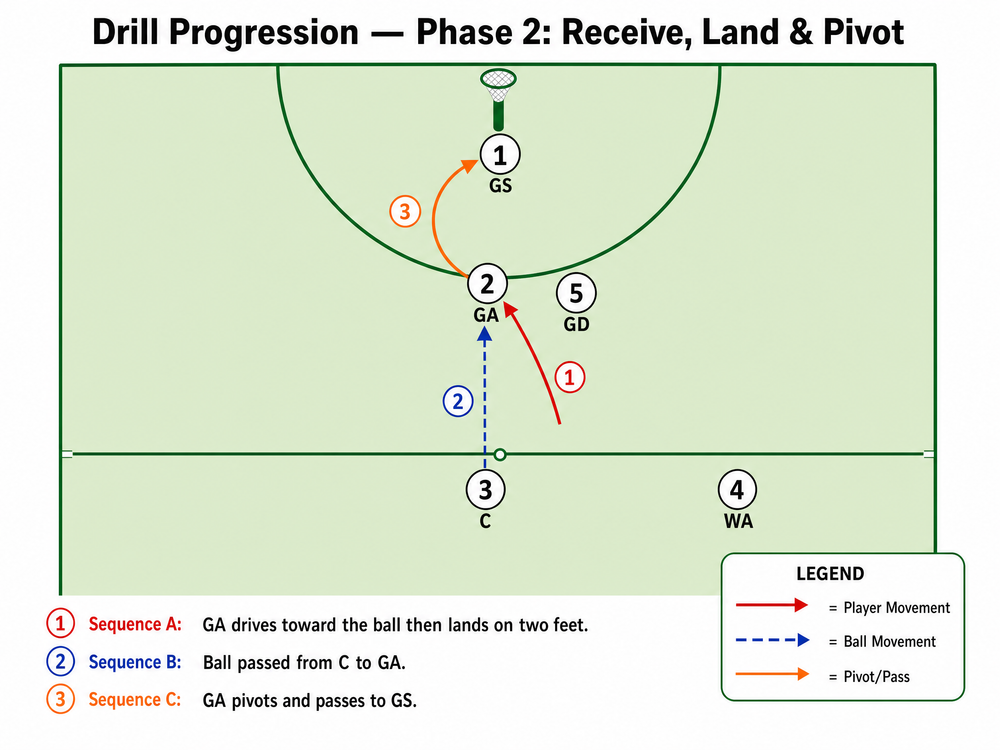
Progression 1: Add a Pivot and Pass
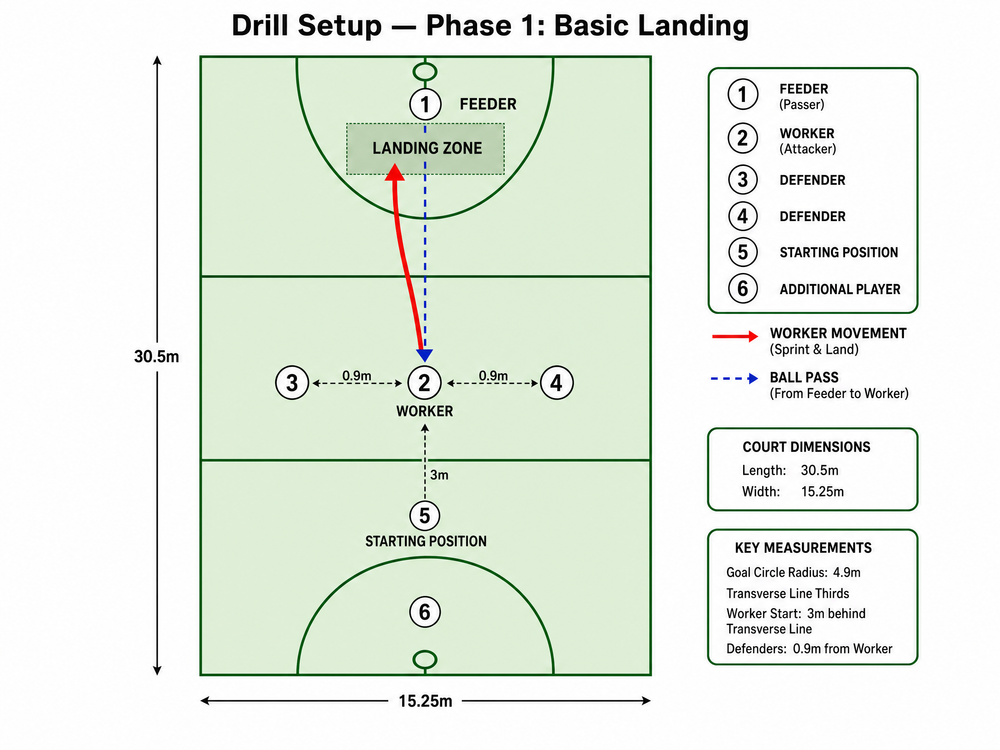
Instead of just holding the landing, the Worker must now execute a pivot before passing the ball to a third player (e.g., a Goal Shooter inside the circle). This teaches players to transition smoothly from landing to the next phase of play.
Progression 2: Add Passive Defense
Introduce a static defender standing near the landing zone. The Worker must still execute a perfect two-foot landing while dealing with the visual distraction and spatial pressure of a defender.
Progression 3: Dynamic Delivery
Vary the type of pass delivered by the Feeder. Instead of a flat chest pass, use lob passes, bounce passes, or passes placed slightly to the left or right, forcing the Worker to adjust their body position in the air before landing.
Age Adaptations
Tailor the drill to suit the developmental stage of your players.
| Age Group | Adaptation |
|---|---|
| Under 8 / Under 10 | Focus entirely on the "stop" rather than the catch. Have players run and stop on two feet without a ball first. Once they can balance, introduce a soft, looped pass. |
| Under 12 / Under 14 | Introduce the pivot progression early. Emphasize the importance of choosing the correct pivot foot based on where they want to pass next. |
| Under 16 / Open | Run the drill at match intensity. Demand perfection on the landing and rapid transition to the next pass. Incorporate active defense to increase the pressure. |
