

Football
High-Intensity Pressing Triggers and Defensive Recovery Drill
Equip your squad to execute coordinated pressing traps and recover shape immediately when the press is broken.
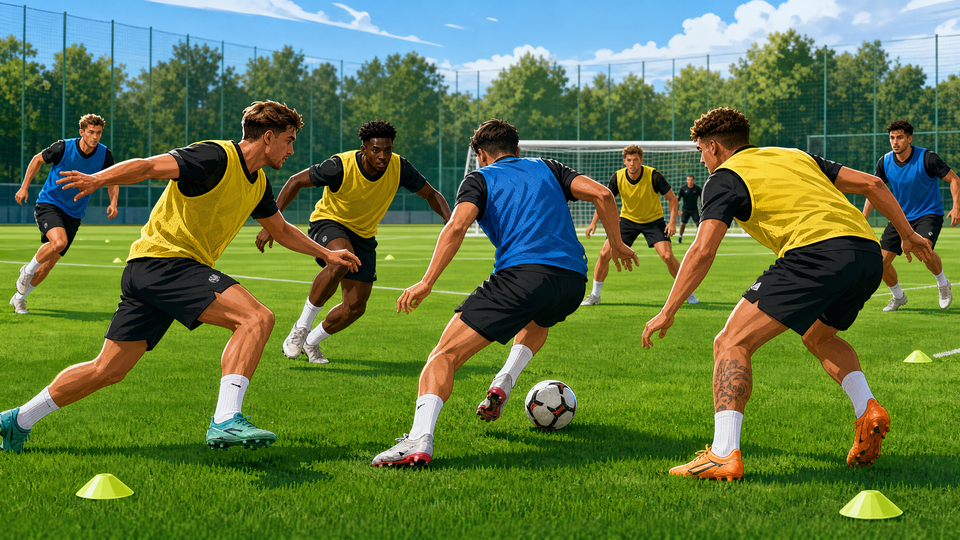
What you need
1 full-size goal, 2 mini-goals, 10-12 bibs (two colors), Footballs, Marker cones
1. Overview
Modern football demands a proactive approach out of possession. This comprehensive drill focuses on two critical phases of defending: identifying and acting upon pressing triggers, and executing a rapid defensive recovery when the initial press is bypassed. By rehearsing these transitions, your players will learn to hunt the ball aggressively while maintaining the discipline to sprint back and protect central areas if the opposition breaks the lines. This drill is essential for teams looking to employ a high press without leaving themselves vulnerable to quick counter-attacks.
2. Setup
To ensure the drill reflects match intensity, utilize a significant portion of the pitch. Set up a playing area of approximately 60m x 40m, utilizing the width of a standard pitch (typically 64-75m) but compressing the length to encourage rapid transitions.
- Equipment Needed: 1 full-size goal, 2 mini-goals (or target zones marked by cones), 10-12 bibs (two distinct colors), a generous supply of footballs, and marker cones to outline the pressing zone.
- Player Positions: You will need 14-16 players, including at least one goalkeeper. Divide the squad into an attacking team (Blue, simulating playing out from the back) and a defending/pressing team (Red).
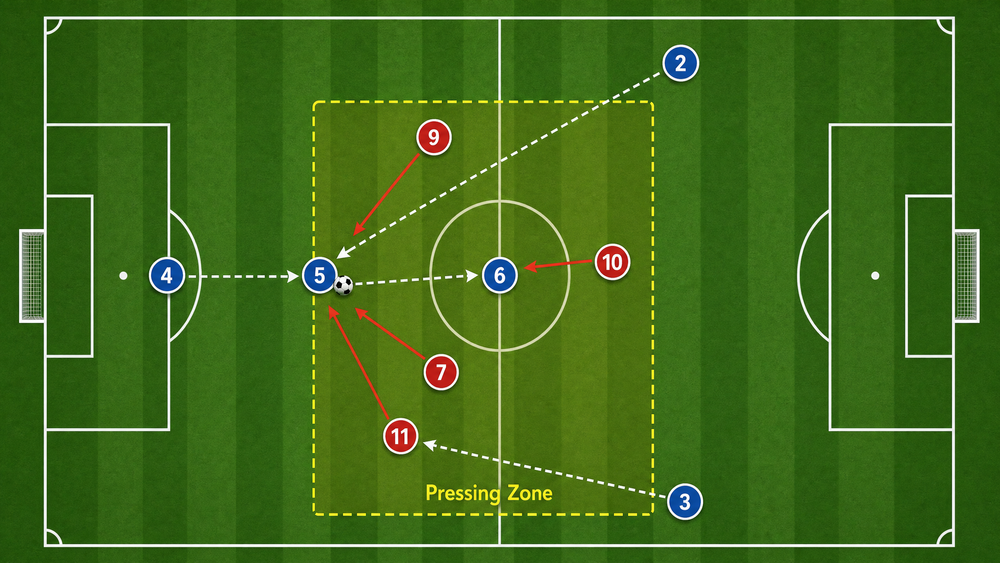
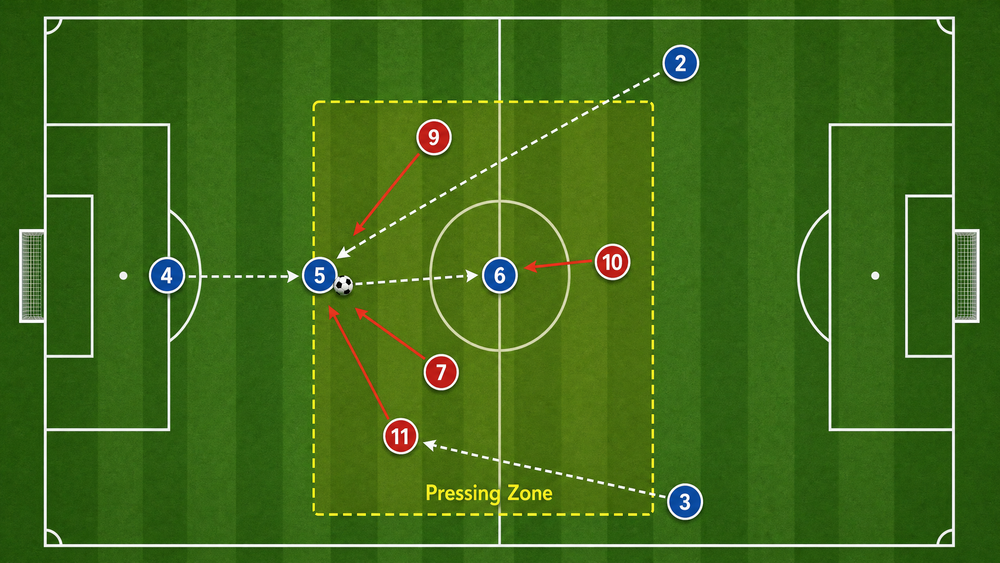
- Pitch Setup: Place the full-size goal at one end with the goalkeeper. Position the two mini-goals on the opposite end line. Mark a central 'Pressing Zone' (approx. 30m x 30m) where the primary engagement will occur.
3. Step-by-Step Instructions
Follow these steps to execute the drill effectively, ensuring players understand both their pressing responsibilities and recovery routes.
- Initiate Play: The drill begins with the Blue team's goalkeeper or center-back distributing the ball from the full-size goal area, aiming to build out from the back.
- Identify the Trigger: The Red team must wait for a specific pressing trigger. This could be a poorly weighted pass, a player receiving the ball facing their own goal, or a heavy first touch by a Blue defender.
- Execute the Press: Once the trigger occurs, the Red team's front line (e.g., the 9, 7, and 11) aggressively closes down the ball carrier, while the midfield (e.g., 10, 8, 6) steps up to cut off passing lanes.
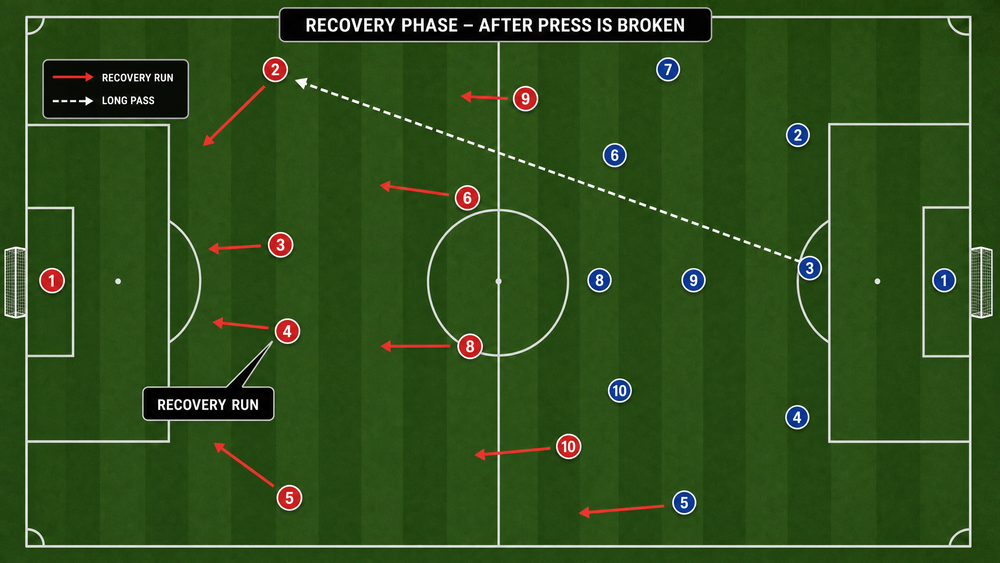
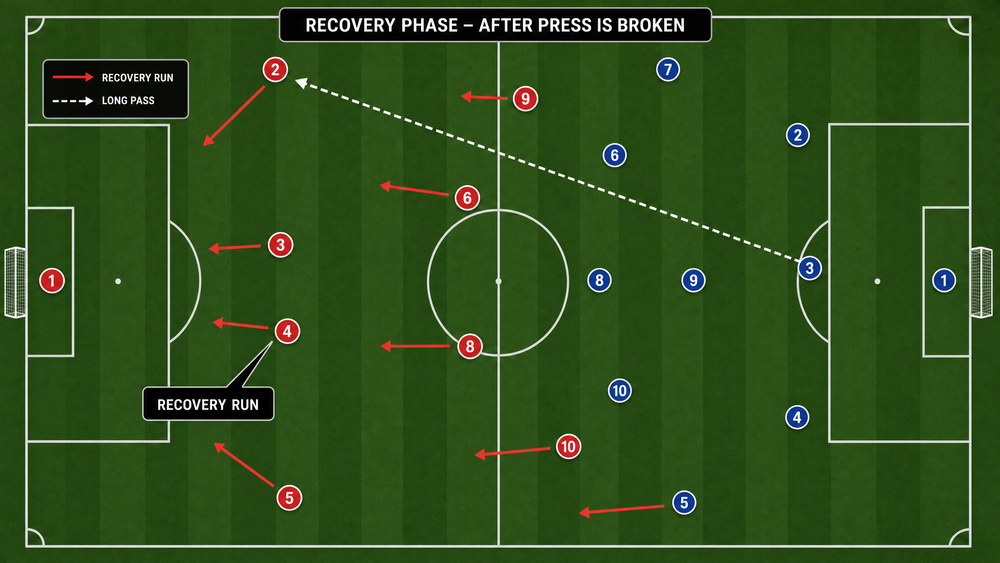
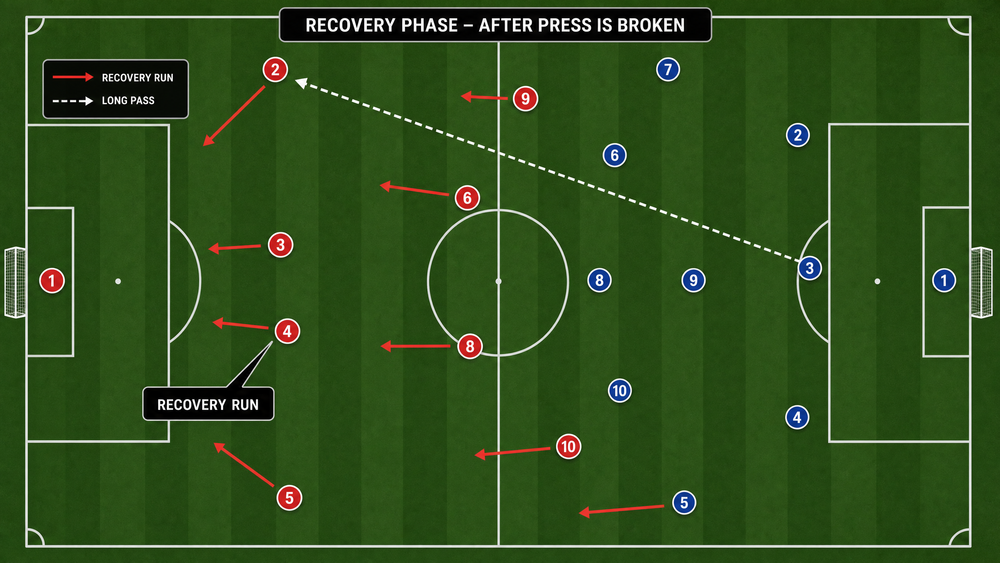
- Transition to Recovery: If the Blue team successfully bypasses the press—either by playing a long ball over the top or threading a pass through the lines—the coach blows the whistle or shouts "Recover!"
- Sprint to Shape: Immediately upon the press being broken, all Red players must abandon their high positions and sprint back toward their own goal line (the end with the mini-goals). They must drop below the ball and re-establish a compact defensive block.
- Reset and Repeat: Once the recovery is complete or the ball goes out of play, reset the drill from the starting position. Rotate players to ensure everyone experiences both the pressing and recovery roles.
4. Key Coaching Points
To maximize the effectiveness of this session, emphasize the following coaching points throughout the drill.
- Unified Movement: The press must be initiated as a cohesive unit. If one player presses while others hesitate, gaps will appear, and the press will easily be bypassed.
- Body Shape and Angling: Pressing players should approach the ball carrier with an angled run, forcing them onto their weaker foot or into congested areas where teammates are providing cover.
- Reaction Speed: The transition from pressing to recovering must be instantaneous. Players cannot afford to dwell on a failed press; they must react immediately to the ball bypassing them.
- Communication: Constant vocal communication is vital. Players must call out triggers ("Press!", "Step up!") and organize the recovery shape ("Drop!", "Tuck in!").
- Protect the Center: During the recovery phase, players must prioritize sprinting back centrally to protect the most dangerous areas before fanning out to cover wide threats.
5. Common Mistakes
Watch out for these frequent errors and correct them promptly to ensure the drill's objectives are met.
- Pressing Alone: A single player chasing the ball without support is easily bypassed, exhausting the player and compromising the team's shape.
- Jogging During Recovery: Players often jog back after a press is broken. Demand an all-out sprint to get back behind the ball.
- Ignoring Triggers: Pressing without a clear trigger (e.g., pressing a player in full control with passing options) wastes energy and pulls the team out of position.
- Over-Committing: Defenders diving in too aggressively can be easily beaten by a simple pass or dribble. They must approach with speed but brake and balance as they near the attacker.
6. Variations & Progressions
Adapt the drill to challenge your players further or focus on specific tactical elements.
- Add a Time Limit: Give the pressing team only 6-8 seconds to win the ball back once the trigger is activated. If they fail, they must immediately drop into a recovery block.
- Overload the Attack: Give the team building out from the back a numerical advantage (e.g., 8v6) to make the press more difficult and force more frequent recovery runs.
- Specific Triggers: Limit the pressing trigger to only one specific scenario, such as a pass to the full-back, to hone recognition of that exact situation.
7. Age Adaptations
Tailor the drill's complexity and physical demands based on the age group you are coaching.
- Under 10s / Under 12s: Focus primarily on the basic concept of pressing together and sprinting back. Reduce the pitch size and simplify the triggers (e.g., "Press when the coach yells 'Go!'").
- Under 14s / Under 16s: Introduce more complex, game-realistic triggers. Emphasize the tactical angles of the press and the specific defensive shape required upon recovery.
- Open / Senior: Run the drill at maximum match intensity. Demand precise communication, aggressive pressing traps, and lightning-fast recovery sprints. Implement strict tactical rules regarding who presses and who covers.
