

Cricket
Rapid-Fire Slip Cordon & Reaction Drill
Develop elite catching skills, sharp reflexes, and soft hands in the slip cordon with this high-intensity reaction drill.
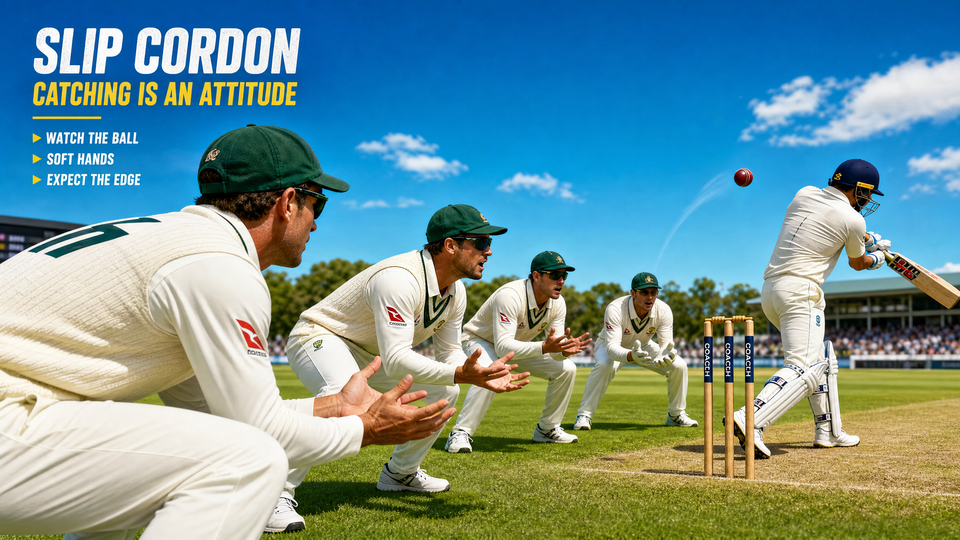
What you need
Cricket Bat, Bucket of Cricket Balls, 3 Stumps, Slip Cradle/Deflection Board (Optional)
1. Overview
The slip cordon is arguably the most crucial catching area on a cricket field. Matches are frequently won or lost based on the chances taken or dropped behind the wicket. This Rapid-Fire Slip Cordon & Reaction Drill is designed to simulate the unpredictable nature of edges off the bat. It focuses on developing soft hands, explosive lateral movement, low body positioning, and sustained concentration. This drill is highly effective when used as a pre-match activation exercise or as a core component of a dedicated fielding session.
2. Setup
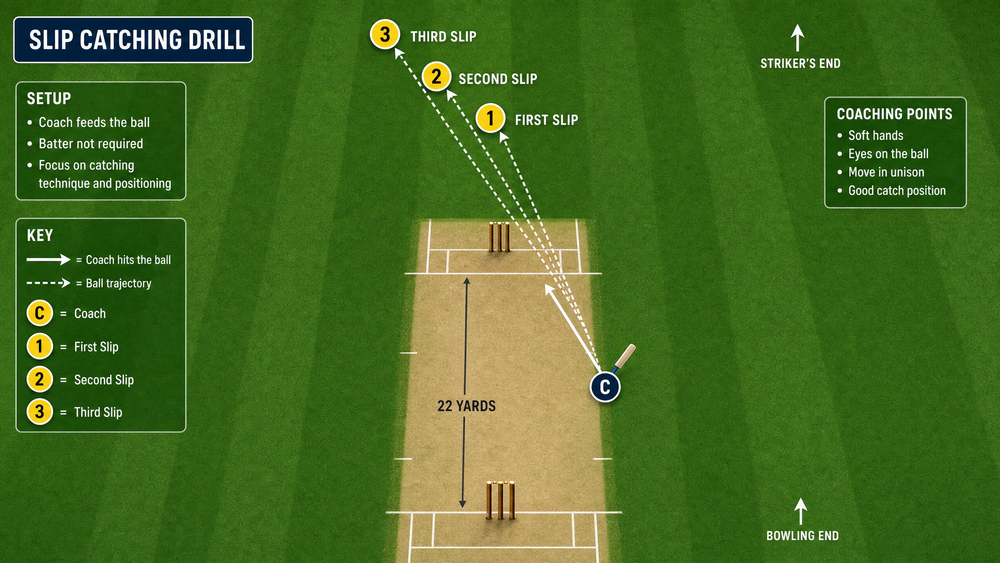
To run this drill effectively, you need to replicate match conditions as closely as possible.
Pitch & Field Setup:
- Utilize a standard 22-yard pitch or a similarly marked grass area.
- Set up three stumps at the striker's end to provide a realistic visual reference for the fielders.
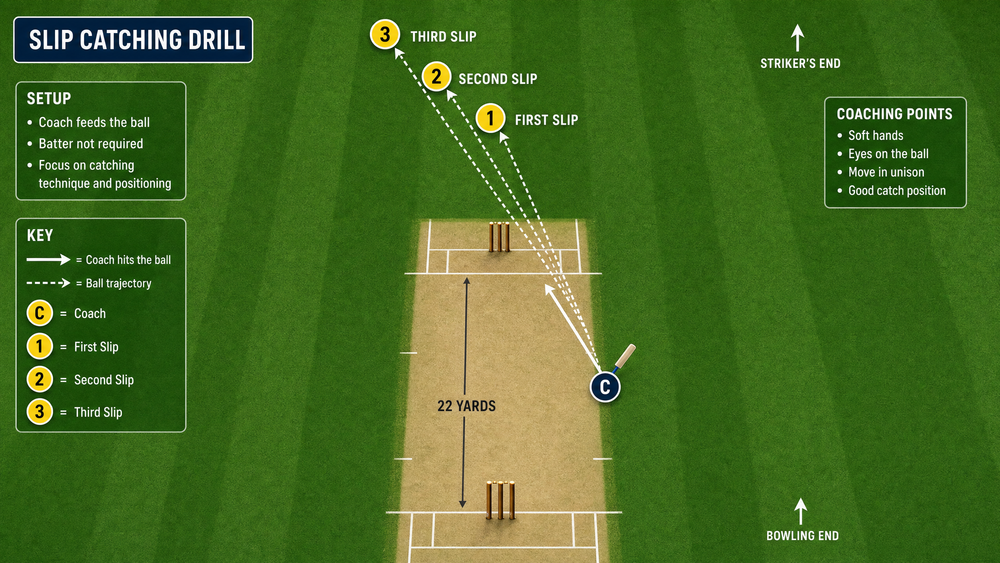
- The Coach (C) stands near the popping crease at the striker's end, armed with a cricket bat and a bucket of balls.
Player Positions:
- Position three fielders in the slip cordon: 1st Slip, 2nd Slip, and 3rd Slip.
- The fielders should be arranged in a staggered diagonal line, adjusting their depth based on the simulated pace of the bowler. For medium-fast bowling, 1st slip should be slightly deeper than 2nd slip, and so on.
- Ensure the spacing between fielders is realistic—close enough to cover the gaps, but wide enough to avoid collisions.
3. Step-by-Step Instructions
- The Stance: Instruct all fielders in the cordon to adopt a balanced, athletic ready position. Knees should be bent, weight slightly forward on the balls of the feet, and hands resting gently on or near the knees, ready to spring.
- The Feed: The Coach (C) initiates the drill by tossing a ball slightly in the air and striking it firmly with the bat towards the slip cordon. The aim is to simulate authentic edges—varying the pace, height, and angle of the catches.
- The Reaction: As the coach strikes the ball, all fielders must execute a small, synchronized 'split step' or forward press to engage their kinetic chain.
- The Catch: The fielder in the trajectory of the ball must track it closely, move their head towards the line of the ball, and attempt the catch.
- The Reset: Once the catch is taken (or dropped), the ball is quickly returned to a designated bucket or feeder, and the cordon immediately resets for the next delivery. Maintain a high tempo to challenge their fitness and focus.
4. Key Coaching Points
- Soft Hands: Emphasize the importance of 'giving' with the ball upon impact. The hands should act like shock absorbers, cushioning the ball into the palms rather than snatching at it.
- Watch the Ball into the Hands: Players must track the ball entirely from the bat all the way into their hands. A common error is looking up prematurely.
- Low Body Position: Encourage fielders to stay low. It is always easier to adjust upwards for a high catch than to drop down quickly for a low edge.
- Move in Unison: The entire cordon should move together. When the ball is hit, every fielder should react as if the ball is coming to them, maintaining their staggered formation.
- Expect Every Ball: Cultivate an attitude where every fielder genuinely believes the next ball is coming directly to them. This heightened state of anticipation is critical for slip catching.
5. Common Mistakes
- Snatching at the Ball: Fielders pushing their hands out aggressively towards the ball, resulting in hard hands and dropped catches.
- Standing Too Upright: A high center of gravity drastically reduces reaction time and lateral mobility, making low catches nearly impossible.
- Losing Concentration: In a match, edges can be infrequent. Drills must train the mind as well as the body. Fielders switching off between deliveries is a critical error.
- Poor Spacing: Fielders standing too close together, leading to confusion and collisions, or too far apart, creating unpluggable gaps in the cordon.
6. Variations & Progressions
To keep the drill challenging and engaging, introduce the following variations:
Progression 1: The Deflection Board
Introduce a slip cradle, catching ramp, or a deflection board. The coach throws or hits the ball onto the board, creating highly unpredictable, erratic deflections that rigorously test pure reaction speed.
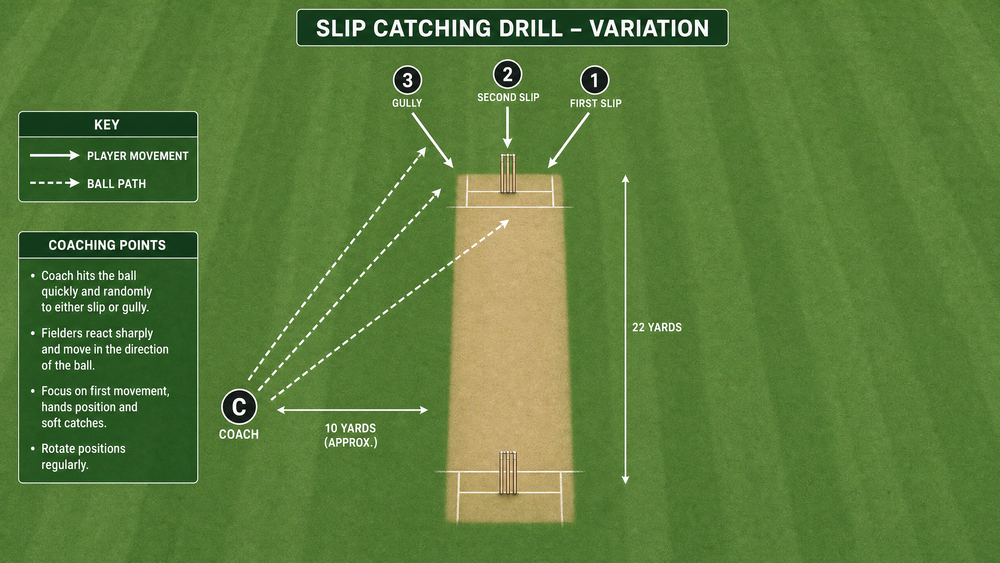
Progression 2: The Gully Variation
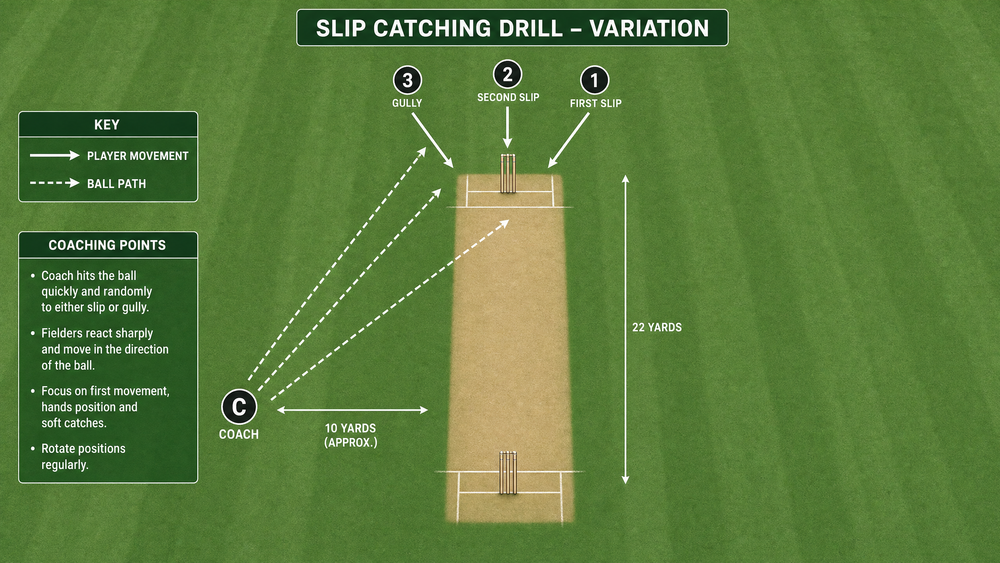
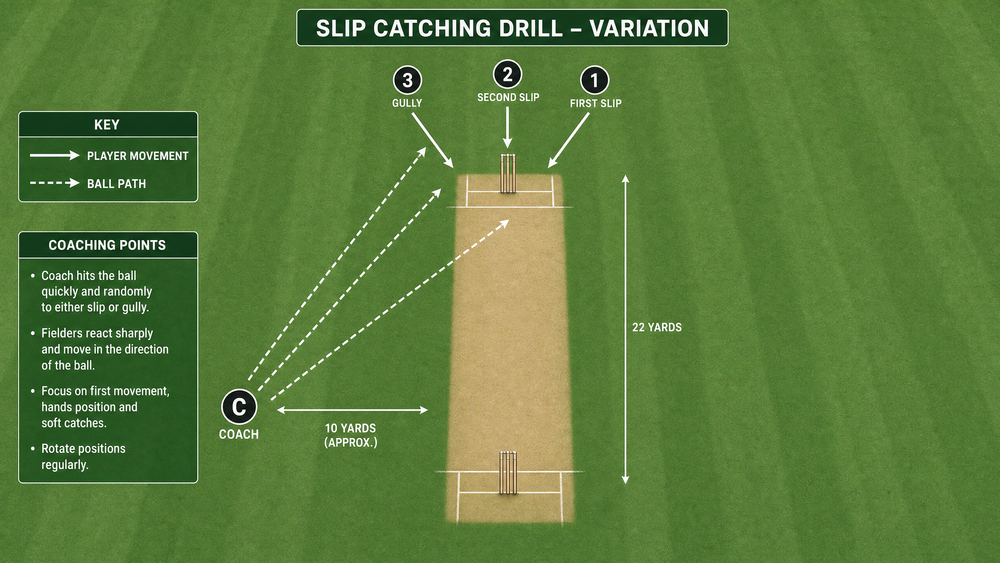
Shift the focus slightly wider. Remove the 3rd slip and introduce a Gully fielder. The coach moves closer (approximately 10 yards away on the off-side) and hits rapid, varied catches (both aerial and bouncing) towards the 1st Slip, 2nd Slip, and Gully positions. This variation demands exceptional lateral agility.
7. Age Adaptations
- Under 10s / Beginners: Use softer balls (like tennis balls or incrediballs) to build confidence and eliminate the fear of impact. The coach should throw the ball by hand rather than using a bat, focusing purely on the fundamental catching technique (the 'cup' shape).
- Under 14s / Intermediate: Transition to standard cricket balls. Introduce the bat for feeding to simulate realistic edges, but keep the pace manageable. Focus heavily on the correct ready position and the concept of soft hands.
- Under 16s / Advanced: Run the drill at full match intensity. Incorporate deflection boards, rapid-fire feeding, and enforce strict discipline regarding spacing and the synchronized split step.
