

Netball
Mastering Centre Pass Variations: Unlocking the Attacking Third
Equip your team with dynamic centre pass strategies to break through defensive structures and secure crucial possessions.
What you need
1-2 netballs, Bibs for two teams, Cones (optional)
1. Overview
The centre pass is the most frequent set-piece in netball and a critical opportunity to secure possession and build attacking momentum. This comprehensive drill focuses on executing multiple centre pass variations, teaching your players how to read the defense, coordinate timing, and create space in the centre third. By mastering these variations, your team will be able to consistently penetrate the attacking third and deliver the ball safely to the shooters.
2. Setup
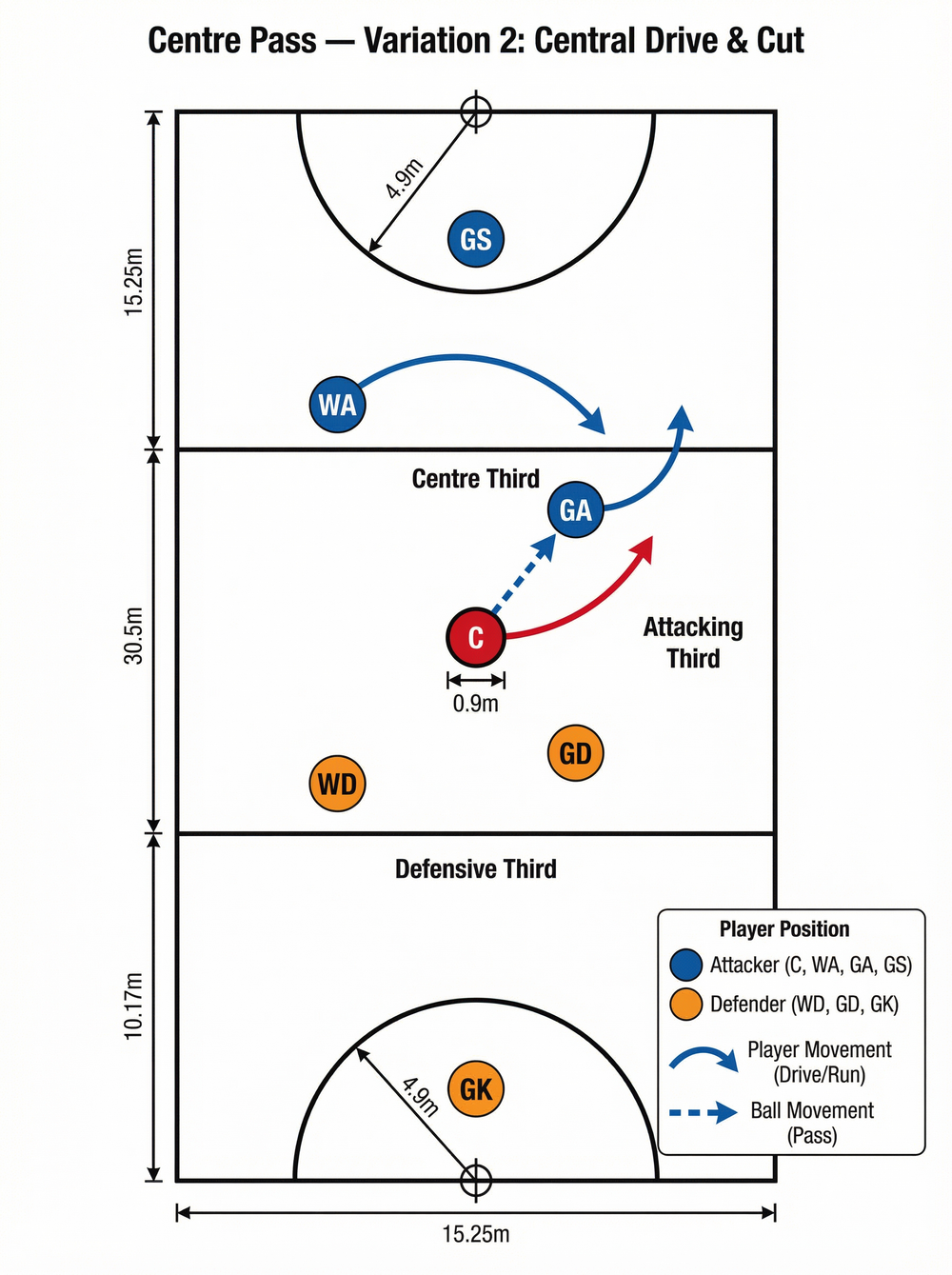
To effectively run this drill, you will need a standard netball court measuring 30.5m x 15.25m. Ensure you have the following setup ready before the session begins:
- Equipment: 1-2 netballs, bibs for two teams (Attackers and Defenders), and optional cones to mark specific driving channels.
- Court Setup: Utilize the full court, specifically focusing on the centre third and the attacking third.
- Player Positions: You will need a minimum of 7 players to run this drill effectively. Assign players to the following positions:
- Attackers: Centre (C), Wing Attack (WA), Goal Attack (GA), Goal Shooter (GS).
- Defenders: Wing Defence (WD), Goal Defence (GD), Goal Keeper (GK).
3. Step-by-Step Instructions
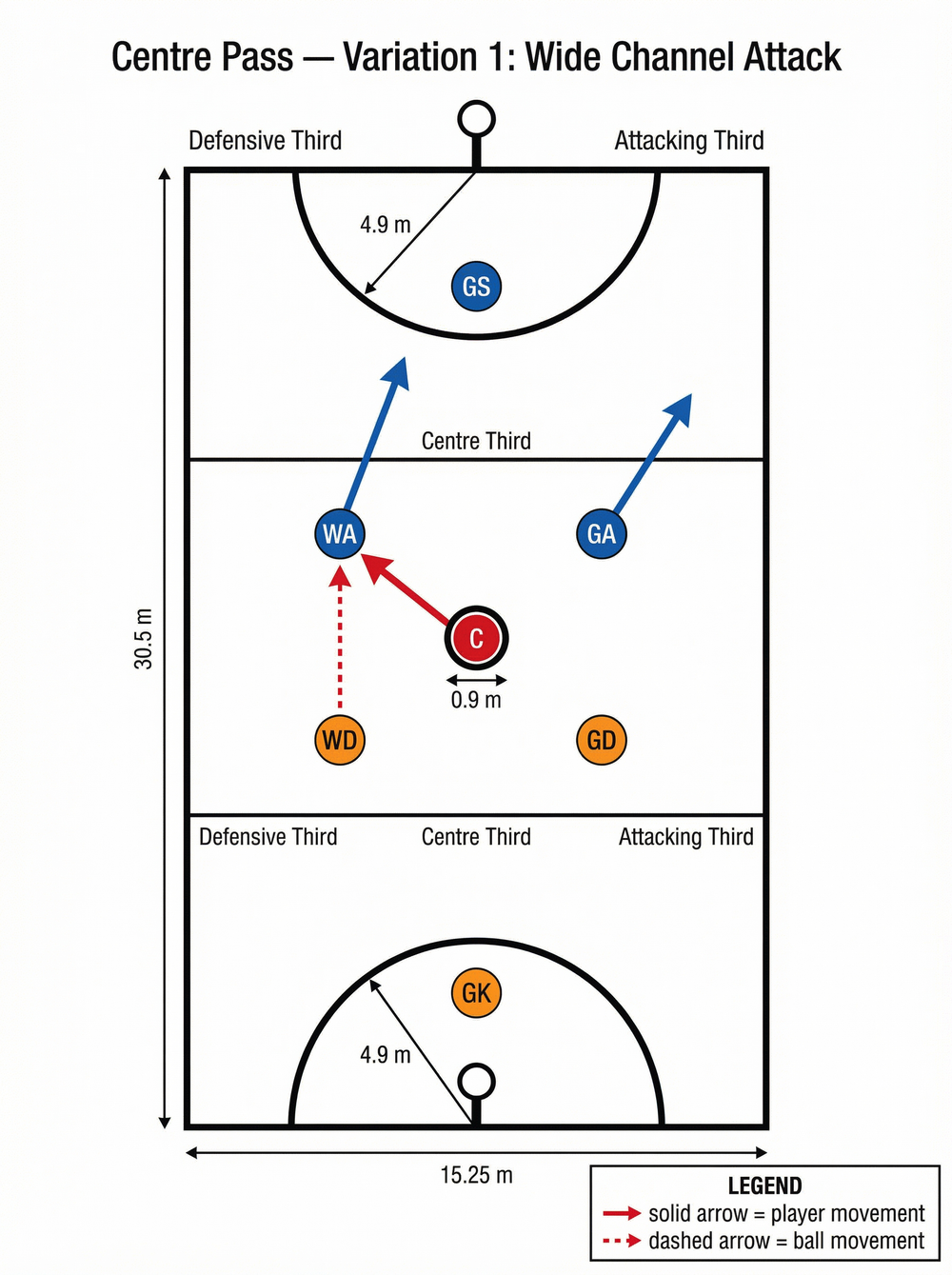
Variation 1: Wide Channel Attack
This variation utilizes the width of the court to stretch the defense and open up passing lanes.
- Starting Position: The C stands in the centre circle. The WA sets up near the transverse line on the left side, while the GA positions themselves on the right side. The WD and GD mark them closely.
- The Drive: On the whistle, the WA makes a sharp, explosive drive towards the sideline, creating separation from the WD. Simultaneously, the GA cuts aggressively across the top of the goal circle to draw the GD away from the centre channel.
- The Pass: The C reads the movement and delivers a crisp, flat pass to the WA in the wide channel.
- The Next Phase: As the WA receives the ball, the C immediately drives forward to offer a short passing option, while the GA re-positions to receive the ball on the circle edge.
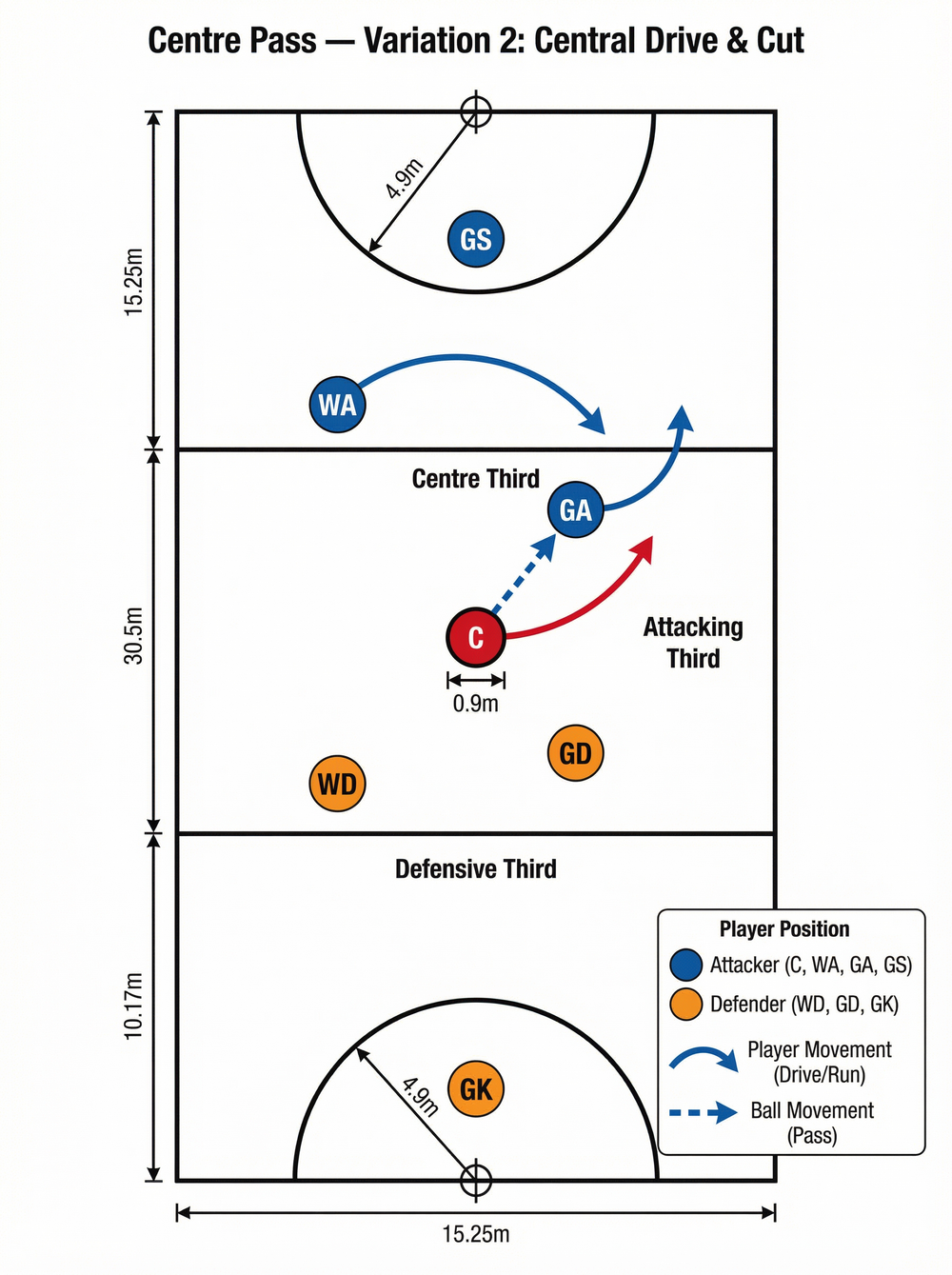
Variation 2: Central Drive & Cut

This variation is designed to punch through the middle of the court, utilizing a decoy run to create space for a central drive.
- Starting Position: The C is in the centre circle. The WA and GA are positioned near the transverse line, marked by the WD and GD.
- The Decoy: On the whistle, the WA makes a wide, sweeping run towards the sideline, acting as a decoy to pull the WD out of the central corridor.
- The Cut: The GA fakes a wide drive and then cuts sharply back into the middle of the centre third, driving directly towards the C.
- The Pass: The C delivers a strong, direct pass to the GA in the central space.
- The Next Phase: The GA lands and immediately looks to feed the GS holding space in the goal circle, or passes to the WA who has driven down the sideline.
4. Key Coaching Points
- Timing is Everything: Emphasize that the WA and GA must time their drives perfectly with the umpire's whistle. Early movement results in a penalty, while late movement allows the defense to intercept.
- Strong, Decisive Drives: Players must commit fully to their drives. A half-hearted run will not create enough separation from the defender. Encourage players to use a strong push-off and sprint into the space.
- Eye Contact and Communication: The C must make eye contact with the intended receiver before releasing the pass. Non-verbal communication is crucial for successful execution.
- Pass Quality: Passes must be accurate, flat, and placed out in front of the driving player to allow them to take the ball on the move.
- Reset and Re-offer: If the initial variation is shut down by the defense, players must quickly reset and offer a secondary option. The C should be prepared to pivot and look for the alternative pass.
5. Common Mistakes

- Crowding the Space: Attackers often drive into the same space, making it easy for the defense to cover both players. Ensure the WA and GA maintain their spacing and utilize different channels.
- Telegraphing the Pass: The C sometimes stares directly at the intended receiver, allowing the defense to anticipate the pass and intercept. Encourage the C to use peripheral vision and disguise the pass.
- Lack of a Decoy: The decoy runner often jogs instead of sprinting, failing to draw the defender away. The decoy run must be as convincing as the actual drive to receive the ball.
- Standing Still After Passing: The C often passes the ball and then stands still. The C must immediately drive forward to support the next phase of play.
6. Variations & Progressions

- Add Defensive Pressure: Start with passive defense and gradually increase the intensity to full, contested defense as the attackers become more confident.
- Time Limits: Introduce a time limit (e.g., 3 seconds) for the attackers to successfully deliver the ball to the circle edge, simulating match pressure.
- Introduce a 'Split' Drive: Have the WA and GA start close together and then split in opposite directions on the whistle, forcing the defenders to make quick decisions.
7. Age Adaptations

- Under 8s / Under 10s: Focus on basic timing and simple, straight drives. Use cones to mark the exact starting positions and the required driving paths. Minimize defensive pressure initially.
- Under 12s / Under 14s: Introduce the concept of decoy runs and changes of direction. Encourage players to read the defense and choose the appropriate variation based on the defenders' positioning.
- Under 16s / Open: Implement complex, multi-stage variations with full defensive pressure. Focus on split-second decision-making, high-speed execution, and seamless transitions into the attacking third.
