

Basketball
Elite Post Moves and Footwork Mastery
Develop dominant interior players with this comprehensive drill focused on low post positioning, the drop step, and finishing through contact.
What you need
2-3 Basketballs, Contact Pads (optional), Half-court
Overview
Dominating the paint requires more than just size; it demands elite footwork, balance, and an arsenal of reliable moves. The "Elite Post Moves and Footwork Mastery" drill is designed to build the foundational skills necessary for effective low post play. This drill emphasizes securing deep position, reading the defense, and executing decisive moves like the drop step and up-and-under. By breaking down the mechanics of interior scoring, coaches can help players of all sizes become efficient threats near the basket.
Use this drill early in practice to establish physical tone and reinforce fundamental footwork before progressing to live 1v1 or team offensive scenarios.
Setup
Proper setup is crucial for maximizing repetitions and ensuring game-like scenarios.
- Location: Half-court setting (standard FIBA 28m x 15m court).
- Players: 4-8 players per basket to maintain a high work rate.
- Equipment: 2-3 basketballs, optional contact pads for coaches to simulate defensive pressure.
- Positions:
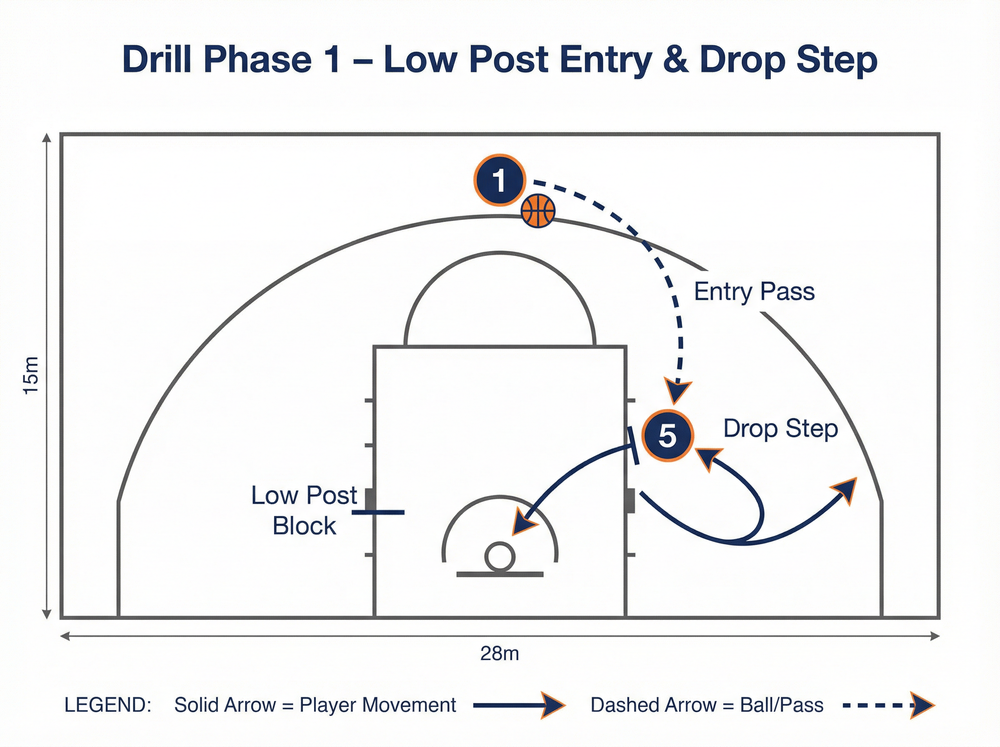
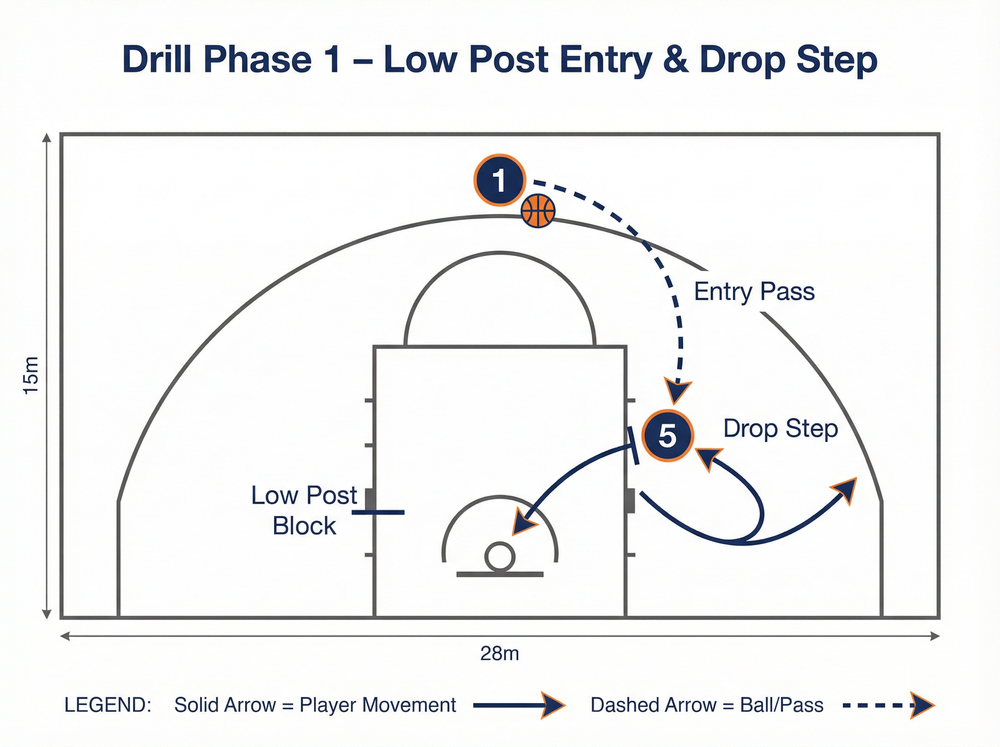
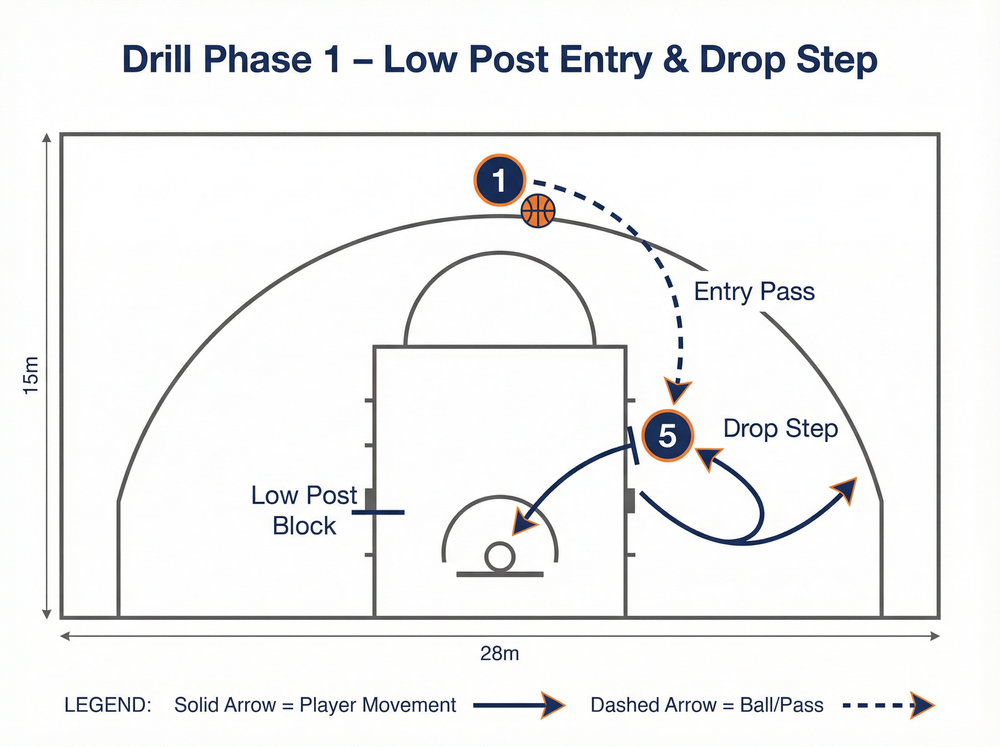
- Player 5 (Post Player) starts on the low post block.
- Player 1 (Passer) starts at the top of the key or the wing (free throw line extended).
- Coach or defensive player (X) positioned near the post player to provide guided resistance.
Step-by-Step Instructions
Follow these sequential steps to execute the drill effectively. We begin with the basic entry and progress to finishing moves.
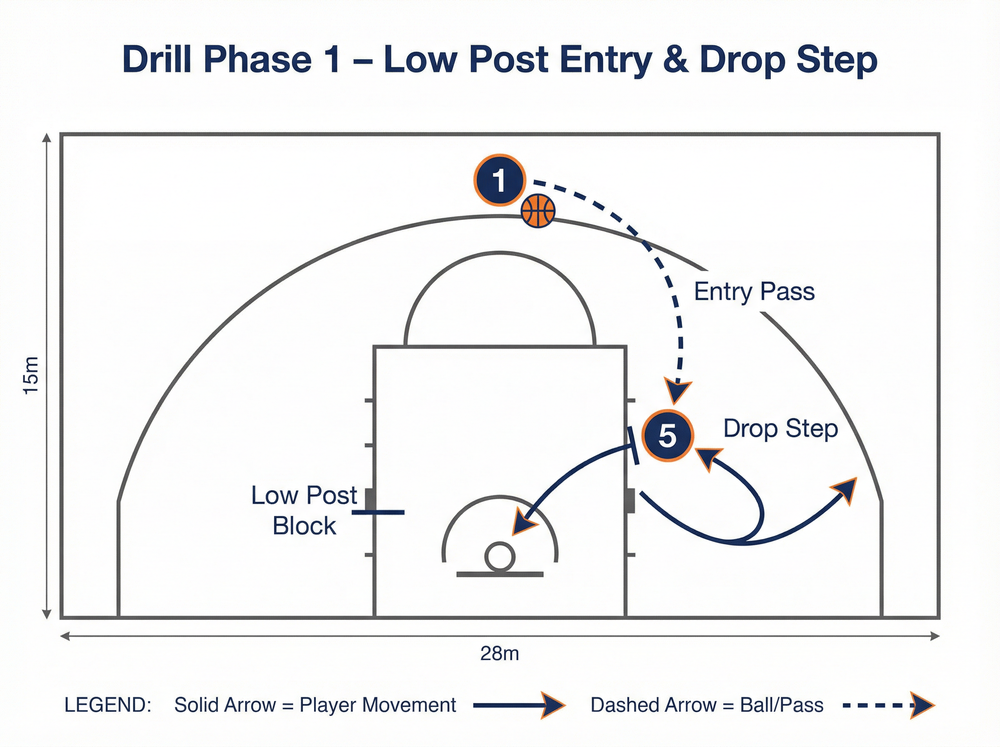
Phase 1: Low Post Entry & The Drop Step
- Establish Position: Player 5 sprints from the baseline to the low post block, establishing a wide base with knees bent. They must demand the ball by presenting a clear target hand away from the defender.
- The Entry Pass: Player 1 executes a crisp, two-handed chest or bounce pass to Player 5's target hand. The pass must be delivered on time and on target.
- The Catch and Chin: Upon receiving the pass, Player 5 immediately "chins" the ball (securing it under the chin with elbows out) and takes a quick peek over their baseline shoulder to read the defense.
- The Drop Step: Reading that the defender is playing on the high side, Player 5 executes a drop step. They pivot on their baseline foot, dropping their top foot toward the basket, sealing the defender on their back.
- The Finish: Player 5 goes up strong for a power layup or dunk off two feet, protecting the ball with their body.
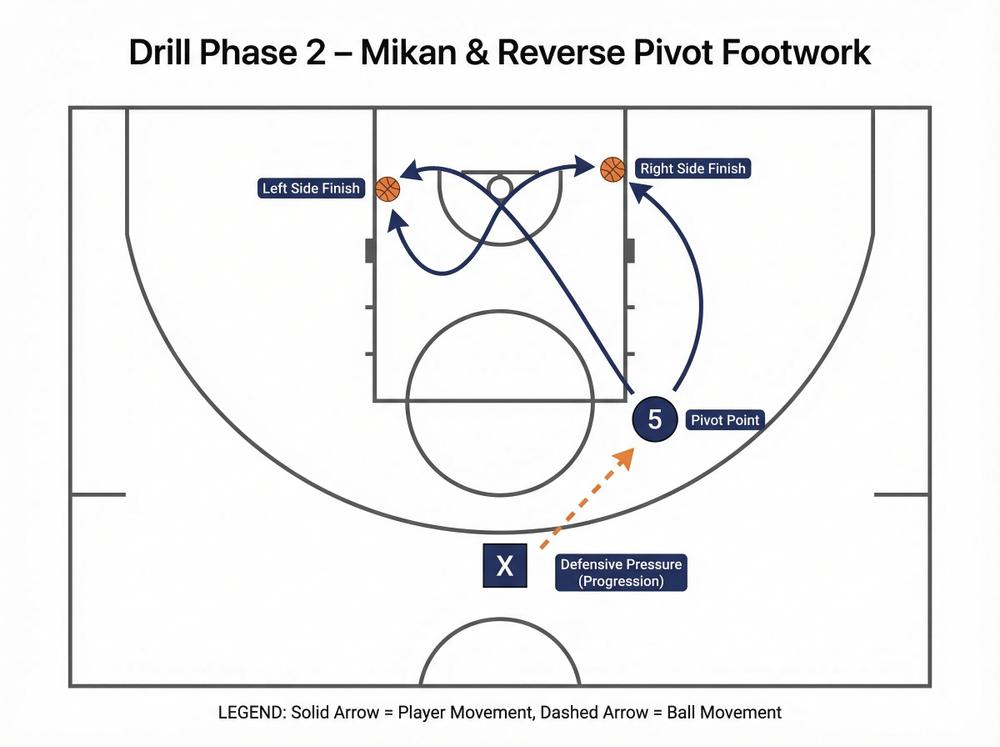
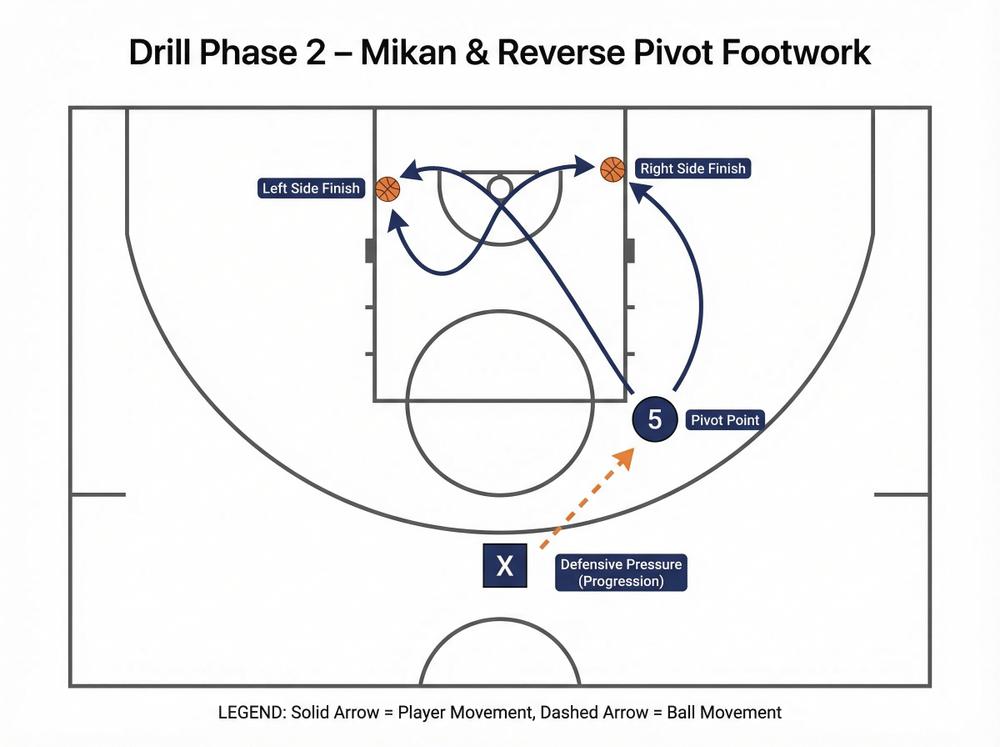
Phase 2: Mikan & Reverse Pivot Footwork
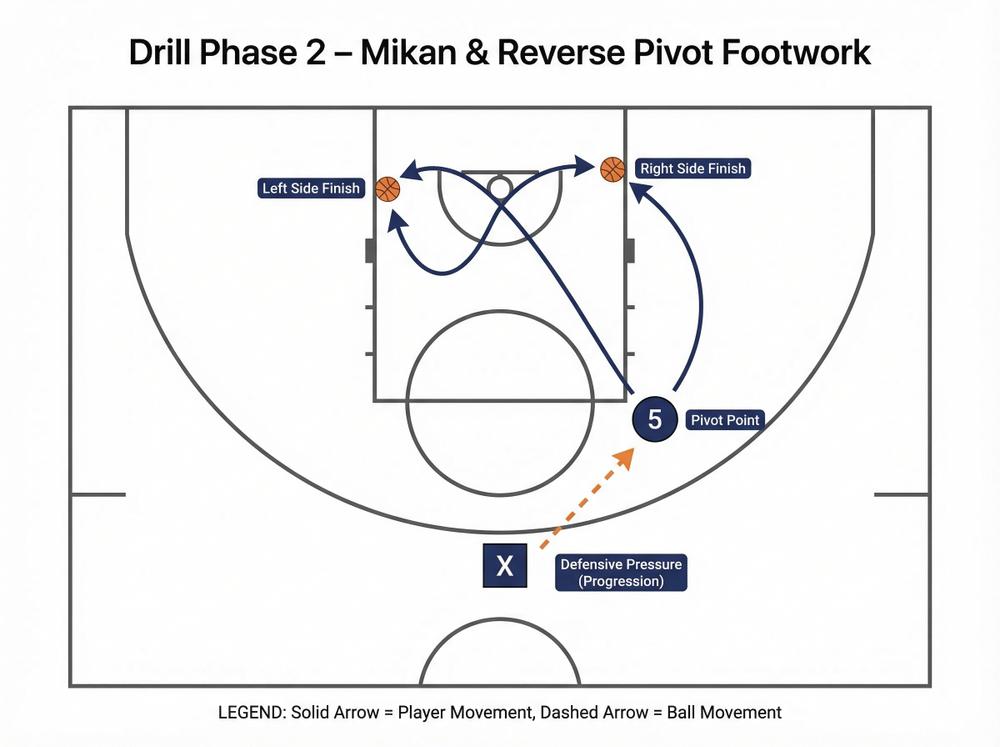
- Continuous Movement: To build rhythm and ambidextrous finishing, Player 5 transitions into a continuous Mikan drill pattern.
- Right Side Finish: Starting under the basket, Player 5 steps out with their right foot, receives a pass (or gathers a rebound), and finishes a right-handed layup on the right side of the rim.
- Reverse Pivot: Immediately after the finish, Player 5 secures the ball out of the net, executes a sharp reverse pivot to face the opposite side, and attacks the left side of the rim.
- Left Side Finish: Player 5 finishes a left-handed layup on the left side of the rim, continuing the figure-8 pattern.
- Adding Pressure: Once the footwork is fluid, the coach (X) introduces light pressure with a contact pad during the pivot and gather phases to simulate game physicality.
Key Coaching Points
To ensure players get the most out of this drill, focus on these critical teaching points:
- Wide Base and Balance: Post players must play low to the ground. A narrow stance invites getting pushed off the block.
- Meet the Pass: Never wait for the ball to come to you. Step toward the pass to prevent deflections and secure possession.
- Chin the Ball: Protect the basketball immediately upon catching it. Keep elbows wide to clear space and prevent guards from stripping the ball.
- Explosive Pivots: Footwork should be sharp and intentional. A slow pivot allows the defense to recover.
- Finish Through Contact: Expect to get hit. Players must focus on the target (the square on the backboard) and finish strong off two feet.
Common Mistakes
Watch for these frequent errors and correct them immediately:
- Catching Flat-Footed: Players catching the ball without being in an athletic stance, making them slow to react.
- Bringing the Ball Down: Dropping the ball below the waist after the catch, exposing it to smaller, quicker defenders.
- Fading Away: Leaning away from the basket on the finish instead of initiating contact and going strong to the rim.
- Rushed Footwork: Traveling or losing balance because the player tries to move faster than their footwork allows.
Variations & Progressions
Keep the drill challenging by introducing these variations:
- Up-and-Under Counter: If the defender anticipates the drop step and cuts off the baseline, have the player fake the drop step, pivot back to the middle, and finish with an up-and-under move.
- Live 1v1: Replace the coach with a live defender. The offensive player gets three dribbles maximum to score after the catch.
- Double Team Read: Introduce a second defender digging down from the wing. The post player must read the double team and pass out to the open shooter.
Age Adaptations
Tailor the drill to suit the developmental stage of your players:
- Under 10s: Focus entirely on the footwork without the ball first. Use smaller basketballs and lower hoops if available. Emphasize the Mikan drill for basic layup coordination.
- Under 14s: Introduce light contact using pads. Focus on the drop step and basic jump hook. Ensure proper "chinning" technique.
- Under 18s/Open: Full physical contact. Demand explosive speed on the moves and introduce complex reads (e.g., passing out of double teams).
